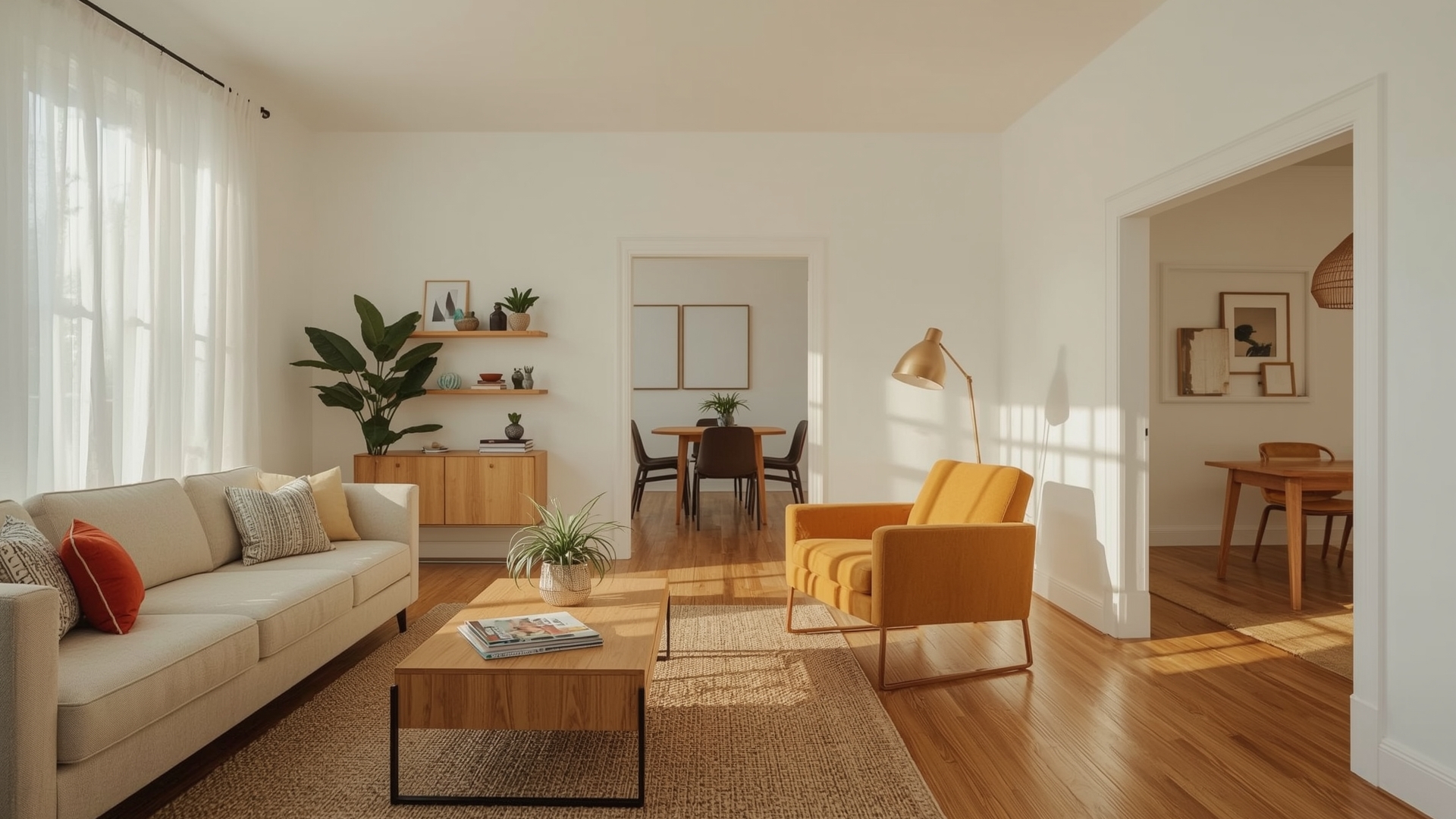
Moving into a new home is exciting. Furnishing it from scratch? That can feel overwhelming fast, especially when you’re already stretched thin from moving costs, deposits, and repairs. The good news is that a tight budget doesn’t mean a bare or ugly home. It means you need a plan.
This guide walks you through exactly how to furnish a new home without overspending, from deciding what to buy first to finding quality pieces at a fraction of retail price. You’ll learn how to avoid the most common budget mistakes, how to mix secondhand and new furniture strategically, and how to make every room feel complete and intentional.
Key Takeaways
- Prioritize function first: Buy what you actually need to live comfortably before anything decorative.
- Start with three rooms: Bedroom, living room, and kitchen are your highest-priority spaces.
- Mix new and secondhand: Buy quality new pieces for high-wear items and save on low-risk secondhand finds.
- Measure before you buy: Wrong-sized furniture is the single most expensive mistake new homeowners make.
- Use free room planning tools: Apps like IKEA Place and Roomstyler let you visualize furniture before spending a dollar.
- Budget $3,000 to $8,000 to furnish a full home at a starter level, or as low as $1,500 with heavy secondhand sourcing.
What Order Should You Furnish a New Home?
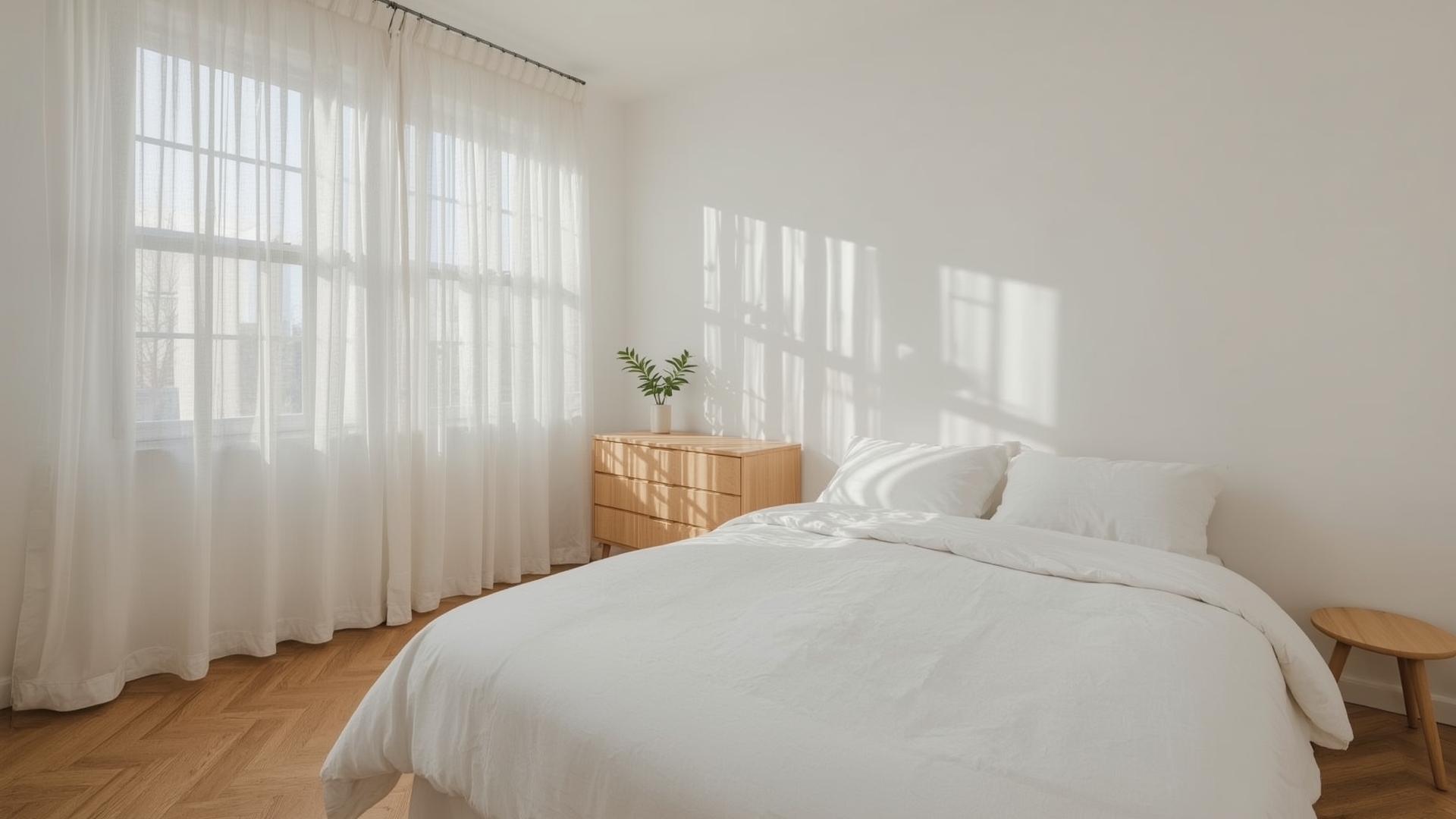
Quick Answer: Furnish your bedroom first, then the living room, then the kitchen and dining area. These three rooms cover sleep, relaxation, and eating. Prioritize function over aesthetics. Add secondary rooms like home offices and guest spaces only after essentials are covered.
Most people make the mistake of trying to furnish every room at once. That leads to spreading your budget too thin and ending up with a house full of cheap pieces that need replacing in two years.
A smarter approach is to fully furnish one room before moving to the next. Start with sleep. A functional bedroom with a bed, mattress, and basic storage lets you rest well while you work through the rest of the house at your own pace.
The Priority Order for Furnishing by Room
- Bedroom (bed frame, mattress, nightstand, dresser)
- Living Room (sofa, coffee table, lighting)
- Kitchen and Dining (table, chairs, basic storage)
- Bathroom (towel hooks, mirror, storage baskets)
- Home Office or Guest Room (desk, chair, or spare bed)
Give yourself a realistic timeline. Most budget-conscious homeowners take six to twelve months to fully furnish a new home. That’s completely normal and far smarter than going into debt to do it all at once.
How Much Does It Cost to Furnish a New Home on a Budget?
Quick Answer: Furnishing a full home on a budget typically costs between $3,000 and $8,000 for new furniture. Heavy use of secondhand and thrift sources can bring that down to $1,500 to $2,500. Single rooms range from $300 for a guest room to $1,500 for a living room.
These numbers vary depending on your city, how much you source secondhand, and which brands you choose. But having a ballpark helps you plan instead of guessing.
Budget Estimates by Room
| Room | New Furniture Budget | Secondhand + New Mix Budget | Key Pieces Needed |
|---|---|---|---|
| Bedroom | $800 to $1,500 | $400 to $700 | Bed frame, mattress, dresser, nightstand |
| Living Room | $1,000 to $2,500 | $500 to $1,200 | Sofa, coffee table, rug, lighting |
| Kitchen/Dining | $500 to $1,200 | $200 to $600 | Table, chairs, storage unit |
| Bathroom | $150 to $400 | $75 to $200 | Mirror, towel hooks, storage baskets |
| Home Office | $400 to $900 | $150 to $450 | Desk, chair, shelving |
| Guest Room | $300 to $700 | $100 to $300 | Bed or sleeper sofa, basic storage |
What Furniture Should You Buy New vs. Secondhand?
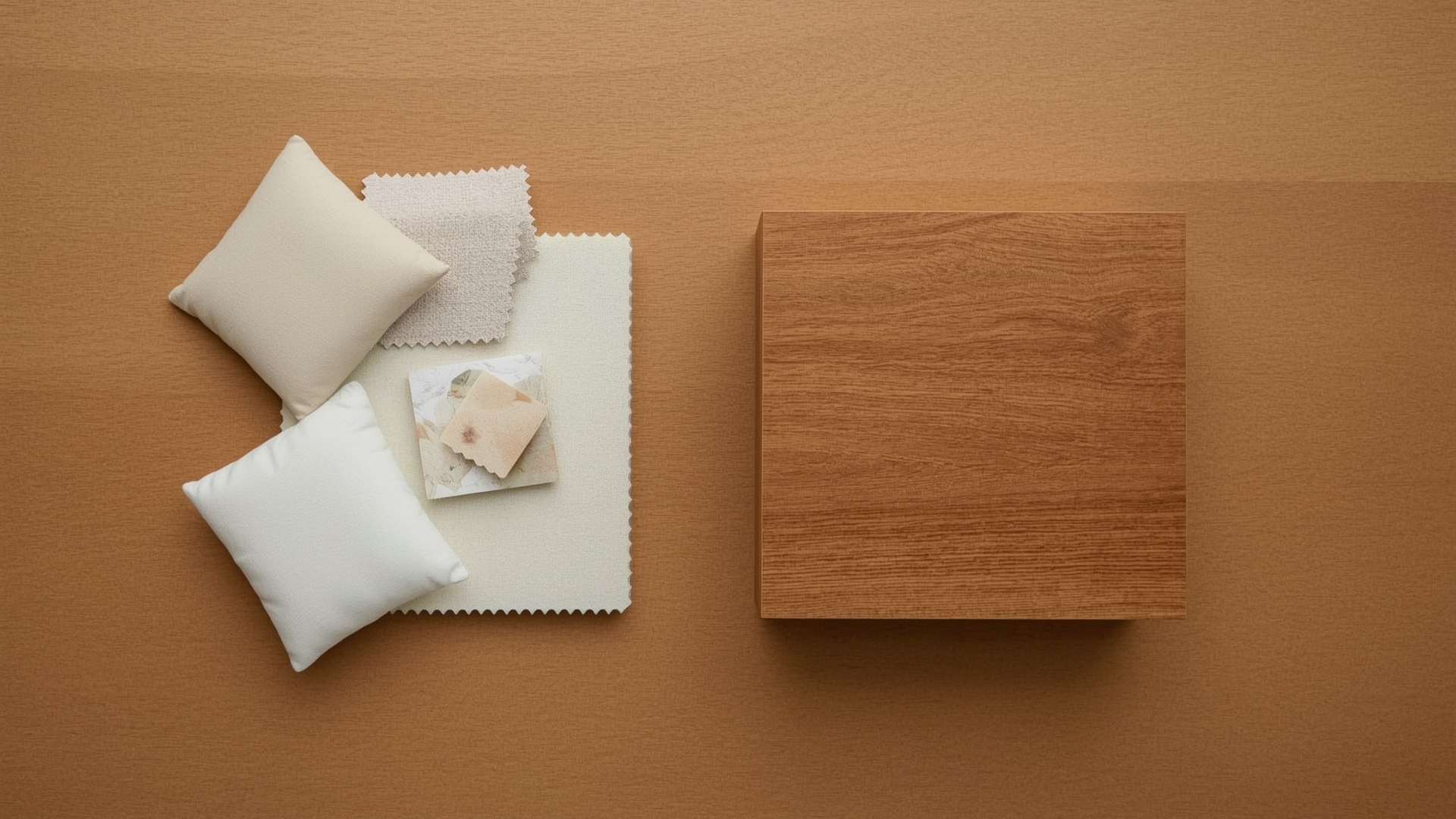
Quick Answer: Buy mattresses, upholstered sofas, and office chairs new. These are high-contact items where hygiene and structural integrity matter. Buy wood furniture, bookshelves, dining tables, dressers, and bed frames secondhand. They clean up easily and last decades with basic care.
This rule saves a lot of money and headaches. Not all used furniture is equal. The risk with secondhand upholstered pieces is hidden damage, odors, or pests. Wood and metal pieces don’t carry the same risks.
New vs. Secondhand: Item-by-Item Breakdown
| Furniture Item | Buy New or Used? | Reason | Typical Secondhand Savings |
|---|---|---|---|
| Mattress | Always New | Hygiene, structural integrity, warranty | N/A |
| Sofa (fabric/leather) | Prefer New | Hard to inspect for odors/pests | 30 to 60% if inspected carefully |
| Solid Wood Dining Table | Secondhand is ideal | Durable, resands easily, decades of life | 50 to 75% |
| Dresser / Chest of Drawers | Secondhand is ideal | Easy to clean and repaint | 60 to 80% |
| Bed Frame (wood or metal) | Either | Non-porous surfaces, easy to inspect | 40 to 70% |
| Bookshelves | Secondhand is ideal | Simple structure, easy to assess | 50 to 80% |
| Office Chair | Prefer New | Ergonomics degrade with use, hard to assess | 20 to 40% |
| Accent Chair (wood frame) | Either | Inspect frame and cushion condition separately | 40 to 65% |
Where Can You Find Quality Budget Furniture?
Quick Answer: Facebook Marketplace, IKEA, thrift stores like Habitat for Humanity ReStores, and estate sales are the top sources for budget furniture. For new pieces, IKEA and Wayfair offer the widest selection under $500 per item. Estate sales consistently offer the best value on solid wood furniture.
Online Sources for Budget Furniture
- Facebook Marketplace: Best for local solid wood furniture, bed frames, and dining sets. Filter by distance and condition. Always inspect in person before buying upholstered items.
- Craigslist: Similar to Facebook Marketplace but with a stronger selection in some cities. Useful for bulk finds from people moving or downsizing.
- OfferUp: App-based platform with rated sellers. Better for smaller items like lamps, side tables, and mirrors.
- IKEA: Best for flat-pack furniture under $300 per piece. Longevity depends heavily on assembly quality. Their RÅSKOG carts, KALLAX shelves, and BRIMNES bed frames consistently deliver value.
- Wayfair: Wide selection across price points. Watch for flash sales and clearance sections where prices drop 30 to 60%.
In-Person Sources Worth Your Time
- Habitat for Humanity ReStore: Nonprofit thrift stores selling donated furniture and home goods. Prices are 50 to 80% below retail, and purchases support a good cause.
- Estate Sales: When homeowners liquidate entire households, quality solid wood pieces often go for $50 to $200. Use EstateSales.net to find sales near you.
- Consignment Shops: Higher-quality secondhand furniture with some vetting already done. Prices sit between thrift stores and retail but quality is more reliable.
- Garage Sales: Inconsistent but occasionally excellent. Best for small items, décor, lamps, and accent pieces.
How Do You Plan a Room Layout Before Buying Furniture?
Quick Answer: Measure your room dimensions and doorways first. Then use a free tool like IKEA Place (augmented reality app), Roomstyler (browser-based), or Magicplan to test furniture arrangements before spending anything. This prevents the most common and costly mistake: buying furniture that doesn’t fit.
Buying furniture that doesn’t fit your space is the number one mistake new homeowners make. A sofa that’s six inches too wide can block a doorway. A dining table that looks right in a showroom can make a small kitchen feel like a hallway.
Free Room Planning Tools Compared
| Tool | Platform | Best For | Cost | AR Feature? |
|---|---|---|---|---|
| IKEA Place | iOS / Android | Visualizing IKEA furniture in real space | Free | Yes |
| Roomstyler 3D Planner | Browser | Full room layout design | Free (paid upgrade) | No |
| Magicplan | iOS / Android | Floor plan measurement and layout | Free (basic) | No |
| Planner 5D | Browser / App | 2D and 3D room planning | Free (limited) | Yes (Pro) |
| SketchUp Free | Browser | Advanced custom layouts | Free | No |
The most effective approach: sketch your room dimensions on paper first, then use one digital tool to confirm your layout before ordering anything. Never skip measuring doorways and hallways. Many sofas and bed frames require disassembly to navigate tight entry points.
What Are the Biggest Budget Mistakes When Furnishing a New Home?
Quick Answer: The five biggest mistakes are: buying everything at once, choosing cheap upholstered pieces that wear out fast, skipping measurements, ignoring lighting, and buying décor before furniture. Each of these leads to spending more money in the long run by replacing items or starting over.
Mistake 1: Buying All at Once
Trying to furnish every room in the first month almost always leads to regret purchases. You don’t fully understand how you live in a space until you’ve lived in it for a few weeks. Give yourself time to notice what you actually need before spending.
Mistake 2: Choosing Price Over Construction Quality on Sofas
A $300 sofa with a particleboard frame and low-density foam will feel broken in 18 months. Sofa frames made from kiln-dried hardwood and cushions with foam density above 1.8 lb per cubic foot last significantly longer. Spend more on the sofa if you can. Save money elsewhere.
Mistake 3: Ignoring Lighting
Overhead lighting alone makes every room feel flat and harsh. A $25 floor lamp or a $15 table lamp changes how an entire room feels. Budget $50 to $150 for layered lighting in your living room and bedroom before spending on artwork or throw pillows.
Mistake 4: Buying Décor Before Furniture
Candles, throw pillows, and wall art are fun to buy. But if your living room has no sofa, none of that matters. Lock in your functional pieces first. Décor fills gaps after the room works.
Mistake 5: Not Accounting for Delivery and Assembly Costs
Many budget furniture retailers charge $50 to $200 for delivery and $75 to $150 for assembly. These costs can add 20 to 30% to your actual spend. Always check total landed cost before hitting purchase.
How Do You Make Budget Furniture Look Expensive?
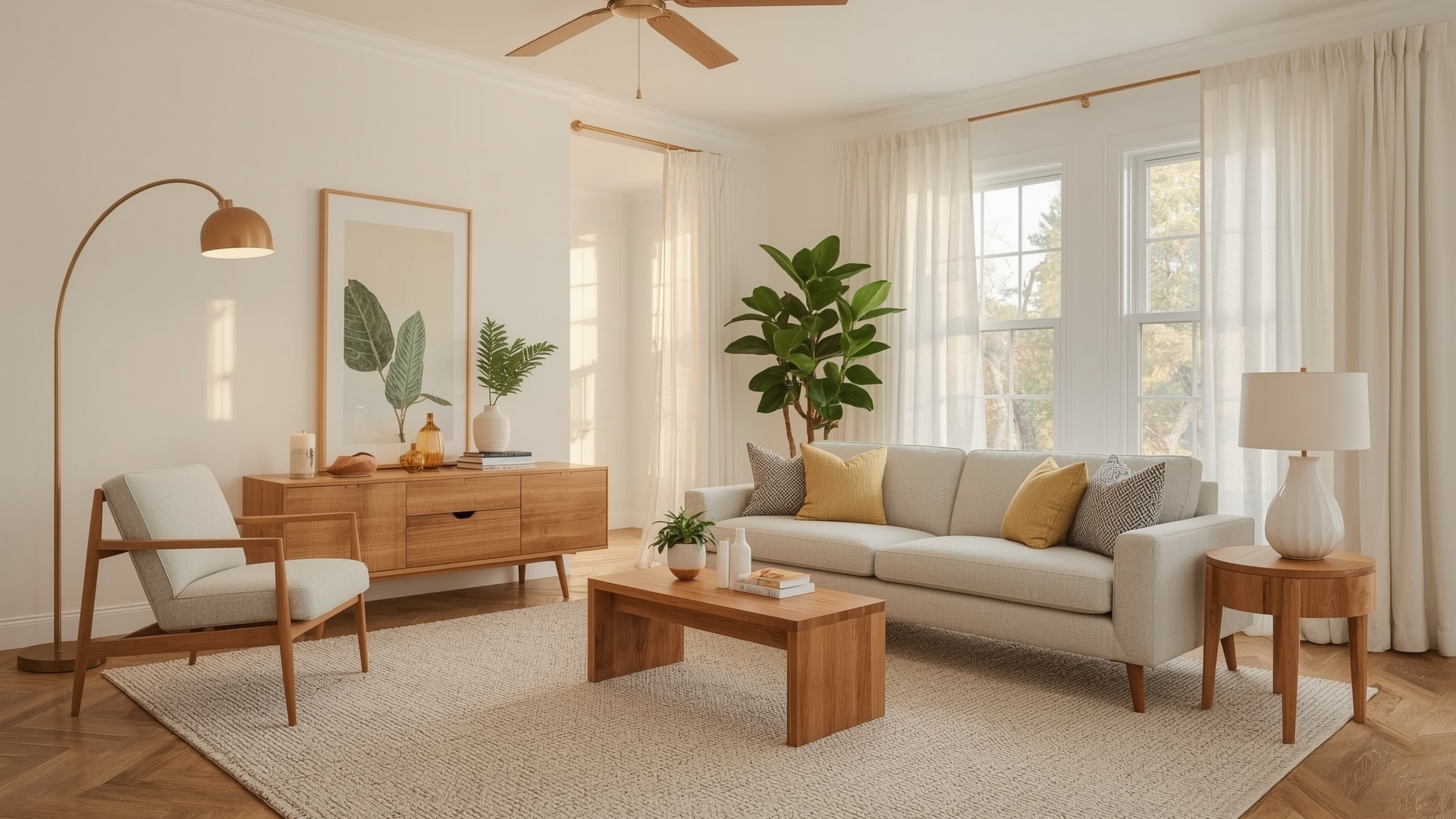
Quick Answer: Use rugs to anchor rooms, add layered lighting, stick to a limited color palette of two to three colors, and mix textures like wood, metal, and fabric. These four strategies make inexpensive rooms look designed rather than assembled.
The Visual Strategies That Work
- Area rugs define spaces: In an open floor plan, a rug under your sofa and coffee table creates a distinct “room” even without walls. Budget $80 to $200 for a large area rug from Ruggable or Amazon basics.
- Consistent wood tones: Mixing too many wood colors (blond oak, dark walnut, red cherry) in one room creates visual noise. Stick to one or two tones.
- White or neutral walls do the heavy lifting: Neutral walls make any furniture look more intentional. If you can paint, a fresh coat of Benjamin Moore White Dove or Sherwin-Williams Accessible Beige costs around $50 per room and elevates everything in it.
- Scale matters more than price: A $150 oversized floor mirror makes a small room feel larger than a $500 piece of artwork hung in the wrong spot.
- Curtains hung high: Mount curtain rods two to four inches below the ceiling (not at window height). This trick makes ceilings look taller and windows look bigger at zero extra cost.
What Is the Best Strategy for Furnishing a Small Space on a Budget?
Quick Answer: In small spaces, prioritize multi-functional furniture. A storage ottoman replaces a coffee table and adds hidden storage. A Murphy bed reclaims a full room. A dining bench with internal storage replaces two chairs and a separate storage cabinet. Every piece should do two jobs.
Multi-Functional Furniture That Earns Its Cost
| Furniture Piece | Primary Function | Secondary Function | Avg. Budget Price |
|---|---|---|---|
| Storage Ottoman | Coffee table / footrest | Blanket and remote storage | $60 to $150 |
| Daybed with Trundle | Sofa seating | Sleeps two guests | $350 to $700 |
| Murphy Bed with Desk | Full bed at night | Desk workspace during day | $800 to $1,800 |
| Storage Bench (entry) | Seating | Shoe and accessory storage | $80 to $200 |
| Extendable Dining Table | Daily dining for 2 to 4 | Expands to seat 6 to 8 for guests | $200 to $500 |
| Lift-Top Coffee Table | Coffee table | Work surface and storage inside | $120 to $300 |
How Do You Build a Cohesive Look With a Limited Budget?
Quick Answer: Choose a simple style direction before buying anything, like Scandinavian, industrial, or transitional. Stick to two to three main colors and one or two wood tones across every room. Cohesion comes from consistent choices, not expensive pieces.
Choosing a Style Direction Without Overthinking It
You don’t need an interior design degree to have a cohesive home. You just need to make consistent decisions. Before you buy your first piece, answer three questions:
- What two or three colors will appear throughout the home?
- What wood tone will anchor the furniture (light, medium, or dark)?
- What one word describes the feeling you want (cozy, minimal, modern, rustic)?
Write these answers down and check every purchase against them. A piece might be a great deal, but if it breaks your palette or contradicts your style direction, it will look out of place.
Budget-Friendly Style Directions and Their Core Pieces
- Scandinavian: Light wood, white and gray tones, simple silhouettes. Easy to source at IKEA. Low-maintenance and timeless.
- Industrial: Dark metal frames, reclaimed or dark wood, exposed textures. Great for secondhand sourcing since worn finishes look intentional.
- Transitional: Mix of modern and traditional. Neutral palette, clean lines, varied textures. Most forgiving for mixed secondhand and new purchases.
- Bohemian: Layered textiles, natural materials, pattern mixing. Very budget-friendly since imperfection and variety are part of the aesthetic.
When Is the Best Time to Buy Budget Furniture?
Quick Answer: The best times to buy furniture are Presidents Day weekend (February), Memorial Day (May), Labor Day (September), and Black Friday (November). These four sale periods consistently see 20 to 50% discounts at major retailers including IKEA, Wayfair, Ashley, and Article.
If you’re flexible on timing, holding your purchase for one of these windows can save hundreds of dollars on big-ticket pieces like sofas and mattresses. Set up price alerts through tools like Google Shopping or Honey to track price drops on specific items before the sale hits.
Retailer Sale Calendar
| Sale Period | Typical Discount Range | Best Categories | Top Retailers Participating |
|---|---|---|---|
| Presidents Day (February) | 15 to 40% | Mattresses, sofas, bedroom sets | Wayfair, Ashley, Saatva, Purple |
| Memorial Day (May) | 20 to 50% | Outdoor furniture, full sets | Home Depot, Wayfair, Target |
| Labor Day (September) | 20 to 40% | Living room, bedroom, dining | IKEA, Crate & Barrel, Wayfair |
| Black Friday / Cyber Monday (November) | 25 to 60% | All categories | Nearly all major furniture retailers |
| End of Quarter (March, June, September, December) | 10 to 30% | Floor models, clearance inventory | Local furniture stores, showrooms |
Frequently Asked Questions
Can you furnish a home for under $1,000?
Yes, but it requires heavy reliance on secondhand sources. Focusing on Facebook Marketplace, estate sales, and Habitat for Humanity ReStores for wood furniture while buying a budget mattress new is the most realistic path to that number. Expect to cover one or two rooms, not an entire home.
Is IKEA furniture worth it for a budget home?
IKEA furniture is worth it for pieces that stay stationary and get assembled carefully. Shelving units like the KALLAX, the BRIMNES dresser, and extendable dining tables consistently last five to ten years with proper care. Avoid IKEA for sofas if longevity is a priority, since foam density and frame construction are entry-level.
How do you inspect secondhand furniture before buying?
Check wood joints for wobbling, look underneath upholstered pieces for stains and smells, and inspect drawer slides for smooth operation. For upholstered items, press the cushions firmly to check foam resilience. Any musty smell, soft spots in the frame, or visible water stains are reasons to walk away.
What is the most important piece of furniture to buy first?
A quality mattress is the single most impactful purchase in a new home. Poor sleep affects everything else. Budget $300 to $700 for a new mid-tier mattress from brands like Zinus, Linenspa, or Allswell before spending on any other single piece.
How do you add storage without spending a lot?
Open shelving, over-door organizers, and vertical storage units give you significant storage capacity for under $100 per solution. The IKEA KALLAX shelf ($50 to $150) is one of the most versatile budget storage tools available, working as a bookshelf, room divider, or media console.
Should you rent furniture instead of buying on a budget?
Furniture rental services like CORT and Feather charge $100 to $300 per month for a basic furnished home. Over twelve months, that’s $1,200 to $3,600 with nothing to show for it at the end. Buying budget furniture is almost always more cost-effective unless you’re in a home for fewer than six months.
