
Harsh overhead lighting makes a room feel like a waiting room. One bright fixture in the center of the ceiling flattens everything and creates shadows in all the wrong places. The fix is layered lighting, and it doesn’t require an electrician or an expensive renovation.
Layered lighting means using multiple light sources at different heights to create depth, warmth, and function. You can transform a living room or bedroom completely using affordable lamps and smart bulbs — often for under $150 total.
Key Takeaways
- Layered lighting uses three types of light: ambient (general), task (focused), and accent (decorative).
- Floor lamps and table lamps are the fastest way to replace or supplement harsh overhead fixtures without any wiring.
- Smart bulbs let you control color temperature and brightness from your phone, making one lamp do multiple jobs.
- Warm white bulbs (2700K–3000K) make rooms feel cozy — daylight bulbs (5000K+) make them feel clinical.
- You don’t need to rewire anything. Plug-in fixtures, dimmer switches, and smart bulbs do the job.
- A full layered lighting setup for one room typically costs $80–$200 when using budget-friendly fixtures and LED bulbs.
What Is Layered Lighting and Why Does It Matter?
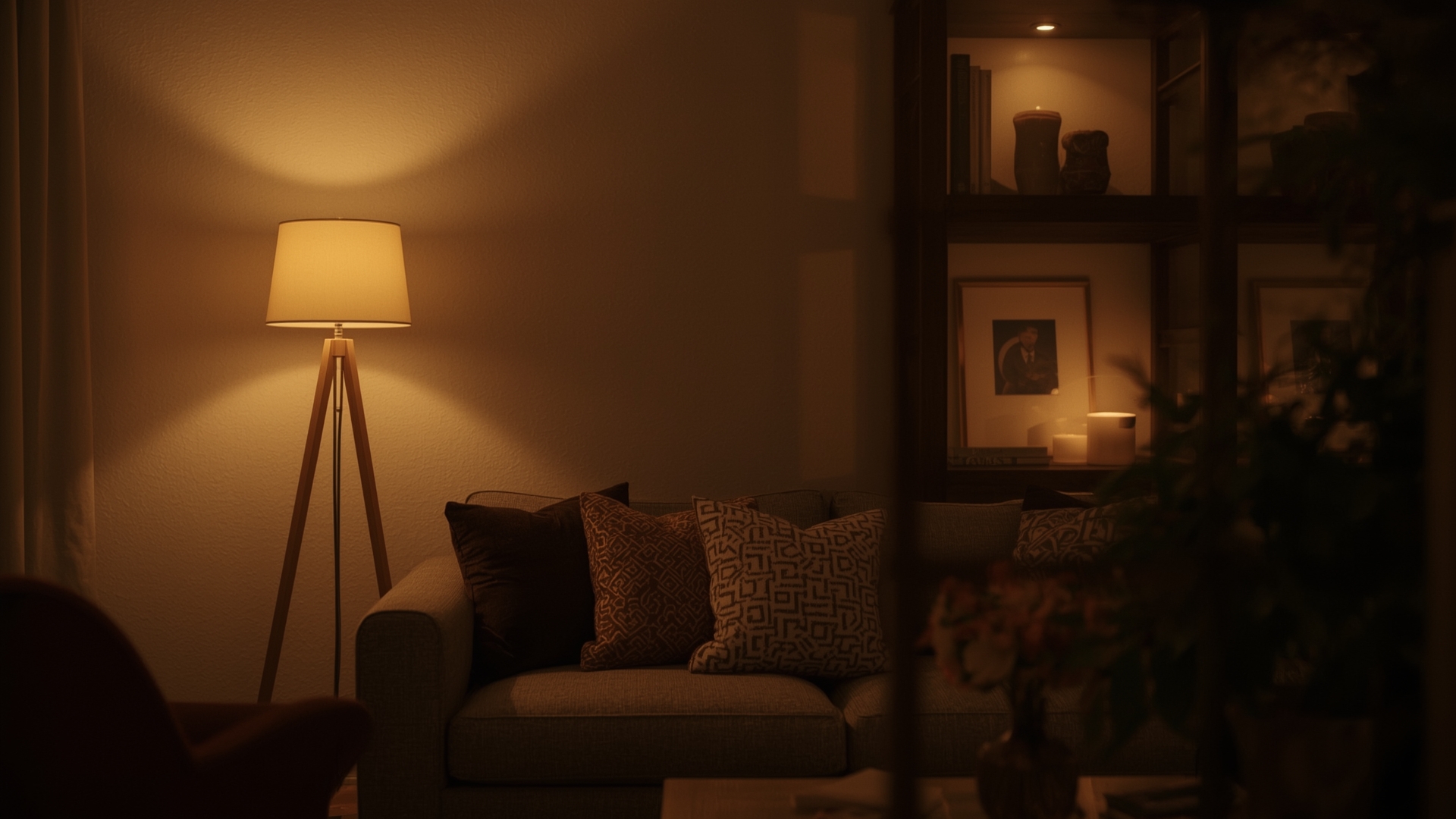
Quick Answer: Layered lighting combines three light types — ambient, task, and accent — at different heights and intensities. It removes the flat, harsh look of single overhead fixtures and makes any room feel more inviting, functional, and visually balanced without expensive renovations.
A single ceiling light pushes light straight down. That creates bright spots on the floor and dark corners around the walls. It also makes ceilings look low and rooms look smaller.
Layered lighting spreads light horizontally across the room at multiple levels. A floor lamp in the corner, a table lamp on a side table, and a backlit TV or shelf create a warm, even glow. The room looks bigger, and it feels more comfortable.
The Three Layers of Light Explained
- Ambient light: The base layer. It fills the room with general light. This includes overhead fixtures, torchiere floor lamps, and large table lamps.
- Task light: Focused light for specific activities. Reading lamps, desk lamps, and under-cabinet lighting fall into this category.
- Accent light: Decorative light that adds depth. LED strip lights behind a TV, a small lamp on a bookshelf, or a plug-in picture light are good examples.
Most budget-friendly rooms only have ambient light. Adding task and accent sources is where the real transformation happens — and neither requires hardwiring.
How Much Does It Cost to Layer Lighting in a Room?
Quick Answer: Layering a single room typically costs $80–$200 using plug-in floor lamps ($30–$80), table lamps ($20–$60), and LED smart bulbs ($8–$15 each). You don’t need to hire an electrician or buy new fixtures if you already have a ceiling light.
Budget Lighting Cost Breakdown by Product Type
| Product Type | Budget Range | Mid-Range | Best Use | Typical Lifespan |
|---|---|---|---|---|
| Torchiere Floor Lamp | $25–$45 | $50–$90 | Ambient bounce light | 5–10 years (fixture) |
| Arc Floor Lamp | $40–$75 | $80–$150 | Task + ambient over seating | 5–10 years (fixture) |
| Table Lamp | $20–$45 | $50–$100 | Task + accent at eye level | 5–10 years (fixture) |
| LED Smart Bulb | $8–$12 | $13–$20 | Color temp + brightness control | 15,000–25,000 hours |
| LED Strip Lights | $12–$25 | $26–$50 | Accent behind furniture or shelves | 30,000–50,000 hours |
| Plug-In Dimmer Switch | $8–$15 | $16–$30 | Control any non-smart lamp | 5+ years |
What Type of Bulb Should You Use for Budget Room Lighting?
Quick Answer: Use LED bulbs rated 2700K to 3000K for living rooms and bedrooms. This color temperature produces warm white light that feels cozy. LEDs use 75% less energy than incandescent bulbs and last up to 25,000 hours, making them the most cost-effective choice.
Color temperature is measured in Kelvin (K). Lower numbers mean warmer, more orange light. Higher numbers mean cooler, bluer light. Most people find that warmer light feels more relaxing in home spaces.
Bulb Color Temperature Guide by Room and Use
| Color Temp (Kelvin) | Light Appearance | Best Room/Use | Mood Effect |
|---|---|---|---|
| 2700K | Warm white / soft yellow | Bedroom, living room, dining room | Relaxing, cozy, intimate |
| 3000K | Warm white / neutral | Living room, kitchen ambient | Warm but cleaner |
| 3500K | Neutral white | Home office, bathroom | Focused, alert |
| 4000K | Cool white | Kitchen task lighting, garage | Energizing, productive |
| 5000K–6500K | Daylight / blue-white | Workshop, commercial spaces | Clinical, high-alert |
Lumen output tells you how bright the bulb is. Watts tell you how much power it uses. For a standard table or floor lamp, aim for 450–800 lumens. For a room’s primary ambient source, 1100–1600 lumens works well.
LED vs. Incandescent vs. CFL: What Makes the Most Sense?
| Bulb Type | Average Cost Per Bulb | Energy Use (60W equivalent) | Lifespan | Color Temp Options |
|---|---|---|---|---|
| LED | $3–$12 | 8–10 watts | 15,000–25,000 hours | 2700K–6500K |
| CFL (Compact Fluorescent) | $2–$6 | 13–15 watts | 8,000–10,000 hours | 2700K–5000K |
| Incandescent | $1–$3 | 60 watts | 1,000–2,000 hours | 2700K only |
LEDs cost more upfront but save money over time. A single LED running 3 hours a day costs about $1–$2 per year in electricity. An incandescent doing the same job costs roughly $7–$8 per year.
How Do You Replace Harsh Overhead Lighting Without Rewiring?
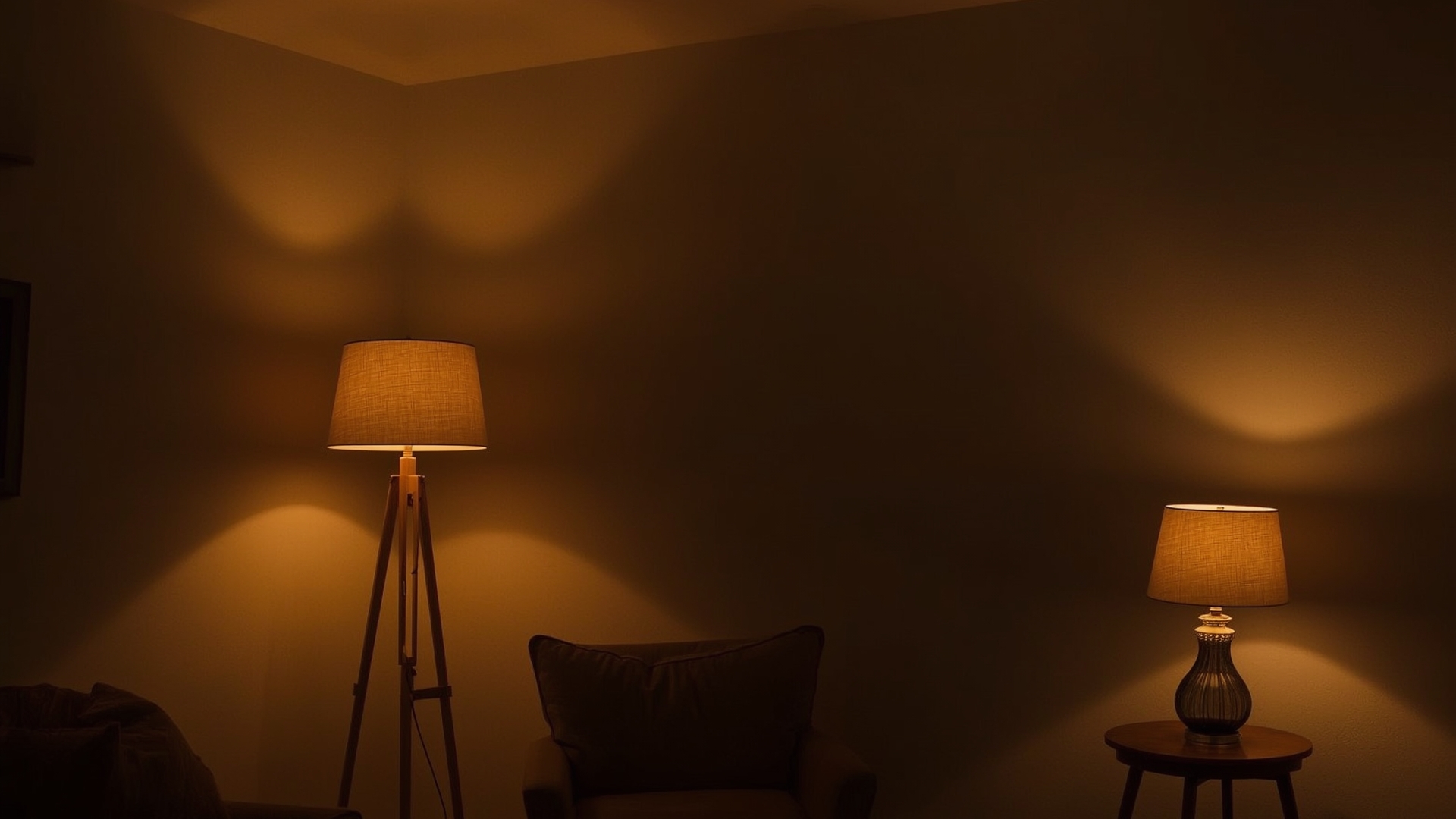
Quick Answer: Swap your overhead bulb for a warmer, dimmable LED. Then dim it down or turn it off entirely and replace it with floor lamps and table lamps. Plug-in torchiere lamps bounce light off the ceiling, mimicking overhead light without the harshness.
The ceiling fixture doesn’t have to disappear. It just needs to stop being the only source. Here’s how to reduce its impact without touching any wiring.
Step 1: Swap the Overhead Bulb
Replace whatever bulb is in your ceiling fixture with a warm white LED rated at 2700K. If the fixture allows it, use a dimmable bulb and add a smart plug or in-line dimmer to control the brightness from your phone or a wall dimmer adapter.
Step 2: Add a Torchiere Floor Lamp in Each Dark Corner
A torchiere is a tall floor lamp that points up. It bounces light off the ceiling, spreading it across the room softly. Place one in any corner that feels dark. This creates the effect of overhead lighting without the harsh downward beam.
Step 3: Position Table Lamps at Eye Level
When you’re seated on a sofa or in a chair, the lamp shade should be roughly at eye level. This directs light horizontally across the room rather than straight down. A 60–75W equivalent LED bulb in a table lamp placed on a side table or console creates a warm pool of light that feels intentional.
Step 4: Dim or Turn Off the Overhead Completely
Once your floor and table lamps are in place, try turning off the overhead light entirely in the evening. Most people find the room looks dramatically better immediately. The overhead light can still serve as task lighting when you need to clean or find something.
Where Should You Place Floor Lamps and Table Lamps in a Living Room?
Quick Answer: Place a torchiere floor lamp in corners opposite your sofa, and an arc lamp over or beside your primary seating area. Put table lamps on side tables at either end of the sofa. This creates light at three heights — ceiling bounce, mid-height, and surface — without any hardwiring.
Living Room Lamp Placement Strategy
- Behind the sofa (corner): A torchiere or tall arc floor lamp creates a backlit glow that makes the seating area feel like a defined zone.
- Beside or over an armchair: A reading lamp positioned at shoulder height gives focused task light without disturbing the rest of the room.
- On side tables at sofa ends: Two matching or complementary table lamps frame the sofa symmetrically and provide mid-level ambient light.
- On bookshelves or console tables: Small accent lamps, LED strip lights, or even flameless candles break up dark vertical surfaces.
- Behind the TV: LED bias lighting (a strip light behind the television) reduces eye strain and adds accent depth. A 2-meter bias kit runs $12–$20.
How Do You Light a Bedroom on a Budget?
Quick Answer: Use bedside table lamps with warm 2700K bulbs for ambient light, a dimmable smart bulb in any ceiling fixture, and optional LED strip lights under the bed frame or behind a headboard for soft accent glow. Total cost for a bedroom setup runs $60–$130.
Bedrooms need two modes: bright enough to get ready in the morning, and dim enough to wind down at night. You can get both without installing new fixtures.
Budget Bedroom Lighting Setup
- Bedside lamps: Two matching table lamps on nightstands, each with a 2700K dimmable LED bulb. Look for lamps with built-in dimmers or use smart bulbs. Budget: $20–$40 each.
- Ceiling fixture: Replace the existing bulb with a tunable white smart bulb. Set it to 5000K in the morning for energy, and 2700K at night. Budget: $10–$15 per bulb.
- Under-bed LED strip: A soft warm LED strip light under the bed frame creates a floating effect and provides enough ambient light to navigate the room at night without turning on harsh overheads. Budget: $12–$20.
- Reading light: A clip-on or wall-mounted plug-in reading light above or beside the bed for focused task light. Budget: $15–$30.
What Are Smart Bulbs and Are They Worth the Cost?
Quick Answer: Smart bulbs are LED bulbs you control via an app, voice assistant, or schedule. They cost $8–$20 each and let you adjust brightness and color temperature without a dimmer switch. For budget lighting setups, they’re often the most flexible tool you can buy.
A smart bulb turns any lamp into a dimmable, color-tunable fixture. You don’t need to buy a new lamp or install any wiring. You just screw it in and connect it to your home’s Wi-Fi.
Smart Bulb Comparison: Budget Options Worth Considering
| Brand/Model | Price Per Bulb | Color Temp Range | Lumen Output | Voice Assistant Compatibility | Hub Required |
|---|---|---|---|---|---|
| Wyze Bulb Color | $8–$10 | 2700K–6500K + color | 800 lumens | Alexa, Google Home | No |
| Sengled Smart Bulb | $8–$12 | 2700K–5000K | 800 lumens | Alexa, Google Home | No |
| Govee Smart Bulb | $9–$14 | 2700K–6500K + color | 806 lumens | Alexa, Google Home | No |
| Philips Hue White | $14–$18 | 2200K–6500K | 800 lumens | Alexa, Google, Siri, SmartThings | Optional (Bridge) |
| Kasa Smart Bulb (TP-Link) | $10–$14 | 2500K–6500K | 800 lumens | Alexa, Google Home | No |
Budget brands like Wyze and Sengled deliver solid performance without requiring a separate hub. If you already use Alexa or Google Home, they connect directly. Philips Hue costs more but offers the most reliable ecosystem if you’re building out multiple rooms.
What Lighting Mistakes Make Rooms Look Worse?
Quick Answer: The biggest lighting mistakes are relying on a single overhead fixture, using the wrong bulb color temperature, placing lamps too high or too low, and choosing lampshades that block too much light. Each one makes a room feel smaller, colder, or flatter than it should.
Common Budget Lighting Mistakes to Avoid
- Using only one light source: A single ceiling fixture creates one harsh zone of light and dark corners everywhere else. Always use at least two additional sources.
- Choosing daylight bulbs for living spaces: Bulbs rated 5000K or higher feel clinical in a home. Stick to 2700K–3000K for any room where you relax.
- Placing table lamps too high: A lamp set on a tall piece of furniture pushes light above eye level. Light at eye level or below creates warmth; light above creates glare.
- Using opaque or dark lampshades: Dark shades absorb light and restrict it to a narrow downward beam. Light-colored or translucent shades diffuse light outward and upward.
- Ignoring lamp scale: A tiny lamp on a large side table looks out of place and produces too little light to matter. Match lamp height to furniture scale.
- Skipping dimmers: Fixed-brightness lamps limit your ability to shift the room’s mood. A $10 plug-in dimmer or smart bulb fixes this entirely.
How Do You Use LED Strip Lights as Accent Lighting?
Quick Answer: Stick LED strip lights behind furniture, under bed frames, along shelves, or behind a TV to create soft accent glow. Use warm white strips (2700K–3000K) for living rooms and bedrooms. A 2-meter strip runs $12–$25 and installs in minutes with adhesive backing.
LED strip lights are one of the highest-impact, lowest-cost tools for accent lighting. They require no wiring, no drilling, and no tools. The adhesive backing sticks directly to surfaces.
Where to Install LED Strip Lights in a Budget Setup
- Behind the TV: Creates bias lighting that reduces eye strain and adds depth to the wall. Use a warm white or RGB strip set to amber.
- Under the bed frame: Provides soft ambient glow at floor level. Works well as a night light without turning on overhead fixtures.
- Under open shelves or floating shelves: Illuminates displayed objects and adds dimension to a flat wall.
- Along the top of a bookcase: Reflects light off the ceiling for a subtle uplighting effect.
- Behind a headboard: Creates a warm backlit effect that makes the bedroom feel layered and intentional.
What Is the Best Lighting Setup for a Small Living Room?
Quick Answer: For a small living room, use one torchiere floor lamp in the darkest corner, one table lamp on a side table, and LED bias lighting behind the TV. Keep all bulbs at 2700K and dim them in the evening. This three-source setup makes the room feel larger and more intentional for under $100.
Small rooms need light that opens up the space rather than drawing attention to the walls. The goal is to create the perception of depth by lighting corners and vertical surfaces.
How to Make a Small Room Feel Bigger with Lighting
- Light the corners: Dark corners shrink a room. A floor lamp or small accent lamp in each corner expands the perceived size of the space.
- Use uplighting: Torchiere lamps that throw light upward make ceilings look higher. This is especially effective in rooms under 8 feet.
- Avoid downlighting only: Light that only comes from above pushes the eye downward and makes ceilings feel lower.
- Illuminate walls: A small table lamp near a wall creates a soft glow that visually pushes the wall back.
How Do You Create a Cozy Atmosphere with Budget Lighting?
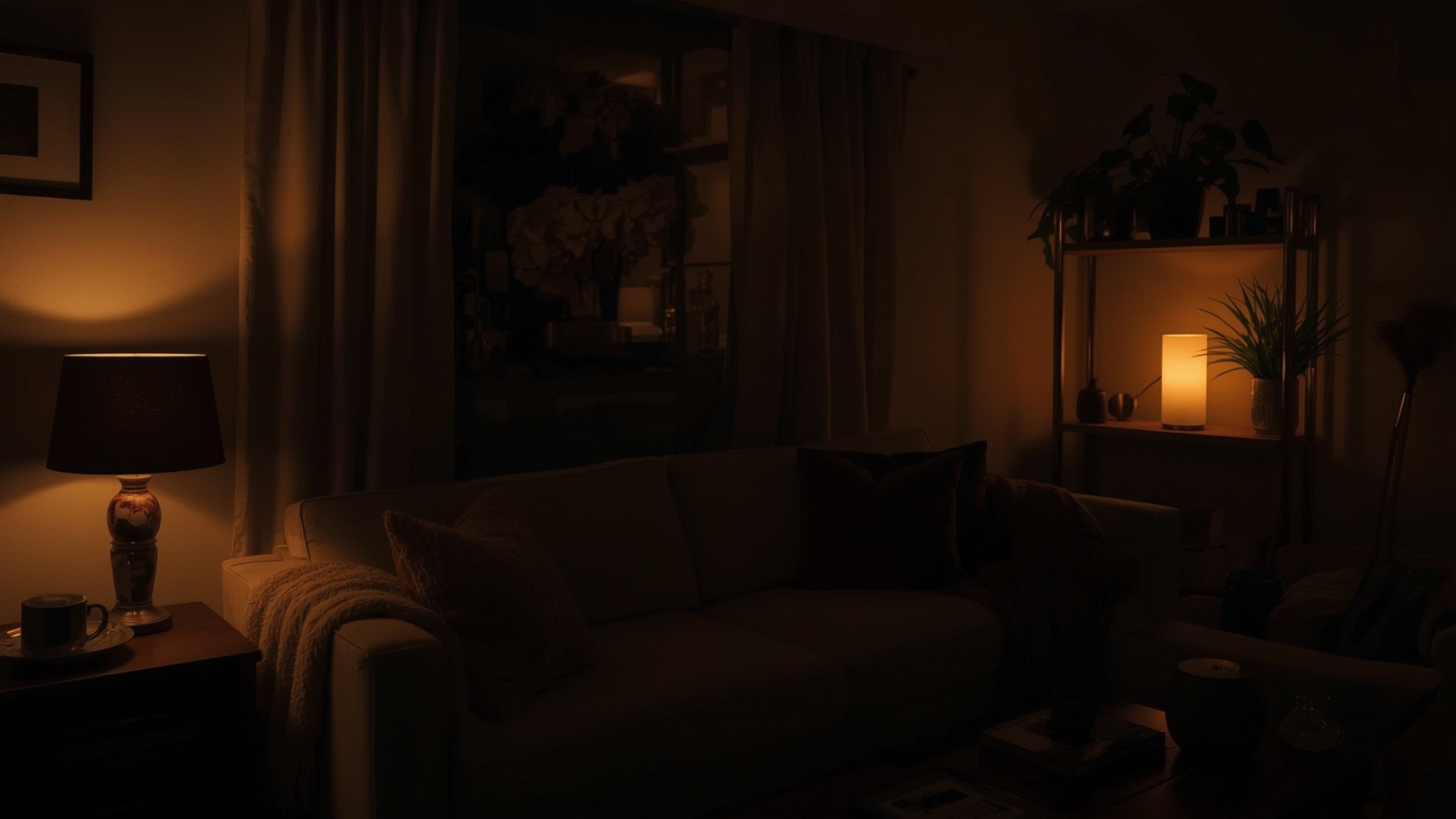
Quick Answer: Use 2700K bulbs across all sources, dim everything to 30–60% brightness in the evening, layer at least three light sources at different heights, and add soft accent lights like LED strips or candle-style bulbs. Warm, low, layered light creates a cozy room regardless of the decor.
Cozy doesn’t come from the furniture. It comes from the light. A room with expensive furniture under harsh overhead light feels cold. The same room with three warm, dimmed lamps feels like home.
Cozy Lighting Formula for Budget Rooms
- Brightness level: Dim to 30–60% in the evening. Bright light signals the brain to stay alert. Dim light signals wind-down.
- Color temperature: 2700K for all primary sources. No daylight or cool white bulbs in evening spaces.
- Number of sources: At least three. One creates harshness. Two creates a choice. Three or more creates atmosphere.
- Light direction: Mix upward (torchiere), horizontal (table lamps), and downward (accent or reading lamps). Variety in direction = depth.
Frequently Asked Questions About Budget Room Lighting
Can you light a room well without any ceiling fixtures?
Yes. Floor lamps, table lamps, and LED strip lights can fully light a room without any ceiling fixture at all. Use a tall torchiere lamp as your main ambient source and supplement with table lamps and accent strips. Many renters use this approach entirely.
What is the cheapest way to add a dimmer to a lamp?
A plug-in dimmer module is the simplest option. It costs $8–$15 and plugs between the wall outlet and the lamp cord. You can also use a smart bulb, which gives you app-based brightness control without buying a dimmer at all.
Do smart bulbs work with regular lamps?
Yes. Smart bulbs use a standard E26 (medium base) socket, which fits most table lamps and floor lamps sold in the US. Just screw them in like any other bulb and connect them to your Wi-Fi through the brand’s app. No special lamp required.
How many lumens do you need to light a living room?
A general rule is 20 lumens per square foot for ambient light. A 200-square-foot living room needs around 4,000 lumens total. With layered lighting, this is usually spread across two to four sources rather than one central fixture.
Is it expensive to run LED lamps all day?
No. A typical 10-watt LED bulb costs about $0.35–$0.50 per month to run for 8 hours daily. Running three lamps costs roughly $1.00–$1.50 per month total. LEDs use about 75% less energy than incandescent bulbs for the same light output.
What is a tunable white bulb and do you need one?
A tunable white bulb lets you shift the color temperature from warm (2700K) to cool (6500K) using an app or voice assistant. They’re useful in spaces that serve multiple purposes, like a home office that doubles as a relaxation room. They typically cost $10–$18 and are worth it for rooms that need to switch moods.
