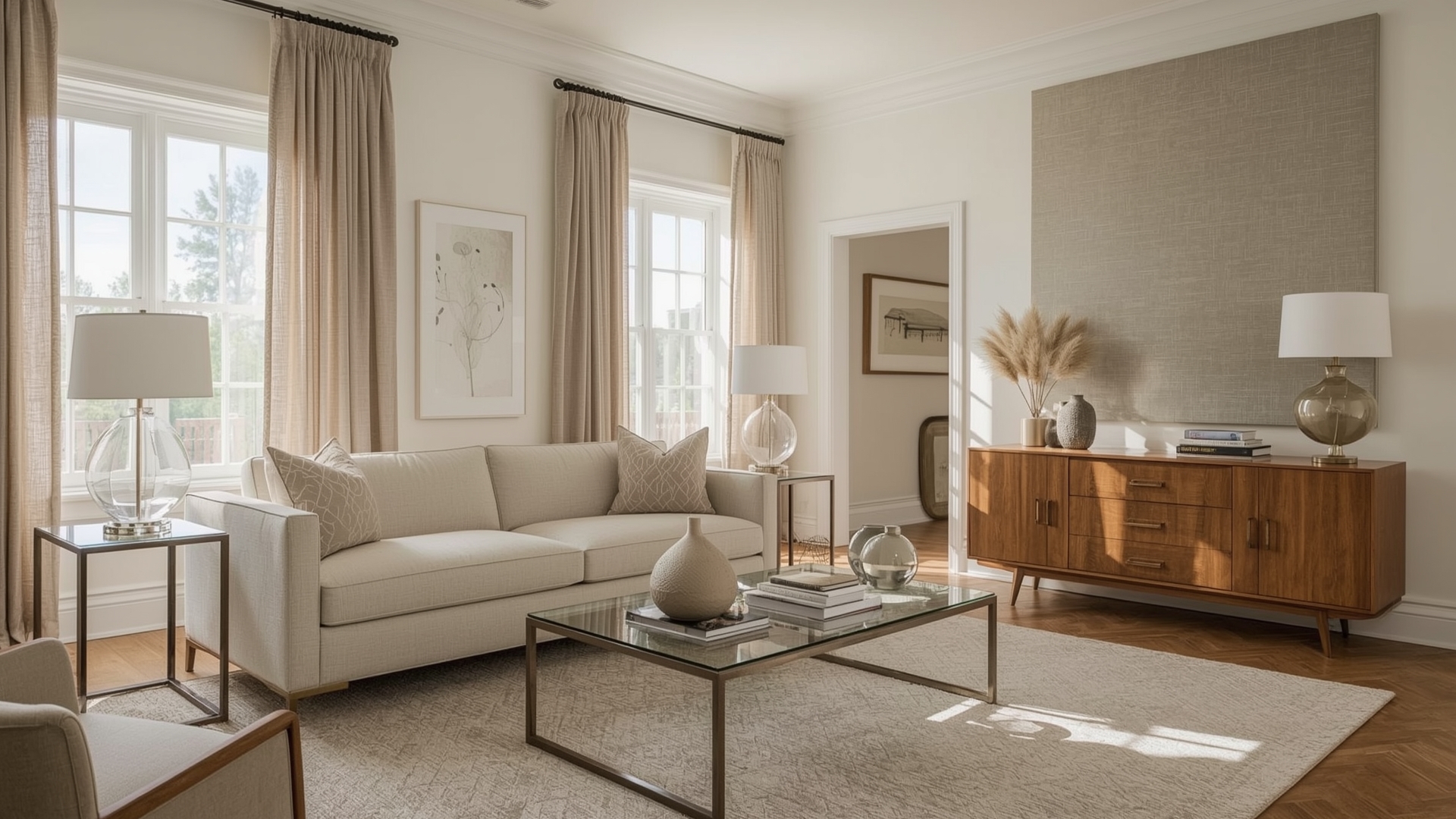
Transitional design sits right in the middle of two worlds. It takes the warmth and comfort of traditional style and pairs it with the clean lines and simplicity of modern design. The result is a home that feels timeless, put-together, and livable — without looking like a furniture showroom or a period piece.
If you’ve ever scrolled through home photos and thought “I like that, but not too much of it,” you’re already thinking like a transitional designer. This guide explains exactly what the style is, how to build it on a budget, and which pieces, colors, and materials bring it to life.
Key Takeaways
- Transitional design blends traditional and modern elements in equal measure — neither style dominates.
- Neutral color palettes (warm whites, greiges, soft taupes) are the backbone of the transitional look.
- Furniture silhouettes are key: clean frames with soft curves, not ornate carving or stark angles.
- Mixing wood tones is allowed — but limit yourself to two or three per room.
- Texture does the heavy lifting where pattern and color stay restrained.
- You don’t need a big budget — strategic anchor pieces and layered accessories get you there.
What Is Transitional Interior Design Style?

Quick Answer: Transitional interior design is a style that blends traditional and contemporary elements. It uses neutral colors, simple furniture silhouettes with soft curves, and natural materials to create a space that feels both comfortable and current — without leaning too far in either direction.
Traditional design is known for ornate details: carved wood legs, rolled arms, rich jewel tones, and formal layouts. Contemporary design goes the opposite direction: flat surfaces, bold angles, minimal decoration, and a cooler color palette.
Transitional design borrows from both without committing to either. A transitional sofa might have clean, straight legs (modern) but a cushioned back with soft curves (traditional). A room might use a classic area rug pattern but pair it with a streamlined coffee table with no extra ornamentation.
This style became popular because it ages well. Rooms don’t feel dated after five years because they were never tied to a single trend. They’re also practical — transitional spaces tend to be comfortable and family-friendly, not precious or untouchable.
How Is Transitional Style Different from Contemporary or Traditional Design?
Quick Answer: Traditional design uses ornate details and rich colors. Contemporary design is minimal and bold. Transitional design lands between the two — it keeps comfort and warmth from traditional, adds clean lines from contemporary, and avoids the extremes of both.
Side-by-Side Style Comparison
| Attribute | Traditional | Transitional | Contemporary |
|---|---|---|---|
| Color Palette | Rich jewel tones, deep burgundy, navy | Warm neutrals, greige, soft white | Black, white, bold accent colors |
| Furniture Lines | Curved, ornate, carved details | Clean with subtle curves | Straight, geometric, angular |
| Fabric Patterns | Damask, toile, floral | Solid, subtle texture, simple geometric | Solid, abstract, bold graphic |
| Wood Finishes | Dark walnut, mahogany, cherry | Medium-tone oak, warm walnut | Bleached oak, lacquered, metal |
| Decorative Detail | High — crown molding, tassels, fringe | Low to moderate — clean hardware | Minimal — no decorative extras |
| Overall Feel | Formal, layered, classic | Relaxed, polished, livable | Sleek, cool, spare |
What Color Palette Works Best for Transitional Interiors?
Quick Answer: Transitional rooms use warm neutrals as a base: think greige (gray-beige), soft white, warm taupe, and cream. Accents come in deeper tones like navy, sage green, or charcoal. The palette feels calm and cohesive, not stark or bold.
The neutral base is what holds a transitional room together. When you’re mixing furniture from different eras or styles, a consistent wall and floor color stops the room from looking chaotic.
Transitional Color Palette by Room Zone
| Room Zone | Recommended Base Color | Accent Color Options | Tone Temperature |
|---|---|---|---|
| Walls | Warm white, soft greige (e.g., Benjamin Moore Revere Pewter) | N/A — walls stay neutral | Warm |
| Sofa / Main Seating | Cream, warm gray, oatmeal | Dusty navy, sage, charcoal | Neutral to cool |
| Accent Chairs | Deeper neutral (taupe, camel) | Velvet navy, olive, warm terracotta | Warm |
| Area Rug | Ivory, gray, warm sand | Subtle pattern in 2-3 of the room’s colors | Warm to neutral |
| Throw Pillows / Accessories | Match or repeat wall or sofa tone | Introduce texture, not new color | Any |
The goal is a palette with 3 to 4 colors maximum in any one room. One base neutral, one supporting neutral, one deeper accent, and one warm highlight (like a brass lamp or natural wood bowl).
What Furniture Pieces Define the Transitional Style?
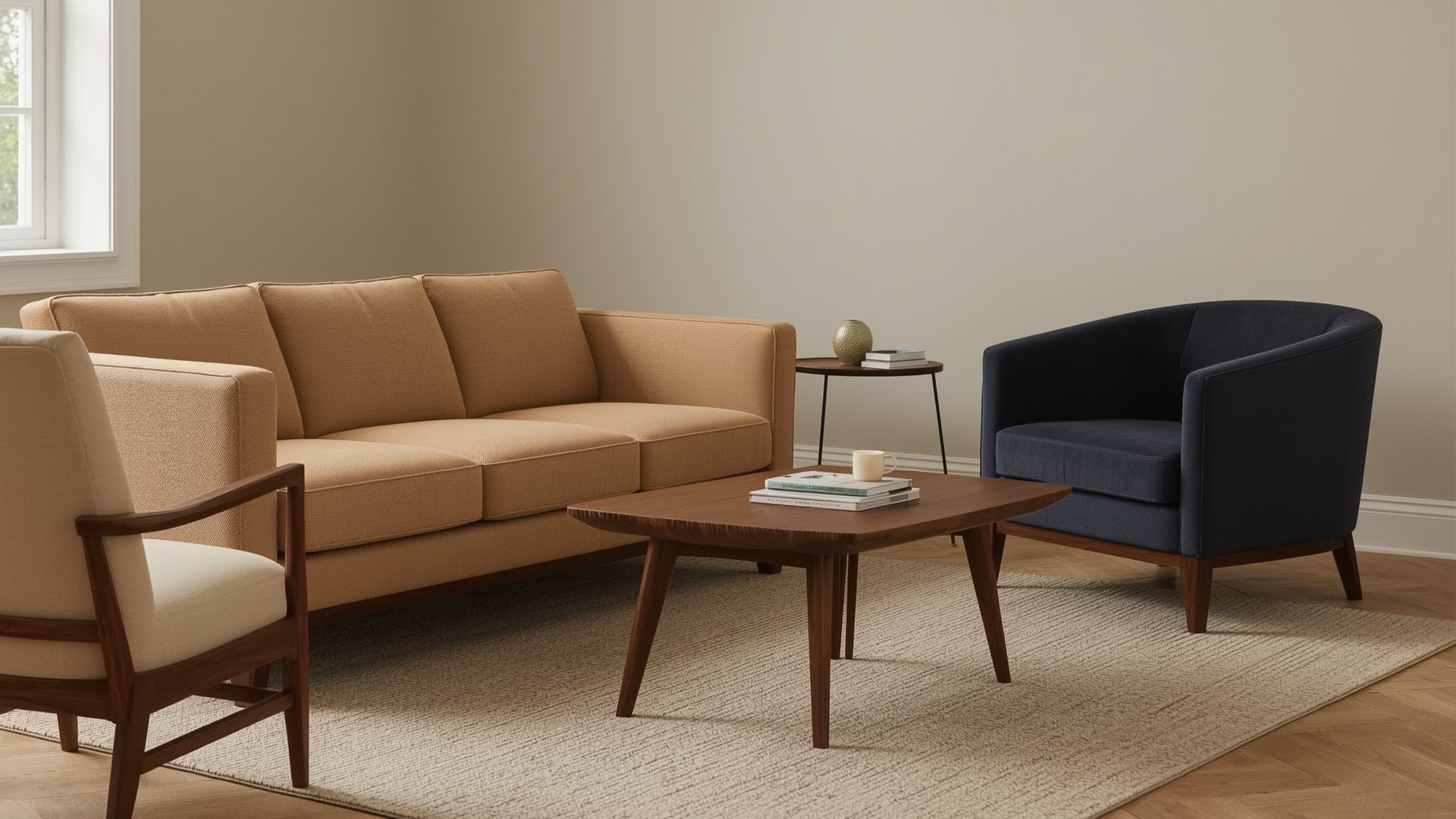
Quick Answer: Transitional furniture has clean frames without heavy ornamentation, soft curves without being overly rounded, and neutral upholstery. Think rolled arm sofas with tapered legs, upholstered headboards, parsons chairs, and simple case goods in medium-tone wood finishes.
Core Transitional Furniture Pieces and Their Attributes
| Furniture Piece | Transitional Feature | Avoid | Typical Price Range |
|---|---|---|---|
| Sofa | Track arm or low rolled arm, tapered legs, neutral fabric | Camelback, tufted back with nailhead, low platform with no legs | $600–$2,500 |
| Coffee Table | Rectangular, clean edges, wood or stone top | Heavy carved legs, ultra-minimal floating glass | $150–$800 |
| Dining Chairs | Parsons style, upholstered seat, simple back | Ornate carved backs, full metal industrial chairs | $80–$350 per chair |
| Accent Chair | Barrel chair, loose cushion, solid fabric | Victorian wingback with fringe, molded plastic shell | $200–$900 |
| Bed Frame | Upholstered headboard, panel or platform style | Ornate canopy with finials, bare metal industrial frame | $300–$1,500 |
| Media Console / Sideboard | Flat-front drawers, simple hardware, medium wood | Heavy china cabinet with glass doors, floating lacquered shelves | $250–$1,200 |
What Makes a Sofa “Transitional”?
A transitional sofa sits in the sweet spot of shape and detail. The arms are low and slightly curved but not dramatically rolled like a traditional Chesterfield. The legs are visible and tapered — usually 4 to 6 inches tall — in a medium wood finish or brushed metal.
Fabric matters just as much as shape. Neutral performance fabrics in linen-look weaves, textured chenille, or smooth velvet all work well. Avoid bold prints, heavy florals, or stark white.
How Do You Mix Furniture Styles in a Transitional Room?
Quick Answer: Mix furniture by keeping one consistent element across all pieces — usually material, scale, or color. Pair a traditional-shaped sofa with a contemporary coffee table, or a classic wood dining table with simple upholstered chairs. The key is balance, not uniformity.
The 60-30-10 Rule for Mixing Styles
A practical formula for mixing styles without visual chaos:
- 60% dominant style: Most pieces lean one direction — usually the more comfortable, traditional-leaning pieces.
- 30% contrasting style: A few pieces from the opposite end — cleaner, more modern items that sharpen the room.
- 10% wild card: One or two statement pieces that add personality without taking over.
Mixing Rules That Work
- Vary height, not era: A short modern coffee table next to a taller traditional-style sofa creates visual interest without clashing.
- Match weight visually: A heavy, cushioned sofa pairs better with a substantial wood coffee table than with a thin wire side table.
- Limit wood tones to two or three: More than three different wood finishes in one room reads as unplanned, not eclectic.
- Let metal finishes repeat: If your lamp base is brass, echo it in a cabinet handle or vase. Repetition creates cohesion.
- Keep scale consistent: A large sectional next to tiny accent chairs looks awkward. Scale your pieces relative to each other first.
What Textures and Materials Define the Transitional Look?
Quick Answer: Transitional design layers natural materials — linen, cotton, wool, leather, natural wood, and stone. These textures add visual depth without adding pattern or color. A wool rug, linen curtains, and a leather accent chair create richness through touch and tone, not decoration.
Transitional Material Pairings That Work
| Material | Best Use | Pairs Well With | Avoid Pairing With |
|---|---|---|---|
| Warm-tone wood (oak, walnut) | Tables, floors, frames | Cream upholstery, linen, stone | Bright white lacquer, ultra-glossy surfaces |
| Linen or linen-blend | Sofas, curtains, pillows | Natural wood, leather, wool | Heavy brocade, synthetic glossy fabric |
| Leather (tan, caramel, cognac) | Accent chairs, ottomans | Soft neutrals, warm wood, metal accents | Black patent leather, jewel-toned velvets |
| Brushed brass or matte gold | Lamps, hardware, mirrors | Greige walls, cream upholstery, dark wood | Shiny chrome, matte black everywhere |
| Natural stone (marble, travertine) | Coffee table top, countertops, accessories | Warm wood, neutral fabric, soft lighting | Bold color, all-metal rooms |
How Do You Decorate a Transitional Living Room from Scratch?
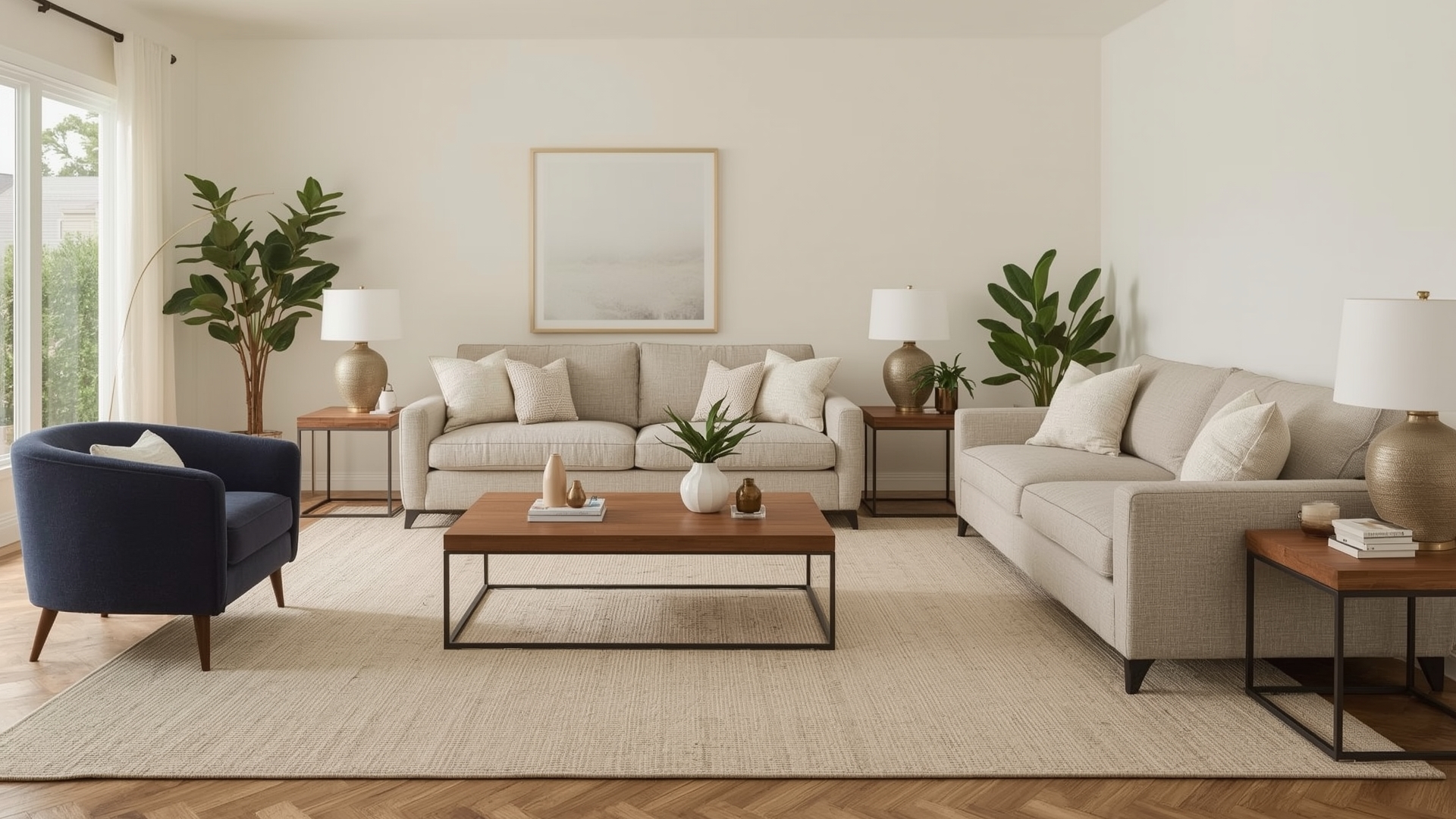
Quick Answer: Start with a neutral sofa in a simple silhouette, add a medium-tone wood coffee table, layer a wool or jute rug in a subtle pattern, then add texture through pillows, curtains, and one or two accent chairs. Keep all decor in a 3 to 4 color palette and let materials do the decorating.
Step-by-Step Transitional Living Room Build
- Anchor the room with a neutral sofa. This is your biggest investment. Choose greige, cream, or warm gray in a fabric that can handle daily use. A linen-look performance fabric or textured chenille works well.
- Lay the rug before you place furniture. Choose a rug large enough that all main furniture legs sit on or near it. A subtle geometric or organic pattern in 2 to 3 neutral tones ties the room together.
- Add a coffee table with visual weight. A solid wood top or stone top on tapered legs keeps it transitional. Avoid glass-only tables (too contemporary) or heavily carved wood (too traditional).
- Bring in one accent chair for contrast. This is where you can introduce a deeper color or a slightly more traditional shape — like a barrel chair in dusty navy velvet.
- Layer lighting at multiple heights. A floor lamp in a brushed brass finish, a table lamp on each end table, and overhead ambient light create depth without relying on decorative clutter.
- Finish with pillows and throws in varying texture. Stick to your established palette. Introduce texture: a knit throw, a nubby pillow, a smooth velvet cushion.
What Lighting Works in a Transitional Interior?
Quick Answer: Transitional lighting uses simple shapes in warm metal finishes like brushed brass, aged bronze, or matte gold. Drum shades, cone pendants, and clean-lined chandeliers all work. Avoid ornate crystal chandeliers (too formal) and bare industrial Edison bulbs (too casual).
Lighting in a transitional room serves both function and atmosphere. The rule is the same as with furniture: clean shapes, warm tones, no extreme ornamentation.
Bulb color temperature matters too. Use bulbs in the 2700K to 3000K range (warm white). This color range flatters neutral palettes and makes the room feel cozy rather than clinical.
Transitional Lighting by Fixture Type
- Pendant lights: Drum shade or empire shade in linen or metal. Hung 30 to 36 inches above a dining table surface.
- Table lamps: Ceramic or turned-wood base in neutral tones, white or cream shade, 24 to 30 inches tall.
- Floor lamps: Arc or tripod style in brushed brass or matte black with a linen shade.
- Overhead fixtures: Simple semi-flush mount in aged bronze or brushed nickel for general lighting.
How Can You Achieve the Transitional Look on a Budget?
Quick Answer: Focus your budget on one or two anchor pieces — usually the sofa and the rug. Buy everything else secondhand or from budget-friendly retailers. Transitional style’s neutral palette and simple silhouettes make it easy to mix price points without it showing.
Budget Allocation for a Transitional Living Room
| Item | Priority Level | Budget Range | Where to Save |
|---|---|---|---|
| Sofa | High — buy the best you can afford | $600–$1,500 | Direct-to-consumer brands, seasonal sales |
| Area Rug | High — sets the room’s tone | $150–$500 | Online retailers, end-of-season clearance |
| Coffee Table | Medium | $100–$400 | Estate sales, Facebook Marketplace, thrift stores |
| Accent Chair | Medium | $150–$400 | Secondhand with reupholstery, budget retailers |
| Curtains | Low to medium | $40–$150 per panel | IKEA linen panels, budget linen-look fabric |
| Lighting | Medium | $50–$200 per fixture | Thrift stores, discount home decor retailers |
| Throw Pillows and Accessories | Low — easiest to DIY or swap | $20–$100 total | TJ Maxx, HomeGoods, DIY covers |
The transitional look works well at different price points because it doesn’t rely on specific brand pieces or rare materials. A $300 secondhand sofa reupholstered in a neutral performance fabric will look just as intentional as a $1,500 new one.
Where to Shop for Budget Transitional Furniture
- Facebook Marketplace and Craigslist: The best source for solid wood tables and case goods at 70 to 80% below retail.
- Estate sales: Excellent for transitional-friendly pieces — wood furniture, accent chairs, lighting, and accessories that already have the right aesthetic.
- IKEA: Clean, simple silhouettes pair well with more traditional secondhand finds. The IKEA Ektorp sofa cover range, for example, comes in linen-look neutrals ideal for this style.
- Direct-to-consumer furniture brands: Often offer transitional-style sofas and case goods at 20 to 40% below traditional retail by cutting out showroom overhead.
- HomeGoods and TJ Maxx: Pillows, throws, lamps, and accessories at significantly reduced prices — often exactly what the transitional look needs.
What Common Mistakes Ruin a Transitional Room?
Quick Answer: The most common mistakes are going too matchy-matchy (buying a full matching furniture set), adding too much pattern, using too many accent colors, or overcrowding the room with accessories. Transitional design needs breathing room — restraint is what makes it work.
Transitional Design Mistakes to Avoid
- Buying a complete matching furniture set: Sets look staged, not styled. Mix pieces from different sources in similar tones and scales.
- Too many competing patterns: In a transitional room, one patterned piece per zone is enough. Let solid textures carry the rest.
- Ignoring scale: Furniture that’s too small for the room makes the space feel tentative. When in doubt, size up.
- All-neutral with no warmth: Pure gray-on-gray rooms feel cold. You need warm undertones — wood, brass, cream — to make a neutral palette feel inviting.
- Mixing too many metal finishes: Two metal finishes per room is the guideline. Three maximum. More than that reads as unplanned.
- Skipping the rug: A room without a rug often looks incomplete. The rug anchors the seating area and grounds the entire composition.
How Do You Apply Transitional Design to a Bedroom?
Quick Answer: Build a transitional bedroom around an upholstered headboard in a neutral fabric, layer bedding in white and warm cream tones, add nightstands in a medium wood finish, and keep decor minimal. Simple curtains, a textured area rug, and a ceramic table lamp complete the look.
Transitional Bedroom Checklist
- Upholstered headboard in greige, cream, or warm gray linen or velvet
- Bedding in layered whites, creams, and one soft accent (like dusty blue or sage)
- Nightstands in medium oak, walnut, or a painted finish in a warm neutral
- Area rug in wool or cotton with a subtle pattern, extending 18 to 24 inches beyond the bed on each side
- Curtains in linen or a linen-look fabric, floor-length, in white or cream
- Table lamps with ceramic or wood bases, in the 24 to 28-inch height range
- Minimal wall art — one large framed piece or a simple grouping in matching frames
Frequently Asked Questions
Is transitional design the same as “contemporary classic”?
They’re very similar and often used interchangeably. “Contemporary classic” sometimes leans slightly more toward traditional detailing. Transitional design is generally understood as a more equal split between the two styles — neither dominates.
Can I use bold colors in a transitional room?
You can use one bold accent color as a supporting tone, not the dominant one. Deep navy, forest green, or warm terracotta work well as accent chair or pillow colors. Keep walls and large upholstered pieces in neutrals.
What wood finish is most common in transitional interiors?
Medium-tone finishes are most common — warm oak, honey walnut, and white oak. These sit between the dark mahogany of traditional design and the bleached or lacquered wood of contemporary spaces. They’re also the most versatile with neutral palettes.
How do I know if a piece of furniture is transitional?
Ask two questions: Does it have obvious ornate detailing like carved wood, fringe, or tufted buttons? And is it completely bare and angular with zero warmth? If the answer to both is no, it’s likely transitional-friendly. The middle ground is what you’re looking for.
Can transitional design work in a small apartment?
It works especially well in smaller spaces. The neutral palette keeps rooms from feeling boxed in, and the clean-lined furniture doesn’t create visual clutter. Focus on two or three well-chosen pieces rather than filling every corner.
How do I add personality to a transitional room without breaking the style?
Personality comes through materials, objects, and art — not through loud furniture. A sculptural ceramic vase, a stack of coffee table books, or a piece of abstract art in your palette all add character. Keep the furniture restrained and let your accessories tell the story.
