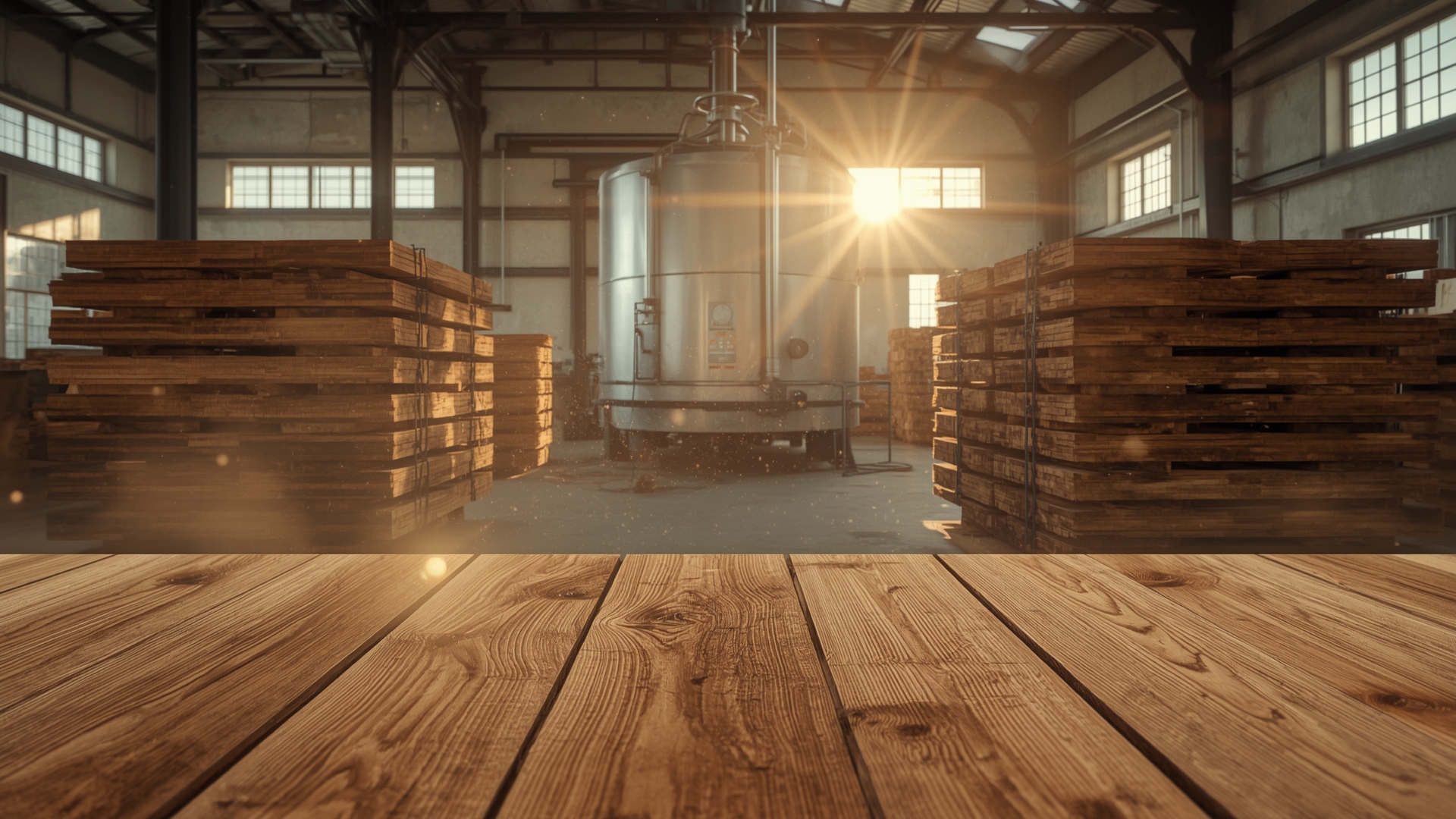
Kiln-dried hardwood furniture is built from wood that has been heated in a controlled oven called a kiln. The heat removes most of the moisture locked inside the wood fibers. Less moisture means the wood is less likely to warp, crack, or split after you bring it home.
Not all solid wood furniture goes through this process. Some pieces are made from air-dried or even “green” (freshly cut) lumber. Those pieces can move and shift dramatically as they adjust to the humidity inside your home. Kiln-dried wood has already been stabilized, so it behaves more predictably over time.
If you’ve ever bought a wooden table or chair that started showing gaps in the joints after a year, there’s a good chance the wood wasn’t properly dried before it was built.
Key Takeaways
- Kiln drying removes 6–8% moisture content from hardwood, bringing it down to the stable range that indoor furniture needs.
- The process uses heat between 120°F and 180°F over several days to weeks depending on wood species and thickness.
- Kiln-dried wood resists warping, cracking, and joint failure far better than air-dried or green lumber used in lower-quality furniture.
- You can identify kiln-dried hardwood by asking for moisture content data, checking for a tight grain pattern, and looking for quality joinery with no gaps.
- Common hardwoods used in furniture include oak, maple, walnut, cherry, and ash — each with distinct density, grain, and cost profiles.
- Kiln drying also kills insects and mold spores, which adds a hygiene benefit that air-dried lumber cannot guarantee.
What Does Kiln-Dried Mean in Furniture Construction?

Quick Answer: Kiln-dried means the wood was heated in a controlled oven to reduce its moisture content to 6–8%. This stabilizes the wood before it becomes furniture, preventing the warping, cracking, and shrinking that happens when wet wood dries out inside your home.
Wood is full of water when it’s first cut from a tree. That water is stored in two places: inside the cells themselves (called free water) and within the cell walls (called bound water). Bound water is the kind that causes problems. As it evaporates after a tree is cut, the wood shrinks unevenly. That uneven shrinkage is what causes warping and cracking.
A kiln is essentially a large, humidity-controlled oven. Furniture manufacturers load cut lumber into the kiln and run a carefully programmed drying schedule. Temperature, airflow, and steam levels are all controlled to dry the wood evenly from the inside out.
The goal is to reach a moisture content of 6–8% for indoor furniture. At that level, the wood matches the typical humidity inside most homes and stops moving significantly.
How Does the Kiln Drying Process Work Step by Step?
- Lumber is cut and stacked with spacers (called stickers) between each board to allow airflow on all sides.
- The kiln is loaded and sealed. Temperature starts low, around 110°F, to begin the drying process gently without shocking the wood.
- Heat is gradually increased to between 120°F and 180°F depending on the wood species and target moisture level.
- Steam is sometimes added in early stages to prevent the outer surface from drying too fast while the core is still wet. This prevents surface cracking.
- The cycle runs for several days to several weeks. Thicker lumber and denser species like hickory take longer than thinner or less dense wood like pine.
- Moisture content is tested throughout using a moisture meter. The cycle ends when the wood reaches the target moisture level.
- The lumber is allowed to cool and equalize before it’s moved to the shop floor for milling and furniture construction.
Why Does Moisture Content Matter for Furniture Longevity?
Quick Answer: Wood naturally expands and contracts as humidity changes. If furniture is built from wood with too much moisture, it will shrink as it dries inside your home. That shrinkage causes cracked panels, loose joints, and warped surfaces. Proper moisture content prevents all three.
Wood is a hygroscopic material. That means it absorbs and releases moisture from the air around it. Even after a tree is cut and milled, the wood keeps responding to humidity changes. This is completely normal and unavoidable. The goal is to minimize how much it moves.
Wood that starts at 6–8% moisture content has very little room to shrink further inside a climate-controlled home. Wood that starts at 15–20% moisture content has a long way to go, and it will move a lot before it stabilizes.
That movement is why cheap furniture falls apart. The joints were cut tight when the wood was wet. As the wood dried inside your home, it pulled away from those joints. Glue bonds failed. Mortises became loose. Panels cracked through their centers.
What Happens to Furniture Built from Improperly Dried Wood?
- Joint failure: Tenons shrink away from mortises. Dowel joints loosen. Glue bonds crack.
- Panel cracking: Wide panels split down the grain as internal stress builds up during drying.
- Warping: Boards bow, cup, or twist unevenly as moisture leaves faster from one face than the other.
- Surface checking: Small cracks appear on the wood’s surface, especially at ends and corners.
- Drawer problems: Drawers that fit perfectly in the shop become sticky or sloppy as the wood moves.
What Are the Most Common Kiln-Dried Hardwoods Used in Furniture?

Quick Answer: Oak, maple, walnut, cherry, and ash are the most common kiln-dried hardwoods in quality furniture. Each species has a different hardness rating, grain pattern, and price point. Oak and maple offer the best durability per dollar. Walnut and cherry cost more but have richer color.
| Wood Species | Janka Hardness (lbf) | Typical Moisture Content After Drying | Common Furniture Use | Relative Cost | Grain Pattern |
|---|---|---|---|---|---|
| Red Oak | 1,290 | 6–8% | Tables, chairs, cabinets | $ (Low) | Open, pronounced |
| Hard Maple | 1,450 | 6–8% | Dining tables, desks, legs | $$ (Moderate) | Tight, fine |
| Black Walnut | 1,010 | 6–8% | High-end tables, case goods | $$$$ (High) | Rich, wavy |
| Cherry | 950 | 6–8% | Bedroom furniture, dining sets | $$$ (High-moderate) | Fine, even |
| White Ash | 1,320 | 6–8% | Chairs, frames, bentwood | $$ (Moderate) | Coarse, straight |
| Hickory | 1,820 | 6–8% | Rustic furniture, heavy-use pieces | $$ (Moderate) | Bold, irregular |
Janka hardness measures how resistant a wood is to denting and wear. It’s the force (in pounds) needed to push a steel ball halfway into the wood’s surface. Higher numbers mean a harder, more dent-resistant surface.
Oak and ash are popular for dining furniture because they’re hard enough to handle daily use without being as expensive as walnut. Maple is a favorite for work surfaces and desks because its tight grain resists scratching. Walnut is chosen for its appearance as much as its performance.
Is Hardwood Always Better Than Softwood for Furniture?
Hardwood and softwood refer to the tree type, not the actual hardness of the wood. Hardwoods come from deciduous trees (trees that lose their leaves). Softwoods come from conifers like pine and fir.
Most hardwoods are denser and more durable than most softwoods, but there are exceptions. Pine, a softwood, is widely used in furniture and dents more easily than oak. For structural frames and high-use surfaces, hardwood is the better choice. For decorative elements or shelving, softwood can work well when properly dried.
How Is Kiln-Dried Wood Different from Air-Dried Wood?
Quick Answer: Air-dried wood is stacked outdoors and dried by natural airflow over one to three years. Kiln-dried wood reaches the same moisture level in days to weeks. Kiln drying is faster, more consistent, and kills insects and mold spores that air-drying leaves behind.
| Attribute | Kiln-Dried Wood | Air-Dried Wood |
|---|---|---|
| Drying Time | 3 days to 4 weeks | 1 to 3 years |
| Final Moisture Content | 6–8% | 12–19% (climate-dependent) |
| Moisture Consistency | High — controlled throughout | Variable — depends on weather |
| Insect and Mold Kill | Yes — heat eliminates both | No — spores and eggs can survive |
| Dimensional Stability | High | Moderate to low |
| Cost to Produce | Higher (energy cost) | Lower (time cost) |
| Color Effect on Wood | Can slightly darken some species | More natural color preservation |
Air-dried wood isn’t automatically inferior. Some woodworkers prefer it for certain species because slow drying can preserve color better and create less internal stress in the wood. The problem is that air-dried lumber rarely reaches the 6–8% moisture content needed for indoor furniture. It usually stabilizes around 12–15%, which is still too wet for climate-controlled homes.
For furniture that lives indoors year-round, kiln-dried wood provides the consistency that air-dried wood simply cannot match at scale.
How Do You Identify Kiln-Dried Hardwood When Shopping for Furniture?
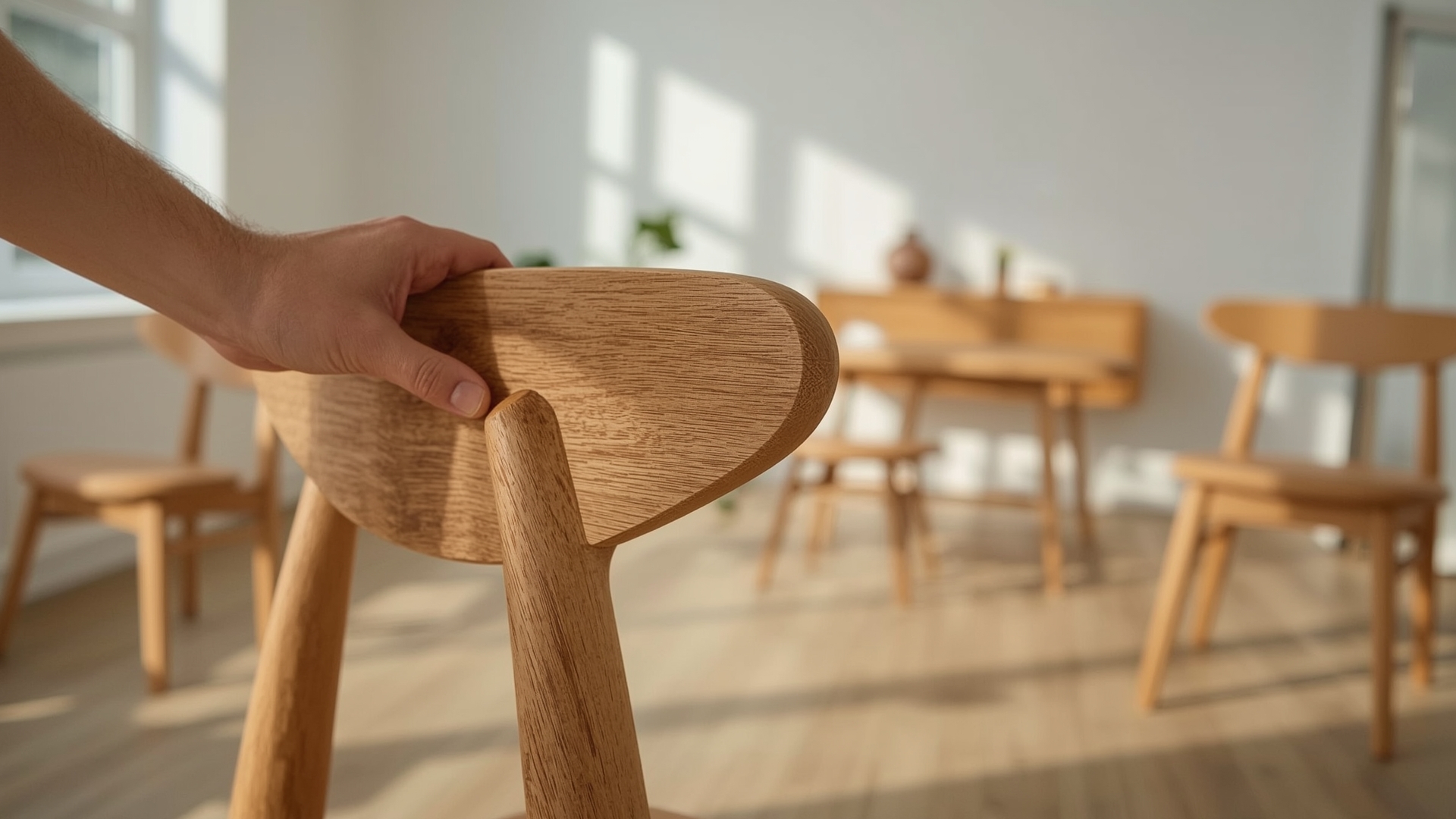
Quick Answer: Ask the retailer or manufacturer for the wood’s moisture content data. Look for tight, consistent joinery with no visible gaps. Check for smooth surfaces with no small cracks near the ends or corners. Reputable manufacturers list “kiln-dried hardwood” directly in their product specifications.
What Questions Should You Ask a Furniture Retailer About Wood Drying?
Most floor staff won’t know the answer off the top of their head. That’s okay. The right question to ask is: “Can you confirm the moisture content of the hardwood in this piece?” Any quality manufacturer will have that data available. If the retailer can’t get you that information, that tells you something about the quality controls involved.
Other useful questions include:
- “Is this solid hardwood, or is it a hardwood veneer over engineered wood?”
- “What species of hardwood is this?”
- “Where is this furniture manufactured?”
- “What type of joinery is used on the frame?”
Quality manufacturers use terms like “kiln-dried hardwood frame” in their product descriptions. If you see that phrase, it’s a positive signal. If the listing just says “wood frame” or “solid wood” without specifying species or drying method, treat it with caution.
What Physical Signs Indicate Well-Dried Hardwood Furniture?
- Tight joints with no visible gaps: Pull on corners and joints gently. There should be no flex or movement at the connection points.
- Smooth end grain: Look at the ends of table legs or exposed edges. Well-dried wood has smooth, consistent end grain. Checking (small cracks radiating from the center) suggests moisture issues.
- Consistent color across the surface: Blotchy or uneven coloring can suggest uneven drying or moisture variation in the board.
- Flat, true surfaces: Place a straight edge along a table top. Properly dried hardwood surfaces are flat and don’t show cupping or bowing.
- Dense, satisfying weight: Kiln-dried hardwood is denser than softwood or engineered alternatives. A dining chair made from solid kiln-dried oak will feel noticeably heavier than one made from pine or MDF.
How Can a Moisture Meter Confirm Kiln-Dried Wood?
A pin-type moisture meter is a small handheld tool that measures water content inside wood by pushing two small pins into the surface and reading electrical resistance. Dry wood resists electricity more than wet wood. The meter converts that reading into a moisture percentage.
You won’t typically carry one into a furniture store, but you can use one when evaluating raw lumber from a sawmill or when buying secondhand furniture you want to refinish or repurpose. A reading of 6–8% confirms kiln-dried status. A reading above 12% means the wood is still too wet for indoor use without further drying.
Does Kiln-Dried Hardwood Furniture Cost More?
Quick Answer: Yes, kiln-dried hardwood furniture costs more upfront than furniture made from softwood, engineered wood, or improperly dried lumber. The price gap ranges from 20% to over 100% depending on species and construction quality. The long-term value is better because well-built pieces last decades.
| Furniture Type | Material | Typical Price Range | Expected Lifespan |
|---|---|---|---|
| Dining Chair | Kiln-dried oak or maple | $150–$600 per chair | 20–50+ years |
| Dining Chair | Pine or MDF frame | $50–$150 per chair | 5–10 years |
| Dining Table | Kiln-dried walnut or oak | $800–$4,000+ | 25–100+ years |
| Dining Table | Veneer over particleboard | $200–$700 | 5–12 years |
| Bed Frame | Kiln-dried hardwood | $500–$3,000+ | 20–50+ years |
| Bed Frame | Engineered wood or softwood | $150–$500 | 5–15 years |
The math often works in favor of the more expensive piece. A $400 dining chair built from kiln-dried oak that lasts 40 years costs you $10 per year. A $100 pine chair that lasts 8 years costs $12.50 per year and gets replaced four times over that same period. You also avoid the hassle of shopping for new furniture repeatedly.
How Should You Care for Kiln-Dried Hardwood Furniture?
Quick Answer: Keep kiln-dried hardwood furniture away from direct heat sources, use a humidifier in dry winters to maintain 35–55% relative humidity, clean with a damp cloth and mild soap, and apply a wood conditioner or furniture wax once or twice per year to protect the finish.
What Indoor Conditions Protect Hardwood Furniture Best?
Even well-dried hardwood will move if the environment swings to extremes. The ideal indoor humidity range for hardwood furniture is 35–55% relative humidity. Most climate-controlled homes fall in this range naturally, but there are two seasons that create problems.
In winter, forced-air heating systems dry out indoor air dramatically. Relative humidity can drop below 20% in cold climates without a humidifier. Wood responds by shrinking and can develop small cracks in panels or at joint lines. A whole-home humidifier or even a portable room humidifier near your furniture prevents most of this.
In summer, high humidity causes wood to expand. This is usually less damaging than winter drying, but it can cause drawers to stick and doors to swell. Air conditioning helps keep summer humidity in check.
What Cleaning and Maintenance Routine Works Best for Hardwood?
- Daily: Wipe with a dry or very lightly damp microfiber cloth. Never use soaking wet cloths — standing water damages wood finishes and can penetrate to the wood underneath.
- Weekly: Dust with a soft cloth or brush. Clean up spills immediately with a dry cloth to prevent water rings.
- Monthly: Use a cleaner designed for the specific finish on your furniture (oil-based, lacquer, wax, or polyurethane finishes each need different products).
- Annually: Apply a paste wax or furniture conditioner to oil-finished pieces. Polyurethane-finished furniture needs less frequent treatment but should be inspected for worn areas that expose bare wood.
- Placement: Keep furniture at least 12 inches from heating vents, fireplaces, and radiators. Direct heat accelerates moisture loss and causes checking and cracking even in well-dried wood.
Is All Solid Wood Furniture Automatically Kiln-Dried?
Quick Answer: No. “Solid wood” only means the piece is made from real lumber, not engineered materials. It says nothing about how the wood was dried. Budget solid wood furniture is sometimes built from air-dried or partially dried lumber, which leads to warping and joint failure over time.
The terms “solid wood,” “real wood,” and “natural wood” are marketing descriptions, not quality certifications. They tell you the material is genuine lumber rather than MDF or particleboard. They don’t confirm drying method, moisture content, species quality, or construction standards.
The phrase to look for is “kiln-dried hardwood” — specifically. If you see both words, the manufacturer is making a claim about the drying process and the wood category. That’s a meaningful specification, not just a marketing label.
Some manufacturers go further and list the target moisture content (usually 6–8%) or the specific hardwood species used. Those details suggest a manufacturer who cares about structural quality, not just visual appearance.
What Role Does Joinery Play in Kiln-Dried Hardwood Furniture Quality?
Quick Answer: Kiln-dried wood is only as good as the joints holding the piece together. Mortise-and-tenon and dovetail joints are the strongest traditional methods. Dowel and biscuit joints are acceptable in secondary areas. Staples and brackets alone indicate low-quality construction regardless of the wood used.
| Joinery Type | Strength Level | Best Used For | Quality Indicator |
|---|---|---|---|
| Mortise and Tenon | Very High | Chair legs, table aprons, frame rails | Premium construction |
| Dovetail | Very High | Drawer boxes, case corners | Premium construction |
| Dowel | Moderate to High | Chair backs, secondary joints | Good construction |
| Biscuit (Plate) | Moderate | Panel alignment, shelf joints | Acceptable for low-stress areas |
| Pocket Screw | Low to Moderate | Backs, light-duty joints | Budget construction |
| Staple Only | Very Low | No structural role | Low-quality indicator |
Kiln-dried hardwood and strong joinery work together. The wood’s stability means joints stay tight over decades. But if the joinery itself is weak — relying on staples, brackets, or glue alone — the structural advantage of kiln-dried wood is largely wasted. Look for both.
Frequently Asked Questions About Kiln-Dried Hardwood Furniture
Can kiln-dried hardwood furniture still warp after purchase?
It can, but it’s much less likely than with air-dried or green wood. If you place kiln-dried furniture directly next to a heating vent or in a room with very low humidity, the wood can dry out further and develop small cracks or slight warping. Keeping indoor humidity between 35–55% prevents most post-purchase movement.
What is the difference between kiln-dried hardwood and engineered wood?
Kiln-dried hardwood is solid natural lumber that has been heat-dried to a stable moisture level. Engineered wood is manufactured from wood fibers, particles, or veneers bonded together with adhesives — products like MDF, plywood, and particleboard. Engineered wood is more dimensionally stable but cannot be refinished or repaired the same way solid hardwood can.
Does kiln-dried wood furniture need to acclimate when it arrives?
A short acclimation period of 24–72 hours is helpful, especially in very dry or very humid climates. Place the furniture in the room where it will live and let it adjust to your home’s temperature and humidity before you start using it heavily or moving it around. This is a minor precaution, not a major requirement with well-dried wood.
Is reclaimed wood the same as kiln-dried wood?
Not automatically. Reclaimed wood is lumber salvaged from old buildings, barns, or industrial structures. Some reclaimed wood is kiln-dried after salvaging to remove pests and reach stable moisture levels. Other reclaimed pieces are sold without additional drying. Always ask whether reclaimed wood has been kiln-dried before buying furniture made from it.
How do I know if a sofa frame uses kiln-dried hardwood?
Check the product description for the phrase “kiln-dried hardwood frame.” Quality sofa manufacturers like Mitchell Gold, Restoration Hardware, and similar brands list this specification. If the listing says “wood frame” or “solid wood frame” without specifying the species and drying method, the frame may use lower-grade lumber. You can also ask the retailer directly for frame material specifications.
Does the finish on hardwood furniture affect how it responds to humidity?
Yes. A good finish — lacquer, polyurethane, oil, or wax — slows the rate at which wood absorbs and releases moisture. It doesn’t stop the process entirely, but it acts as a buffer that reduces extreme movement. Unfinished wood responds more dramatically to humidity changes, so finishing all surfaces (including the underside of table tops) provides better protection.
