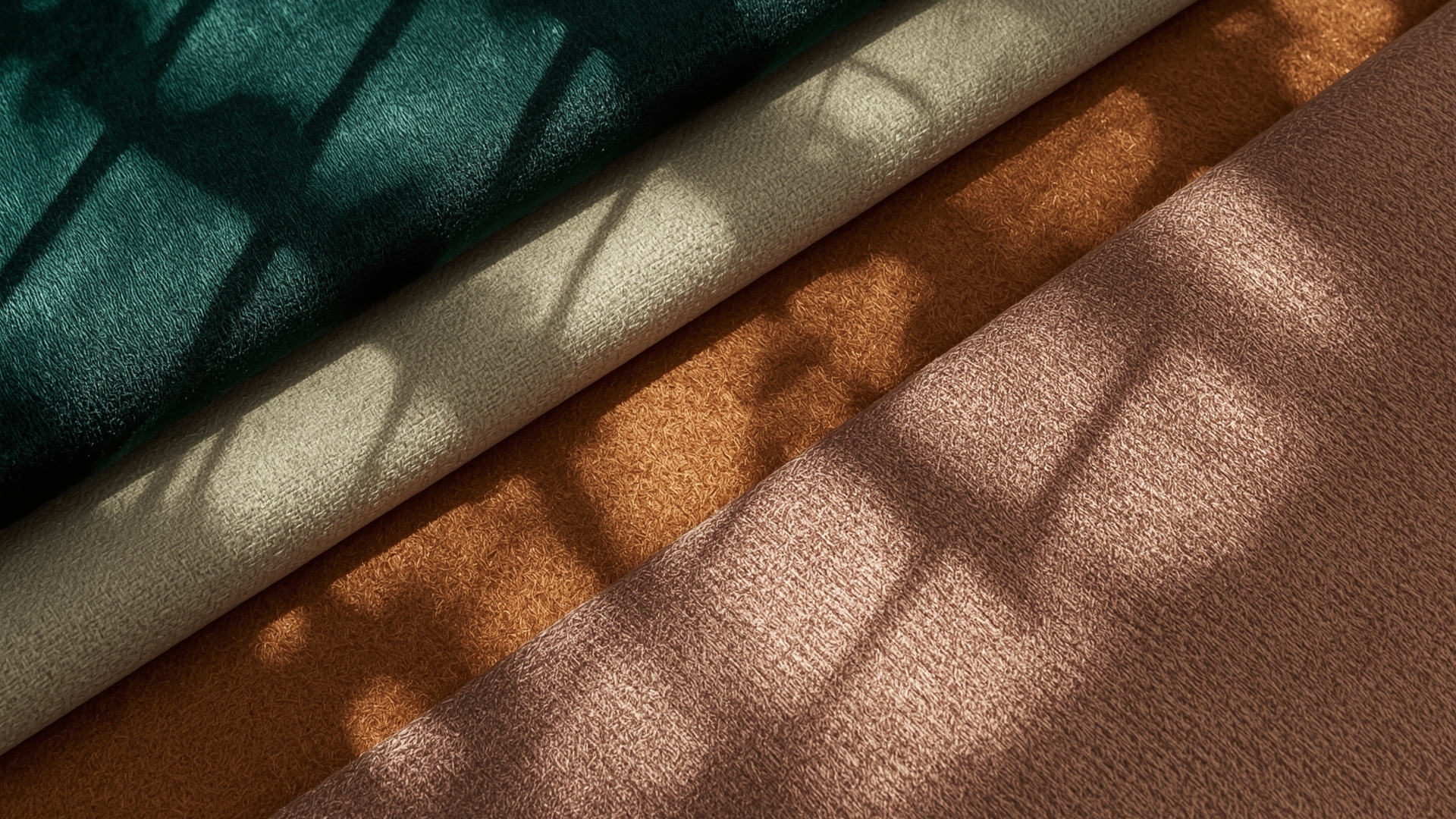
The fabric you choose for a sofa or chair affects how it looks, how long it lasts, and how much work it takes to keep clean. Most people pick a color they like and move on. That’s how you end up with a beautiful velvet sofa that’s destroyed within two years of real family life.
This guide covers everything you need to make a confident decision: fabric types, durability ratings, stain resistance, and how to test swatches before you buy. By the end, you’ll know exactly what to look for and what to avoid.
Key Takeaways
- Rub count is your durability benchmark. Look for at least 15,000 double rubs for everyday use, and 30,000+ for high-traffic furniture.
- Performance fabrics outperform natural fibers in durability and stain resistance but can feel less luxurious than linen or velvet.
- Always test swatches in your actual room before ordering. Fabric color looks different under natural versus artificial light.
- Leather is not one material. Full-grain, top-grain, and bonded leather have very different lifespans and care requirements.
- Stain resistance ratings like Crypton and Teflon-treated finishes offer real protection, not just marketing claims.
- Fiber content determines cleanability. Look at the cleaning code on the tag — W, S, WS, or X — before buying.
What Is Upholstery Fabric and Why Does It Matter So Much?
Quick Answer: Upholstery fabric is the textile covering on sofas, chairs, and ottomans. It determines durability, comfort, cleanability, and appearance. The wrong fabric choice is the single most common reason furniture looks worn within just a few years.
The frame and cushion foam inside a sofa matter a lot. But the fabric is what you see, touch, and interact with every single day. It takes the most abuse of any part of the piece.
Fabric wears down from friction, fading from sunlight, and staining from spills. A piece with excellent construction can look terrible within five years if it’s covered in the wrong material for how you actually live.
The good news: once you understand a few key metrics, choosing the right fabric becomes straightforward.
What Are the Main Types of Upholstery Fabric?
Quick Answer: The main upholstery fabric types are performance fabric, linen, velvet, leather, microfiber, and cotton blends. Each has a different durability level, feel, and best use case. No single fabric type is best for everyone — your household determines the right choice.
Performance Fabric
Performance fabric is engineered specifically for furniture use. It’s woven from synthetic fibers — usually polyester or olefin — that are treated to resist stains, moisture, and fading. Brands like Crypton, Sunbrella, and Revolution Fabrics are well-known examples.
Performance fabrics typically have rub counts above 50,000 double rubs. They clean with soap and water, and many are bleach-safe. If you have kids, pets, or heavy daily use, performance fabric is almost always the practical choice.
The tradeoff is texture. Performance fabrics have improved dramatically, but they still tend to feel slightly less luxurious than natural fibers like linen or velvet.
Linen
Linen is a natural fiber made from the flax plant. It has a casual, textured look that suits relaxed, layered interiors well. Pure linen is breathable and gets softer over time with use.
The problem: linen wrinkles easily, absorbs stains quickly, and is prone to pilling if it has a low thread count. Pure linen upholstery also tends to fade in direct sunlight faster than synthetic blends.
A linen-cotton or linen-polyester blend solves many of these problems. Blended versions hold their shape better and resist staining more effectively while keeping the natural look.
Velvet
Velvet has a soft, pile surface created by weaving two layers of fabric and then cutting them apart. It reflects light differently depending on the direction of the pile, which gives it a rich, dimensional appearance.
Not all velvet is the same. Cotton velvet crushes and marks easily. Polyester velvet is more durable and stain-resistant. Mohair velvet is the most luxurious and the most expensive.
Velvet works well in low-traffic rooms or for pieces that don’t see daily heavy use. Velvet sofas in family rooms with pets are a recipe for frustration unless you choose a performance velvet specifically.
Leather
Leather is a natural material made from animal hide. It’s durable, easy to wipe clean, and develops a patina over time that many people find attractive. But “leather” covers a wide range of quality levels.
Full-grain leather keeps the entire outer layer of the hide, making it the strongest and most breathable type. Top-grain leather is sanded to remove imperfections, which makes it more uniform but slightly less durable. Bonded leather is made from leather scraps and adhesive — it looks like leather but peels and cracks within a few years.
Microfiber
Microfiber is a tightly woven synthetic fabric made from polyester or nylon fibers. It’s soft, affordable, and resists many common stains. Microfiber has a suede-like appearance and is often used as a budget-friendly alternative to velvet or leather.
It tends to show wear in high-contact areas over time and can pill if the fiber quality is low. Look for a rub count above 20,000 for furniture-grade microfiber.
What Is a Rub Count and How Do You Use It?
Quick Answer: A rub count measures how many times a fabric can be rubbed back and forth before it shows visible wear. It’s measured using the Wyzenbeek or Martindale test. Higher numbers mean more durability. For everyday sofas, aim for at least 15,000 double rubs.
The rub count test simulates the friction a fabric experiences from regular use. It doesn’t measure stain resistance or color fastness — only abrasion resistance. Think of it like a mileage rating on a car tire: it tells you about wear, not everything else.
Rub Count Benchmarks by Use Case
| Use Case | Minimum Rub Count | Recommended Rub Count | Example Fabric Types |
|---|---|---|---|
| Decorative / Accent Chairs (low use) | 6,000 double rubs | 10,000+ double rubs | Pure linen, velvet, silk blends |
| Bedroom Bench or Occasional Chair | 10,000 double rubs | 15,000+ double rubs | Cotton velvet, linen blends |
| Living Room Sofa (everyday adult use) | 15,000 double rubs | 25,000+ double rubs | Polyester blends, microfiber |
| Family Room / Kids and Pets | 30,000 double rubs | 50,000+ double rubs | Performance fabric, Crypton |
| Commercial / Heavy Residential | 50,000 double rubs | 100,000+ double rubs | Contract-grade performance, leather |
Two testing methods are commonly used: the Wyzenbeek test (standard in the US) and the Martindale test (standard in the UK and Europe). They don’t produce equivalent numbers, so compare only within the same testing method.
How Do Stain Resistance Ratings Actually Work?
Quick Answer: Stain resistance ratings measure how well a fabric repels or releases liquid stains. Crypton, Teflon, and Nanotex are the most common treatment systems. Crypton is built into the fiber; Teflon and Nanotex are surface coatings that can wear off over time with washing.
There’s an important difference between stain-resistant fabric and stain-proof fabric. No fabric is completely stain-proof. Stain resistance means liquids bead up and can be blotted away before absorbing — it doesn’t mean stains are impossible.
Stain Resistance Technologies Compared
| Technology | How It Works | Durability | Bleach-Safe | Best For |
|---|---|---|---|---|
| Crypton | Barrier built into fiber during manufacturing | Permanent (doesn’t wash out) | Yes | Heavy use, pets, kids |
| Sunbrella | Solution-dyed acrylic fibers (colorfast) | Permanent | Yes | Outdoor and indoor use, fade-prone rooms |
| Teflon (DuPont) | Surface coating on finished fabric | Moderate (fades with washing) | No | Light-use rooms, adults only |
| Nanotex | Nano-scale coating on fiber surface | Moderate | No | Casual everyday use |
| Revolution Fabrics | Olefin fiber — inherently stain-resistant | Permanent | Yes | Kids, pets, outdoor-ready interiors |
What Do the Cleaning Codes on Fabric Tags Mean?
Quick Answer: Upholstery cleaning codes tell you what cleaning method is safe for the fabric. W means water-based cleaners only. S means solvent-based cleaners only. WS means both are safe. X means vacuum only — no liquid cleaners. Always check the tag before purchasing.
These codes are standardized by the furniture industry. They’re printed on a small tag typically underneath the cushion or on the frame beneath the seat.
Most people never read these until something spills. By then, it’s too late to realize the sofa they bought requires dry-cleaning solvents only. Check the cleaning code before you buy — it tells you a lot about how practical the fabric will be in real life.
Cleaning Code Reference
| Code | Meaning | Practical Use | Recommended For |
|---|---|---|---|
| W | Water-based cleaner only | Easy DIY cleaning | Families, high-use rooms |
| S | Solvent-based cleaner only | Requires dry-cleaning products | Low-traffic rooms, adults only |
| WS | Water or solvent cleaners both safe | Most flexible option | Any household |
| X | Vacuum only — no liquid cleaners | Professional cleaning required for stains | Decorative or accent pieces only |
How Do You Evaluate Fabric Swatches Before Buying?
Quick Answer: Order fabric swatches and test them in your room under natural and artificial light. Rub the swatch on your skin to check comfort. Press a damp cloth to it and let it dry to test absorbency. Hold it up to a window to check weave density and opacity.
A swatch is a small sample of the actual fabric. Most furniture retailers offer them for free or a small fee that gets credited toward your purchase. Always order swatches before committing to a full piece — especially online.
Seven Things to Test on Every Swatch
- Color in natural light. Hold the swatch near the window in the room where the furniture will live. Fabric color shifts dramatically under different lighting conditions. What looks warm beige in the store can look gray at home.
- Color under artificial light. Check it at night under your actual lamps. Some fabrics look completely different under incandescent versus LED versus natural light.
- Texture against skin. Rub the swatch against your inner arm. Some fabrics that look great feel scratchy or uncomfortable for daily sitting.
- Weave density. Hold the swatch up to light. A tight weave lets very little light through. A loose weave lets a lot through and will wear out faster and snag more easily.
- Pilling resistance. Rub the fabric against itself firmly for 30 seconds. If small fiber balls form immediately, the fabric will pill on your sofa within months.
- Liquid absorption test. Drop a few drops of water on the swatch. Watch whether they bead up (stain resistant) or absorb quickly (not stain resistant). Pat dry and check whether a water stain remains.
- Color match against your room. Place the swatch against your existing rug, wall color, and throw pillows. Color relationships that work in your head don’t always work in real life.
How Do Different Fabrics Compare Across Key Performance Metrics?
Quick Answer: Performance fabric leads in durability and stain resistance. Leather excels in longevity and ease of cleaning. Velvet scores highest for appearance but lowest for pet and stain resistance. Linen offers breathability but requires the most maintenance of any common upholstery fabric.
Upholstery Fabric Comparison by Key Attributes
| Fabric Type | Avg. Rub Count | Stain Resistance | Pet Friendliness | Breathability | Estimated Lifespan | Price Range (per yard) |
|---|---|---|---|---|---|---|
| Performance Fabric (Crypton/Revolution) | 50,000–100,000+ | Excellent | High | Moderate | 10–20 years | $20–$60 |
| Full-Grain Leather | N/A (not tested by rub count) | Very Good | Moderate | High | 20–50 years | $60–$200+ |
| Polyester Velvet | 25,000–50,000 | Moderate | Low to Moderate | Low | 5–10 years | $15–$45 |
| Linen Blend (linen-polyester) | 15,000–30,000 | Low to Moderate | Low | High | 5–8 years | $18–$55 |
| Microfiber (furniture-grade) | 20,000–40,000 | Good | Moderate | Low | 5–12 years | $10–$30 |
| Bonded Leather | N/A | Moderate (peels over time) | Low | Low | 2–5 years | $8–$25 |
Which Fabric Is Best for Homes With Pets?
Quick Answer: For pet households, choose performance fabric with a rub count above 30,000 or leather. Both resist claw snags better than velvet or linen. Tightly woven fabrics resist pet hair embedding. Avoid looped weaves like bouclé — claws catch and pull loops out easily.
Pets create two specific problems for upholstery: claw damage and hair. Loose weaves snag. Fabrics with visible texture or loops attract and hold hair. Light-colored fabrics show both pet hair and muddy paw prints immediately.
Crypton and Revolution Fabrics are specifically marketed to pet owners and hold up well in testing. Many are bleach-safe at low concentrations, which matters when dealing with accidents.
Leather is effective against claw damage at the surface level with full-grain and top-grain options. However, deep scratches on leather are permanent and visible. If your pet actively scratches furniture, even leather has limits.
How Does Sun Exposure Affect Upholstery Fabric?
Quick Answer: Direct sunlight causes color fading, fiber weakening, and surface cracking in most upholstery fabrics. Solution-dyed fabrics like Sunbrella resist fading best. Leather and velvet are particularly vulnerable to sun damage. Use UV-blocking window treatments to protect any upholstery in direct light.
Ultraviolet (UV) light breaks down the dyes and fibers in fabric over time. This process is called photodegradation. It happens slowly, so most people don’t notice until the damage is significant.
If your furniture sits near a south-facing window, the fabric on the sun-facing side can fade noticeably within one to two years. Rotating cushions regularly helps even out exposure. But the most effective solution is either choosing a solution-dyed fabric or blocking the UV light at the window.
Solution-dyed acrylic (like Sunbrella) has color baked into the fiber during manufacturing — not applied on top. UV light cannot bleach it out. This makes it far superior to surface-dyed fabrics in sunlit rooms.
What Should You Consider About Fabric Pattern and Scale?
Quick Answer: Large patterns require pattern matching during upholstery, which increases fabric waste and cost. Geometric patterns on sofas with curved frames often distort. Solid fabrics show wear more visibly than textured weaves or subtle patterns. Consider scale relative to the piece’s size.
A large-scale botanical print that looks beautiful on a swatch can feel overwhelming on a full sofa. Conversely, a very small-scale pattern that looks refined on a swatch can disappear entirely from across the room.
Pattern repeat is a technical term for the vertical and horizontal distance before a pattern repeats itself. A 24-inch pattern repeat means the upholsterer needs an extra 24 inches of fabric per piece to line up the pattern correctly. This adds material cost that’s easy to overlook when budgeting.
Textured weaves like bouclé, herringbone, or subtle jacquard patterns hide everyday wear better than solid colors. A solid fabric shows every cat hair and every worn area. A textured fabric absorbs visual noise.
When Should You Choose Custom Fabric Over Stock Options?
Quick Answer: Choose custom fabric when stock options don’t meet your durability requirements, color needs, or household conditions. Custom fabric lets you specify exact rub counts, fiber content, and treatments. Stock fabric is faster and cheaper but limits your ability to match specific performance or aesthetic requirements.
Most furniture retailers offer a curated selection of stock fabrics. These are pre-approved fabrics in a range of colors and textures. They’re faster to produce and usually less expensive than custom options.
Custom fabric (sometimes called COM, or Customer’s Own Material) lets you supply or specify a fabric from any source. You’re responsible for ensuring the fabric meets the manufacturer’s minimum requirements for rub count and fiber content.
If you’re reupholstering an existing piece, you have full flexibility to choose any fabric. Just confirm the rub count and cleaning code match how you plan to use the piece.
What Questions Should You Ask Before Buying Upholstered Furniture?
Quick Answer: Ask for the fabric’s rub count, fiber content, cleaning code, stain treatment type, and whether the color is solution-dyed or surface-dyed. Also ask whether the fabric is tested for pilling and whether it carries any warranty. These six data points tell you most of what you need to know.
A retailer or manufacturer who can’t answer these questions probably doesn’t know them. That’s itself useful information.
Good retailers will either have these specs on the product page or in a fabric sample book. If a fabric is listed only by a color name with no technical specs attached, treat that as a warning sign.
Also ask about the warranty terms specifically for fabric. Many furniture warranties cover frame defects but not fabric wear. Knowing this upfront sets the right expectations for how long the piece is supposed to last and what’s covered if it fails early.
Frequently Asked Questions
What is the difference between Wyzenbeek and Martindale rub count tests?
The Wyzenbeek test is the US standard. It measures double rubs using a figure-eight motion. The Martindale test is the European standard and uses a circular motion. A Martindale score of 20,000 is not the same as a Wyzenbeek score of 20,000. Only compare scores from the same test method.
Can outdoor fabric be used indoors?
Yes, and it’s often a smart choice. Outdoor fabrics like Sunbrella are solution-dyed and bleach-safe, making them extremely durable and easy to clean indoors. They’re especially useful in rooms with heavy sunlight or households with kids and pets. The texture has improved significantly and many styles look refined enough for interior use.
How do I know if leather furniture is real or bonded leather?
Check the product description for the words “genuine leather,” “top-grain,” or “full-grain” — these indicate real leather. “Bonded leather,” “reconstituted leather,” or “bi-cast leather” are lower-quality alternatives made from scraps. Bonded leather typically peels and cracks within two to five years and cannot be repaired easily.
Is velvet a practical choice for everyday furniture?
It depends on the velvet type. Polyester velvet with a rub count above 25,000 is practical for everyday adult use in moderate-traffic rooms. Cotton velvet crushes and marks more easily. For homes with kids or pets, performance velvet is the only velvet worth considering — it combines the look with durability and stain resistance.
How often should upholstery fabric be professionally cleaned?
Most upholstery benefits from professional cleaning every one to two years, depending on use. High-traffic sofas in family rooms may need it annually. Accent chairs in low-use rooms can go two to three years. Regular vacuuming between professional cleanings removes dust and debris that accelerates fiber breakdown over time.
Does fabric color affect how quickly a sofa shows wear?
Yes. Very dark fabrics show lint, pet hair, and dust clearly. Very light fabrics show stains and soiling easily. Mid-tone fabrics in warm neutrals like taupe, warm gray, or camel tend to hide everyday wear best. A textured weave in a mid-tone color is the most forgiving combination for busy households.
