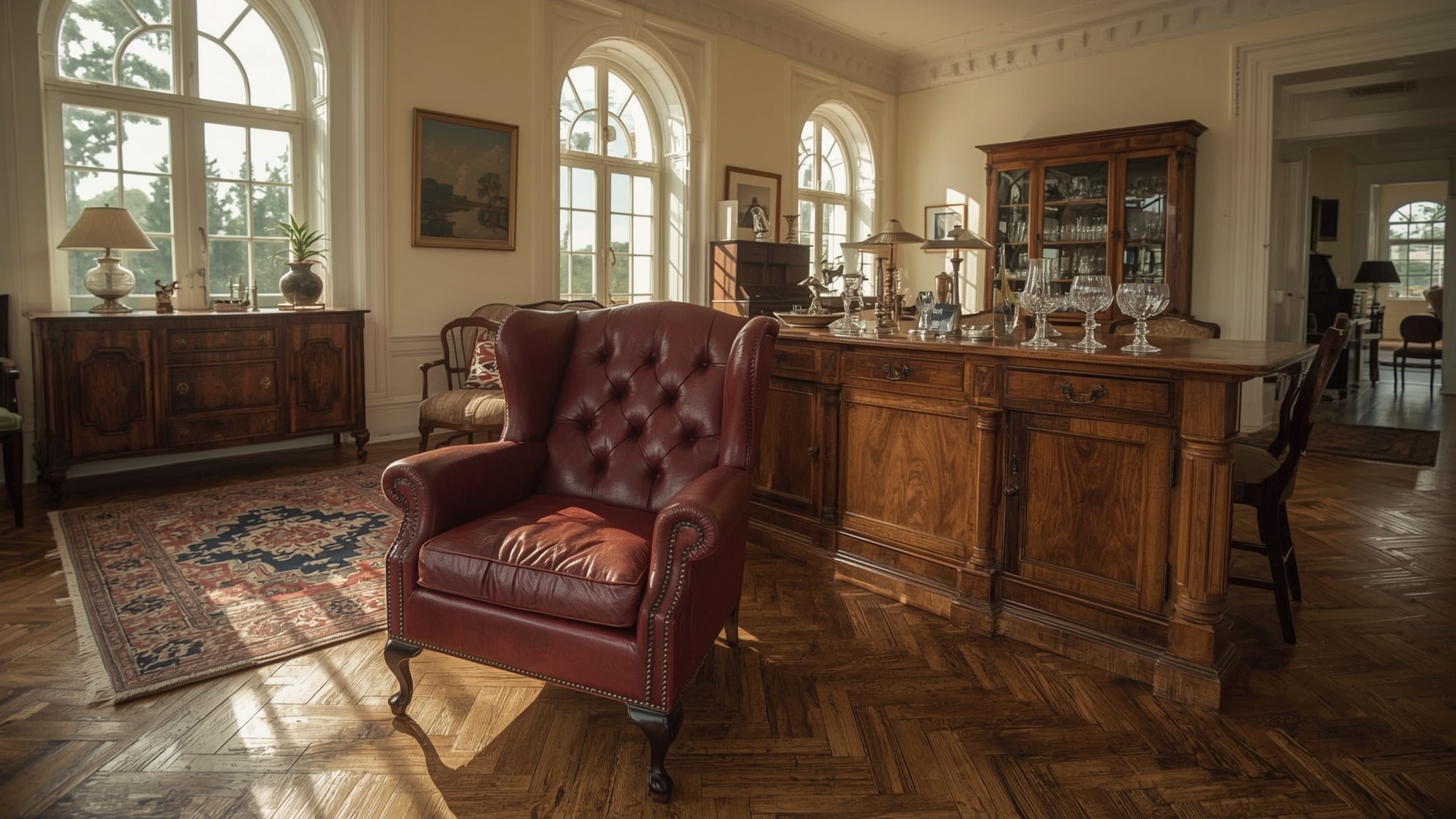
Estate sales are one of the best-kept secrets in furniture shopping. You can walk away with a solid hardwood dining table, a vintage leather armchair, or a mid-century dresser for a fraction of what it would cost new. But if you go in unprepared, you can just as easily overpay for a piece that falls apart in six months.
This guide covers everything you need: how to find estate sales near you, what to look for when you’re there, how to negotiate, and which furniture types are worth your money versus which ones to skip.
Key Takeaways
- Arrive early on day one for the best selection, and on the last day for the deepest discounts.
- Solid wood, cast iron, and quality leather are the most reliable furniture types to buy used.
- Always inspect for structural damage before negotiating — joints, drawers, and legs are the first things to check.
- Mattresses, heavily stained upholstery, and particle board furniture are generally not worth buying at estate sales.
- Negotiating is expected at estate sales — most sellers price with room to come down, especially on the last day.
- Bring a tape measure, phone charger, and flashlight to every sale you attend.
What Is an Estate Sale and How Is It Different from a Garage Sale?
Quick Answer: An estate sale is a professional liquidation of a home’s entire contents, usually after a death, divorce, or move. Unlike garage sales, estate sales are run by companies, span multiple rooms, and often include high-quality furniture priced to sell quickly.
At a garage sale, a homeowner picks through their own things and prices them emotionally. At an estate sale, a professional company comes in, catalogs everything, sets market-based prices, and runs the sale over two to four days.
That difference matters to you as a buyer. Estate sale companies want to clear the house fast. They don’t have emotional attachment to any piece. That creates real opportunities to find quality items at honest prices — and sometimes well below market value.
Estate sales also tend to feature older homes with furniture made before manufacturers started cutting corners. Pre-1980s furniture often used solid wood joinery, real wood veneers over solid cores, and high-density foam or natural materials in upholstery.
Where Can You Find Estate Sales Near You?
Quick Answer: The most reliable way to find estate sales is through EstateSales.net, EstateSales.org, and Estatesale.com. These sites list upcoming sales by zip code, show photos, and let you preview inventory days before the sale starts.
Online Listing Sites
EstateSales.net is the largest database in the U.S. You can search by city, browse photos of what’s available, and even mark items you want to track. EstateSales.org works similarly and often lists different sales, so it’s worth checking both.
Most listings go live three to seven days before a sale starts. Set up email alerts for your zip code so you get notified automatically. When photos show solid wood furniture, artwork, or full room sets, that’s usually a sale worth attending in person.
Local Facebook Groups and Nextdoor
Search Facebook for “[your city] estate sales” and you’ll often find dedicated groups where local companies post their upcoming sales. Nextdoor also surfaces local sales from neighbors and small operators who don’t always list on national sites.
Driving Neighborhoods
In some areas, especially older neighborhoods built in the 1940s through 1970s, estate sale companies post yard signs the day before a sale opens. If you’re in one of those neighborhoods regularly, keep an eye out on Thursday evenings before weekend sales.
When Should You Arrive at an Estate Sale?
Quick Answer: Arrive 30 to 60 minutes before opening on day one for the best furniture selection. Visit on the final day, usually Sunday, for discounts of 25% to 50% off remaining items. Both strategies work — they just have different goals.
Day One Strategy: Best Selection
Most serious estate sale shoppers arrive early on opening day. Some sales hand out numbered tickets for entry order if lines form before they open. For high-demand sales with good furniture photos, arriving an hour early is not unusual.
You won’t always need to be first, but for a sale that clearly shows quality bedroom sets or antique dining furniture in its photos, early arrival gives you first pick before dealers strip the best pieces.
Last Day Strategy: Best Prices
Estate sale companies want to move everything before the sale ends. On the last day, most companies apply automatic discounts of 25% to 50% storewide. Some go higher on bulky items like furniture that no one wants to haul away.
The tradeoff is obvious: less selection. But if you’re flexible about exactly what you’re looking for, last-day shopping is where you find the real deals. Show up an hour after opening when the initial rush has passed and the discounts are fully in effect.
What Furniture Types Are Worth Buying at Estate Sales?
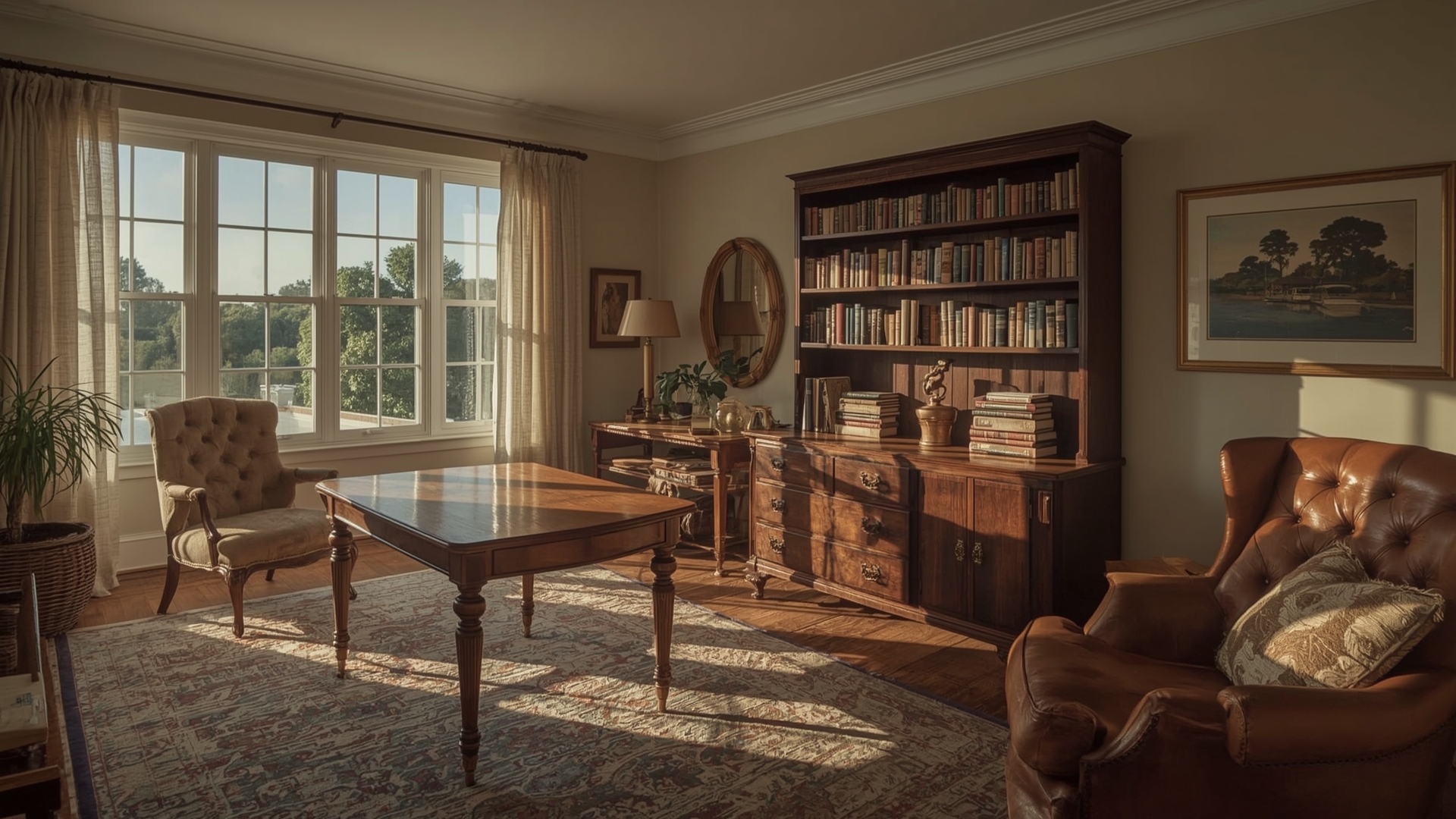
Quick Answer: Solid wood dressers, dining tables, bookcases, and hardwood bed frames are the best buys at estate sales. Cast iron pieces, solid brass hardware, and leather furniture in good condition also offer strong value. Stick to items where age improves or doesn’t hurt the material.
EAV Table: Best Furniture Types to Buy at Estate Sales
| Furniture Type | Why It’s a Good Buy | What to Inspect | Typical Discount vs. Retail |
|---|---|---|---|
| Solid Wood Dressers | Built to last; older pieces often use dovetail joinery | Drawer slides, veneer lifting, musty odor | 50–80% below retail |
| Hardwood Dining Tables | Thick solid tops age well; refinishing is straightforward | Warping, leg stability, leaf mechanism | 40–75% below retail |
| Solid Wood Bookcases | Simple construction, minimal failure points | Back panel integrity, shelf sag, water damage | 50–70% below retail |
| Leather Sofas and Chairs | Full-grain leather improves with age and patina | Cracking, peeling (sign of bonded leather), frame wobble | 40–70% below retail |
| Hardwood Bed Frames | Solid construction; easy to disassemble and transport | Rail hardware, slat count, headboard joints | 50–80% below retail |
| Cast Iron or Solid Brass Pieces | Nearly indestructible; high resale and functional value | Surface rust, structural cracks (rare) | 30–60% below retail |
Mid-Century and Antique Furniture
Mid-century modern furniture — pieces made roughly between 1945 and 1975 — tends to appear at estate sales from older homes. Brands like Broyhill Sculptra, Lane Acclaim, and Drexel Heritage made solid pieces during this era that hold up well today.
Before you buy any piece you think might be antique, do a quick image search on your phone. Look for maker’s marks on the back or underside of drawers. Knowing what you’re looking at helps you negotiate from a position of knowledge rather than guessing.
What Furniture Should You Avoid at Estate Sales?
Quick Answer: Skip mattresses, heavily stained upholstery, particle board furniture, and anything with signs of pest damage or severe water staining. These items carry hygiene risks, high refurbishment costs, or structural failure that makes them poor value regardless of price.
EAV Table: Furniture to Avoid at Estate Sales
| Furniture Type | Primary Risk | Warning Signs | Verdict |
|---|---|---|---|
| Mattresses | Bed bugs, bacteria, body impressions | Stains, odor, visible wear | Never buy used |
| Particle Board Furniture | Swells with moisture, joints fail quickly | Chipped edges, laminate peeling, lightweight feel | Skip unless near-new and very cheap |
| Heavily Stained Upholstery | Set stains rarely come out; reupholstery costs $300–$1,200 | Dark patches, odor, discoloration | Pass unless you plan to reupholster |
| Water-Damaged Wood | Warping, mold, structural weakness | White rings, buckling veneer, soft spots | Avoid unless damage is purely cosmetic |
| Wicker or Rattan in Poor Condition | Brittle fibers snap under weight; difficult to repair | Fraying, breaks in weave, wobble | Only buy in very good condition |
| Furniture with Pest Damage | Active infestation can spread to your home | Sawdust piles, exit holes, hollow sound when tapped | Never buy — risk is too high |
The Particle Board Problem
A lot of furniture from the 1990s onward uses particle board — compressed wood chips and glue covered with a laminate surface. It looks fine in photos but it doesn’t hold screws well, swells when it gets wet, and tends to chip at the edges after years of use.
The easiest test: pick up a corner of the piece. Solid wood is noticeably heavy. Particle board feels light relative to its size. If you’re unsure, look at an exposed edge — solid wood shows grain, particle board shows a compressed chip pattern.
How Do You Inspect Furniture at an Estate Sale?

Quick Answer: Check structural joints by applying gentle pressure in multiple directions. Open every drawer, check the underside for maker’s marks and damage, and look for water stains or pest evidence. Bring a flashlight — estate sale rooms are often poorly lit.
Structural Inspection Checklist
- Joints and corners: Apply light pressure to the frame. Any rocking or creaking signals loose joints or failed glue.
- Drawers: Pull each one fully out. Check for dovetail joints on the sides (a sign of quality construction). The drawer bottom should be solid, not sagging.
- Legs: Wobble the piece gently. All four legs should contact the floor evenly. Uneven legs can be shimmed, but structural leg cracks are harder to fix.
- Surfaces: Run your hand across the top. Bubbling or soft spots under veneer indicate water damage. White rings are usually superficial and can be treated.
- Odor: Put your head inside a cabinet or drawer and take a sniff. Musty odor means moisture history. Heavy cigarette smell is difficult to remove from upholstered pieces.
- Hardware: Check hinges, handles, and locks. Replacement hardware is cheap, but missing or broken pieces confirm the overall care level of the piece.
What to Bring to an Estate Sale
- Tape measure: Know your room dimensions before you go. Impulse-buying a sofa that doesn’t fit through your door is a common and expensive mistake.
- Flashlight or phone torch: Many estate sale homes have poor lighting. You need to check undersides, backs, and corners properly.
- Phone with camera: Photograph pieces you’re considering. It helps with price research and lets you compare options later.
- Cash and a card: Most estate sale companies accept both, but cash can give you negotiating leverage.
- Your vehicle plan: Know your car’s cargo space or have a truck/van rental booked. Most sales do not offer delivery.
How Do You Negotiate at an Estate Sale?

Quick Answer: Negotiating at estate sales is normal and expected. Start by asking “Is there any flexibility on the price?” for individual pieces. Bundling multiple items into one purchase is the strongest negotiating strategy. Last-day discounts of 25–50% are usually automatic — ask if they’re not posted.
Negotiation Tactics That Work
The most effective approach is to make it easy for the seller to say yes. Don’t start with an aggressive lowball offer. Instead, ask about flexibility politely. The estate sale staff sets prices but often has authority to discount by 10% to 20% on the spot.
Bundling is your most powerful tool. If you’re interested in a dresser, a nightstand, and a lamp, offer a single price for all three. The company wants to reduce the number of transactions and items to manage. A bundle deal benefits both parties.
EAV Table: Estate Sale Negotiation Variables
| Variable | Effect on Negotiability | Typical Outcome |
|---|---|---|
| Day of Sale (Day 1) | Low — full price expected | 0–10% discount, maybe |
| Day of Sale (Final Day) | High — automatic discounts common | 25–50% off marked price |
| Bundling Multiple Items | Very high — reduces seller workload | 10–30% off bundle total |
| Large/Heavy Furniture | High — difficult to remove after sale ends | 15–35% discount possible |
| Cash Payment | Moderate — saves company card processing fees | 5–10% additional discount |
| Visible Damage on Item | High — use as negotiating evidence | 15–40% off depending on damage severity |
What Not to Do When Negotiating
Don’t claim a piece is worth less than the seller knows it’s worth. Estate sale companies often research prices before tagging items. Trying to undercut their knowledge makes you look uninformed and closes the conversation.
Don’t make offers you won’t honor. If the seller accepts your price, you’re expected to buy. Walking away after an accepted offer is bad form and may get you turned away at future sales run by the same company.
How Do You Know If a Price Is Fair at an Estate Sale?
Quick Answer: Check eBay’s sold listings for the same or similar item before making an offer. Search the piece’s maker’s mark or style name. A fair estate sale price is typically 30–60% of the current resale value for that item in comparable condition.
Quick Price Research Methods
eBay’s “sold” filter is the fastest tool available. Type in the piece’s approximate description — “Lane Acclaim dresser” or “Danish teak dining table” — and filter by sold listings. This shows you what buyers actually paid, not just what sellers are asking.
Facebook Marketplace and Craigslist show local demand, which matters if you’d ever want to resell. An item with fifty listings in your city at low prices tells you supply is high and you shouldn’t overpay.
For pieces you think might be antique, apps like Google Lens can identify furniture styles from a photo. This takes thirty seconds and can tell you whether you’re looking at a reproduction or the real thing.
What Happens to Furniture You Buy — Transport and Logistics
Quick Answer: Most estate sales require same-day or next-day pickup for large furniture. Bring moving blankets, tie-down straps, and help. Measure doorways at the sale location before buying — getting a piece out of the house is often harder than getting it into yours.
Pickup and Transport Tips
When you pay for a large piece, confirm the pickup window with staff immediately. Most estate sale companies give you until the end of the sale day or the following morning. Missing that window can mean losing the piece or paying a storage fee.
Measure the piece, then measure every doorway and hallway between the piece and the exit. Old homes often have narrow interior doorways — 28 to 30 inches wide — that can stop a wide dresser cold. Do this before you pay, not after.
If you’re renting a truck or van, book it the same day you find the sale. Weekend truck rentals at U-Haul and similar companies fill up fast on estate sale weekends, especially in spring and fall when sales are most common.
Cleaning and Refurbishing After Purchase
Solid wood furniture from estate sales usually needs cleaning and sometimes minor repairs. A good furniture cleaner and a coat of paste wax restores most older wood pieces to excellent condition. This is a one-hour job for most dressers or tables.
Upholstered pieces may need a professional cleaning before use. Steam cleaning removes most odors and surface stains from fabric that’s otherwise structurally sound. If the frame is solid but the fabric is worn, reupholstering a dining chair costs $50 to $150 per chair — often still cheaper than buying new.
How Do You Identify Quality Furniture Construction at an Estate Sale?
Quick Answer: Look for dovetail drawer joints, corner blocks inside cabinet frames, solid wood construction (check the underside and back edges), and mortise-and-tenon joinery on table legs. These are signs of furniture built to last decades, not years.
EAV Table: Quality Construction Indicators in Used Furniture
| Construction Feature | What It Looks Like | Why It Matters | Quality Signal |
|---|---|---|---|
| Dovetail Drawer Joints | Interlocking wedge-shaped cuts at drawer corners | Stronger than staples or dowels; resists pulling apart | High |
| Corner Blocks | Triangular wood blocks glued and screwed into frame corners | Prevents frame racking and wobble over time | High |
| Solid Wood Back Panels | Thick wood panels, not cardboard or thin hardboard | Supports structure; resists moisture | High |
| Mortise-and-Tenon Leg Joints | Leg inserts into a fitted cavity in the frame | Far stronger than dowel or bolt-on legs | High |
| Wooden Drawer Slides | Wood-on-wood contact, no metal hardware | More durable than cheap metal slides; ages well | Medium–High |
| Dust Panels Between Drawers | Thin wood panels separating each drawer cavity | Prevents debris transfer; indicates quality build | Medium–High |
Are Estate Sales Good for Specific Furniture Styles?
Quick Answer: Estate sales are especially strong for mid-century modern, traditional, and Colonial Revival furniture styles. These were built for longevity with solid materials. Contemporary minimalist or flat-pack styles rarely appear at estate sales and aren’t worth pursuing when they do.
Styles That Hold Up Over Decades
Traditional furniture — the dark wood cabinets, ornate dressers, and claw-foot dining tables common in 1950s through 1980s homes — was built when solid wood was the standard, not the premium. These pieces are often undervalued at estate sales because they’re not currently trendy.
Mid-century modern pieces have been in high demand for years and are often priced accordingly at estate sales. That said, even at elevated estate sale prices, authentic pieces from makers like Bassett, Thomasville, and Lane often cost less than buying from a vintage dealer or antique store.
What Rarely Appears (and Isn’t Worth It When It Does)
IKEA and similar flat-pack furniture occasionally appears at estate sales, usually in younger households. These pieces don’t hold up to disassembly and reassembly well. The cam-lock joints and dowel connections weaken each time they’re moved. Skip them unless the price is near-nothing and the piece has never been moved.
Frequently Asked Questions
Can you return furniture bought at an estate sale?
Almost never. Estate sales are all-sales-final transactions. The estate sale company is liquidating a home’s contents, not operating a retail store. Inspect everything carefully before you pay, because there’s no recourse after purchase.
Do estate sale companies accept offers before the sale starts?
Some do, through a process called pre-sale offers. You contact the estate sale company directly before opening day and submit a written offer on a specific piece. Not all companies accept this practice, but it’s worth asking — especially for high-value furniture you don’t want to lose to early-day competition.
How do you remove musty odors from estate sale furniture?
For wood pieces, wipe down all surfaces with a diluted white vinegar solution, then leave drawers open in a well-ventilated space for several days. For upholstered pieces, baking soda applied to fabric surfaces and left for 24 hours absorbs a significant amount of odor. Professional steam cleaning handles most stubborn cases.
Is it worth hiring a professional appraiser before buying at an estate sale?
For everyday furniture purchases, no — it’s too slow and costly. For pieces priced above $500 that you believe might be genuinely antique, a quick consultation with a certified appraiser from the American Society of Appraisers can be worthwhile. More practically, eBay sold listings and Google Lens cover most on-the-spot research needs.
What’s the difference between an estate sale and an estate auction?
At an estate sale, items have fixed prices and you can negotiate. At an estate auction, bidding determines the final price and competition can push costs above retail for desirable pieces. Estate sales generally offer more predictable pricing and better opportunities for negotiation than auctions.
Can you get furniture delivery arranged through the estate sale company?
Rarely, but sometimes. A few estate sale companies partner with local moving services and can connect you with a delivery crew for an additional fee. Ask at checkout. Otherwise, junk removal companies and local moving apps like TaskRabbit can arrange same-day furniture transport, typically for $75 to $200 depending on distance and piece size.
