
When you’re choosing upholstery fabric, the color you see in the store might not be the color you live with for years. How a fabric gets its color determines how long that color lasts, how well it handles sunlight, and how it responds to spills and cleaning. Two dyeing methods dominate the upholstery world: solution dyeing and surface dyeing. They look similar on a sample card but behave very differently once they’re on your furniture.
This guide breaks down exactly how each method works, what the real-world performance differences look like, and which one belongs on your sofa, outdoor sectional, or dining chairs.
Key Takeaways
- Solution dyeing embeds color into the fiber itself, while surface dyeing coats only the outside of the fiber.
- Solution-dyed fabrics resist fading far better because UV light cannot strip color from the fiber’s core.
- Surface-dyed fabrics offer richer initial color depth and more design flexibility at a lower price point.
- For outdoor or high-sunlight applications, solution-dyed acrylic (like Sunbrella) is the industry standard choice.
- For low-light indoor settings with moderate use, surface-dyed fabrics perform well and cost significantly less.
- Cleaning method matters more with surface-dyed fabric because harsh cleaners strip the surface coating along with the dye.
What Is Solution Dyeing and How Does It Work?

Quick Answer: Solution dyeing adds pigment to liquid polymer before fibers are formed. Color becomes part of the fiber’s molecular structure. The result is a fabric where color runs all the way through, not just on the surface, making it highly resistant to fading and bleaching.
Think of solution dyeing like mixing food coloring into bread dough before baking. The color is distributed throughout the entire loaf, not painted on top. Once the bread is baked, you can’t scrape the color off. That’s exactly what happens with solution-dyed fiber.
During manufacturing, pigment is blended directly into the molten or dissolved polymer before it gets extruded through tiny holes to form individual fibers. Every strand of fiber contains color from the inside out. The dyeing happens before the fabric even exists.
What Fibers Are Commonly Solution Dyed?
Solution dyeing works best with synthetic fibers. You’ll most often see it applied to acrylic, olefin (polypropylene), nylon, and polyester. Acrylic is the most common for upholstery because it mimics the soft feel of natural fibers while delivering outdoor-grade durability.
Natural fibers like cotton, wool, and linen cannot be solution dyed because they don’t go through a liquid polymer stage during production. Solution dyeing is a synthetic-fiber process.
What Is Surface Dyeing and How Does It Work?
Quick Answer: Surface dyeing applies color to finished fibers or fabric through immersion, printing, or padding. Color sits on or just below the outer layer of the fiber. It offers vivid initial color and design flexibility but fades faster when exposed to UV light, heat, or aggressive cleaning.
Surface dyeing is the traditional method used for most fabric production. After the fiber is formed or the fabric is woven, it gets submerged in a dye bath, printed with color, or run through a pad-and-steam process. The dye molecules bond to the outer layer of the fiber.
This method works across every fiber type, including natural ones. Cotton, wool, linen, and silk can all be surface dyed. The flexibility is a major reason surface dyeing dominates the indoor upholstery market.
What Are the Main Surface Dyeing Techniques?
Different techniques produce different results. Vat dyeing gives deep, even color across the whole fabric. Reactive dyeing bonds color molecules chemically to the fiber, which improves wash fastness. Disperse dyeing works specifically on polyester. Each technique affects how well the color holds under stress.
Printed fabrics are also technically surface dyed. The pattern sits on top of the base fabric. This is why printed upholstery tends to show wear on raised areas of the weave first, where the surface coating gets the most friction.
How Does Fade Resistance Compare Between the Two Methods?
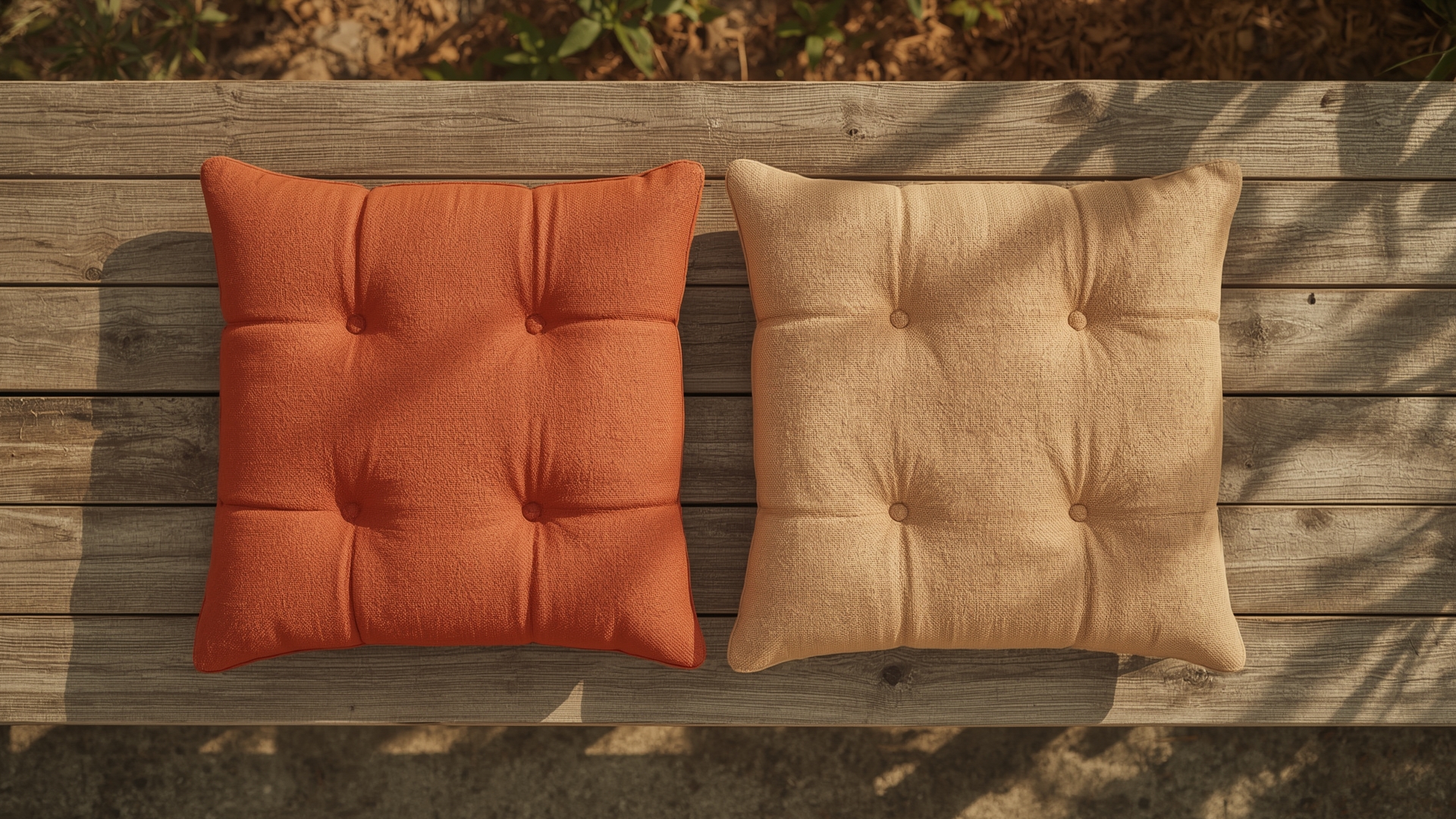
Quick Answer: Solution-dyed fabrics are significantly more fade resistant. Color lives inside the fiber, so UV light cannot strip it away. Surface-dyed fabrics typically show noticeable fading within 1 to 3 years in high-sunlight conditions. Solution-dyed acrylics often last 5 to 10 years with minimal color change.
UV light breaks apart dye molecules. With surface-dyed fabric, those molecules sit exposed on the fiber’s outer layer. Direct sunlight attacks them first. You may notice the top of a cushion fading while the back stays vibrant, because the back never sees sun.
With solution-dyed fabric, the pigment is locked inside the polymer matrix. UV rays still hit the surface, but there’s no exposed dye to break down. The color you see is the color buried deep in the fiber. This is why solution-dyed acrylic is the go-to material for marine upholstery, awnings, and outdoor furniture.
Fade Resistance Performance by Dyeing Method
| Attribute | Solution-Dyed Acrylic | Surface-Dyed Polyester | Surface-Dyed Cotton |
|---|---|---|---|
| UV Fade Resistance | Excellent (5,000+ hours lightfastness) | Moderate (1,000–2,000 hours) | Low (500–1,000 hours) |
| Visible Fading Timeline (Direct Sun) | 5–10 years | 1–3 years | 6 months–2 years |
| Color Consistency After 5 Years | 90–95% retained | 60–75% retained | 40–65% retained |
| Bleach Tolerance | High (1:10 bleach:water safe) | Low (bleach strips surface dye) | Very Low (destroys fiber and color) |
| Typical Lightfastness Rating (AATCC 16) | 4–5 out of 5 | 2–3 out of 5 | 1–3 out of 5 |
Does Color Vibrancy Hold Up Differently Between the Two?
Quick Answer: Surface-dyed fabrics often appear richer and more vivid when new because the dye concentrates on the fiber’s outer layer where light reflects off it. Solution-dyed fabrics may look slightly less saturated initially but maintain their color far longer because the pigment doesn’t degrade under UV exposure.
Fresh surface-dyed fabric can be stunning. The color sits right at the surface where your eye catches it directly. Deep jewel tones, high-contrast prints, and iridescent effects are all easier to achieve through surface dyeing. This is why luxury indoor upholstery fabrics lean heavily on this method.
The tradeoff shows up over time. As surface dye fades, colors often shift in hue, not just intensity. A navy blue can become a dusty teal. A rich burgundy can wash out to a pale rose. Solution-dyed colors tend to fade more uniformly and much more slowly, so even when they do age, they look intentionally lived-in rather than neglected.
Color Attribute Comparison by Dyeing Method
| Color Attribute | Solution Dyed | Surface Dyed |
|---|---|---|
| Initial Visual Depth | Moderate to Good | High to Excellent |
| Color Saturation at Year 1 | 95–100% of original | 85–100% of original |
| Color Saturation at Year 5 | 88–95% of original | 50–75% of original |
| Hue Shift Over Time | Minimal | Moderate to Significant |
| Color Range Available | Limited (pigments must survive extrusion) | Broad (thousands of colors and prints) |
| Print Capability | Limited (solid or heathered) | Full (prints, patterns, gradients) |
How Do the Two Dyeing Methods Affect Cleaning and Maintenance?
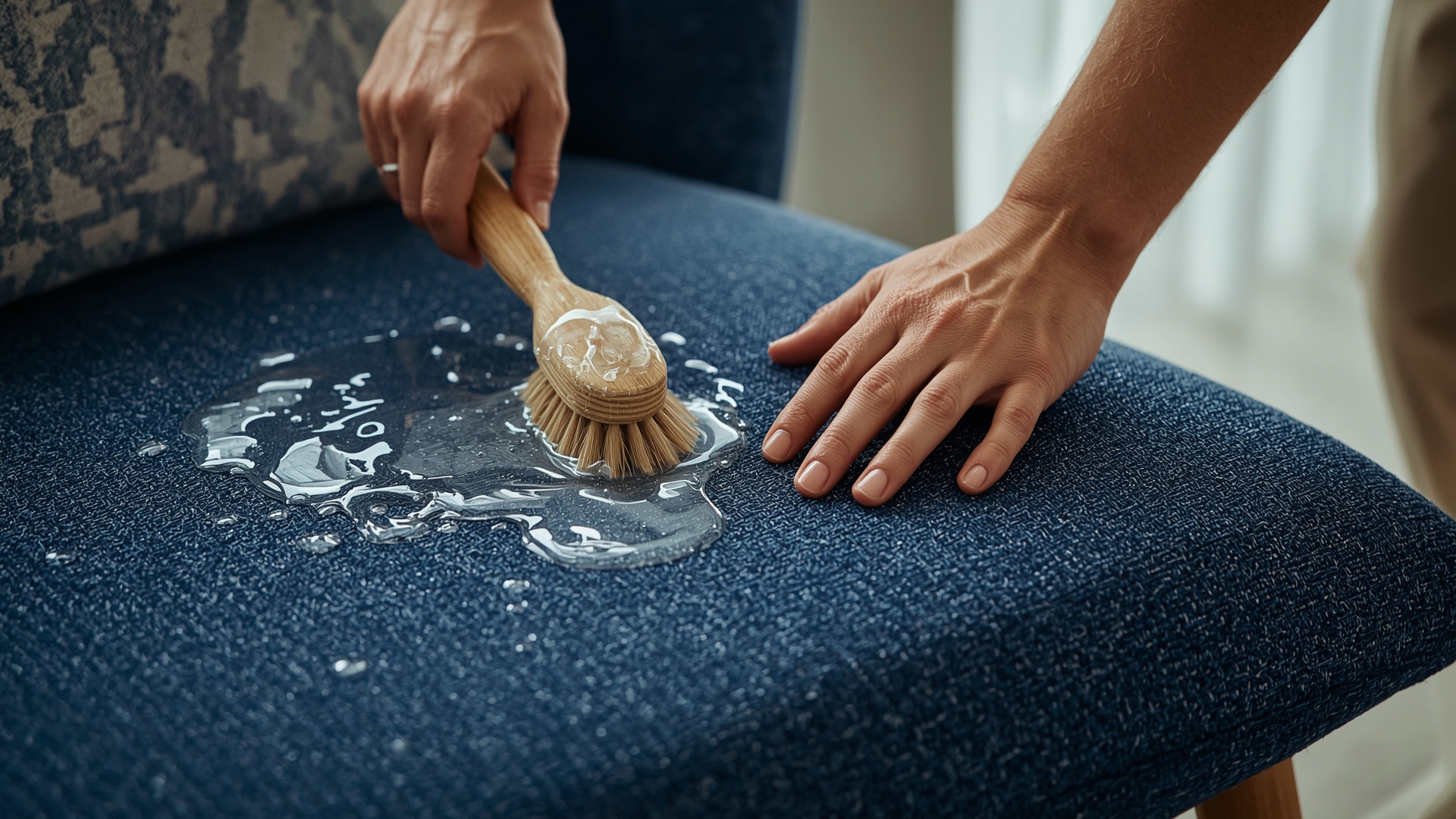
Quick Answer: Solution-dyed fabrics tolerate stronger cleaning agents, including diluted bleach, without losing color. Surface-dyed fabrics need gentle, pH-neutral cleaners. Harsh chemicals lift surface dye along with the stain. For high-traffic or outdoor areas, solution-dyed fabric is significantly easier to maintain long-term.
This is one of the most practical differences between the two methods. If you have kids, pets, or an outdoor setting, how you clean your fabric matters just as much as how it looks.
Sunbrella, the benchmark solution-dyed acrylic brand, officially recommends cleaning with a solution of 1 cup bleach and 1/4 cup mild soap per gallon of water. That cleaning power is possible precisely because the pigment is locked inside the fiber. The bleach can’t reach it.
Surface-dyed fabrics require gentler handling. Even some mild cleaning products can cause localized color loss, especially on spot-treated areas. You may end up with a clean spot that’s a slightly different shade than the surrounding fabric, which is often more noticeable than the original stain.
Cleaning Compatibility by Dyeing Method
| Cleaning Agent | Solution-Dyed Acrylic | Surface-Dyed Polyester | Surface-Dyed Cotton/Linen |
|---|---|---|---|
| Mild Dish Soap + Water | Safe | Safe | Safe |
| Diluted Bleach (1:10 ratio) | Safe | Not Recommended | Not Safe |
| pH-Neutral Upholstery Cleaner | Safe | Safe | Safe with caution |
| Solvent-Based Cleaner | Test first | Not Recommended | Not Safe |
| Pressure Washing (low PSI) | Safe | Not Recommended | Not Safe |
Which Dyeing Method Works Better for Outdoor Upholstery?
Quick Answer: Solution dyeing is the clear choice for outdoor upholstery. It withstands UV exposure, humidity, rain, and mold without significant color loss. Surface-dyed fabrics degrade quickly outdoors. Most outdoor fabric industry standards, including CFFA (Chemical Fabrics and Film Association) guidelines, reference solution-dyed acrylic as the benchmark.
Outdoor fabric faces stressors that indoor fabric never encounters. Direct sunlight, temperature swings, moisture, mildew, bird droppings, and chlorine splash from pools are all on the menu. No surface-dyed fabric can survive that environment without showing serious deterioration within one to two seasons.
Solution-dyed acrylic is specifically engineered for this. The closed-loop fiber structure resists moisture absorption, which is why mold and mildew can’t penetrate the fiber itself. They may grow on the surface, but a simple bleach wash removes them completely without harming the color.
Best Outdoor Fabric Options by Use Case
- Uncovered patio furniture: Solution-dyed acrylic (minimum 50,000 double rubs, AATCC lightfastness rating 4–5)
- Covered porch seating: Solution-dyed acrylic or solution-dyed olefin
- Boat and marine upholstery: Solution-dyed acrylic vinyl or coated solution-dyed acrylic
- Poolside cushions: Solution-dyed acrylic with water-repellent finish
- Awnings and shade structures: Solution-dyed acrylic (UV block rating 98%+)
Which Dyeing Method Works Better for Indoor Upholstery?
Quick Answer: Both methods work indoors, but the right choice depends on sunlight exposure, traffic levels, and your budget. Surface-dyed fabrics offer more design variety and lower costs for shaded rooms. Solution-dyed fabrics make sense for south-facing rooms or high-traffic furniture that needs frequent cleaning.
Most living rooms don’t expose furniture to 8 hours of direct sun daily. In those spaces, surface-dyed fabric performs well for many years. The design advantages, lower cost, and massive range of colors and patterns make surface-dyed fabric the practical choice for most interior applications.
The calculus changes if your sofa sits in front of a large south-facing or west-facing window. Even filtered sunlight through glass causes UV damage over time. Windows with UV-blocking film help, but they don’t eliminate the problem. In those rooms, solution-dyed fabric earns its price premium.
Indoor Use Case Comparison
| Indoor Scenario | Recommended Method | Reason |
|---|---|---|
| North-facing room, low traffic | Surface Dyed | Minimal UV exposure, prioritize aesthetics |
| South-facing room, direct sunlight | Solution Dyed | Daily UV exposure accelerates fading |
| High-traffic family room with children/pets | Solution Dyed | Tolerates aggressive cleaning without color loss |
| Formal living room, occasional use | Surface Dyed | Lower wear, design aesthetics take priority |
| Dining chairs, food/drink exposure | Solution Dyed (performance fabric) | Frequent spot cleaning needed |
| Bedroom accent chair | Surface Dyed | Low UV, low traffic, wide design range |
What Is the Cost Difference Between Solution Dyed and Surface Dyed Fabric?
Quick Answer: Solution-dyed acrylic typically costs $20 to $60 per yard at retail. Surface-dyed upholstery fabric ranges from $8 to $40 per yard depending on fiber type and weave complexity. The price gap reflects manufacturing cost, raw material quality, and performance lifespan.
Solution dyeing adds cost at the manufacturing stage. Pigments that can survive the extrusion process (extreme heat and pressure) are more expensive than standard dyes. The process also limits color options, which means manufacturers can’t produce as many SKUs to spread fixed costs across.
Surface dyeing is more flexible and cheaper to execute. A single undyed fabric can be dyed in hundreds of colorways from the same production run. This efficiency lowers cost and drives the wide design range available in surface-dyed collections.
Cost and Lifespan by Fabric Type
| Fabric Type | Dyeing Method | Retail Cost Per Yard | Expected Lifespan (Outdoor) | Expected Lifespan (Indoor) |
|---|---|---|---|---|
| Solution-Dyed Acrylic (e.g., Sunbrella) | Solution | $25–$60 | 5–10 years | 10–15+ years |
| Solution-Dyed Olefin | Solution | $12–$25 | 3–6 years | 7–12 years |
| Surface-Dyed Performance Polyester | Surface | $15–$35 | 1–3 years | 5–8 years |
| Surface-Dyed Cotton Blend | Surface | $12–$30 | Not recommended | 4–8 years |
| Surface-Dyed Velvet (Polyester) | Surface | $18–$45 | Not recommended | 4–7 years |
How Can You Tell If a Fabric Is Solution Dyed or Surface Dyed?
Quick Answer: Pull a yarn from the fabric’s edge and look at the cross section. Solution-dyed fiber shows the same color all the way through. Surface-dyed fiber shows a lighter or white core with color only on the outside. The manufacturer’s spec sheet or content label often states the dyeing method directly.
This test works best with a loupe (a small magnifying glass) or even a phone camera with high zoom. Pull one thread from a seam allowance so you don’t damage the fabric. Bend the thread slightly to expose the cross section of the fiber bundle. If the color goes all the way through, it’s solution dyed. If you see a lighter interior, it’s surface dyed.
For fabrics being sold online or on showroom floors, look for the spec sheet. Quality fabric vendors publish full technical data including dyeing method, fiber content, Martindale or Wyzenbeek abrasion ratings, and lightfastness ratings. If a retailer can’t provide a spec sheet, that’s a red flag.
How to Identify Dyeing Method Without a Lab
- Pull a yarn from a hidden seam: Examine the cross section under magnification. Uniform color throughout = solution dyed.
- Check the spec sheet: Look for terms like “solution dyed acrylic,” “SDY,” or AATCC 16 lightfastness rating of 4–5.
- Review the fabric content label: Acrylic and olefin labeled as outdoor-grade are almost always solution dyed.
- Apply a small amount of diluted bleach to a hidden area: Solution-dyed fabric won’t change color. Surface-dyed fabric will lighten noticeably.
- Check the price and brand positioning: Solution-dyed acrylic from brands like Sunbrella, Outdura, or Docril is clearly labeled as such and priced accordingly.
What Are the Environmental Differences Between the Two Dyeing Methods?
Quick Answer: Solution dyeing is generally considered more environmentally efficient. It uses less water, fewer auxiliary chemicals, and produces less dye wastewater than traditional surface dyeing. Surface dyeing, especially vat and reactive dyeing, requires significant water volume and generates effluent that needs treatment before disposal.
Traditional fabric dyeing is one of the most water-intensive processes in textile manufacturing. A single kilogram of surface-dyed fabric can require 100 to 150 liters of water during the dyeing and rinsing stages. Solution dyeing skips most of that water use because the pigment is added before fiber formation, not after.
This doesn’t make solution-dyed fabric universally sustainable. It’s still a synthetic fiber produced from petrochemicals. But the dyeing stage itself has a notably smaller water and chemical footprint. For buyers weighing environmental factors, this is a meaningful distinction.
Which Should You Choose: Solution Dyed or Surface Dyed?
Quick Answer: Choose solution-dyed fabric for outdoor furniture, high-sunlight rooms, high-traffic seating, and anywhere that needs frequent or aggressive cleaning. Choose surface-dyed fabric for low-sunlight interiors where design range and cost matter more than extreme durability or fade resistance.
The decision isn’t complicated once you know your actual use case. Ask yourself three questions before choosing.
First: will this fabric see direct sunlight? If yes for more than two or three hours daily, solution dyed is the safe answer. Second: how often will you need to clean it aggressively? Pets, children, and dining areas all push toward solution dyed. Third: does the design range matter more than long-term performance? For a formal accent chair in a dim study, surface-dyed fabric wins on aesthetics and value.
Quick Decision Guide
- Outdoor furniture of any kind: Solution-dyed acrylic, no exceptions
- Indoor sofa near large windows: Solution-dyed if budget allows
- Family room sofa with pets or children: Solution-dyed performance fabric
- Bedroom or formal room, low traffic: Surface-dyed, prioritize design
- Dining chairs: Solution-dyed for easy cleaning
- Decorative accent pieces: Surface-dyed, wide pattern range
- Tighter budget, shaded interior: Surface-dyed performs well
Frequently Asked Questions
Can solution-dyed fabric be used indoors?
Yes, solution-dyed fabric works perfectly indoors. It’s commonly used for high-traffic indoor furniture because it handles frequent cleaning without color loss. Sunbrella, for example, offers dedicated indoor collections using the same solution-dyed acrylic fiber as their outdoor line.
Does surface-dyed fabric always fade faster?
In high-UV environments, yes. Surface-dyed fabric fades significantly faster outdoors or near bright windows. In low-light indoor settings, the difference is much smaller. A well-made surface-dyed polyester blend in a shaded room can hold its color for many years without visible fading.
What does AATCC 16 lightfastness testing measure?
AATCC 16 is a standardized test that measures how much a fabric’s color changes after controlled exposure to UV light. Scores run from 1 (severe fading) to 5 (no change). Solution-dyed acrylics typically score 4 to 5. Surface-dyed fabrics usually score 2 to 3 for outdoor-grade polyester and lower for natural fibers.
Is Sunbrella always solution dyed?
Yes. Sunbrella fabrics are made from solution-dyed acrylic fiber. The color is embedded in the yarn before weaving. This is the primary reason Sunbrella carries warranties of 5 years on outdoor applications and why it’s the benchmark brand in the performance fabric category.
Does dyeing method affect how a fabric feels?
The dyeing method itself has minimal effect on hand feel. Texture is primarily determined by fiber type, yarn construction, and weave structure. That said, surface-dyed fabrics sometimes use finishing treatments that affect softness, and those treatments can wear off over time with washing.
Can you re-dye a faded surface-dyed fabric?
In theory, yes. Fabric dyes designed for the specific fiber type can refresh a faded surface-dyed upholstery piece. In practice, it’s difficult to get an even result on shaped, seamed upholstery. Professional reupholstery or fabric replacement is usually a more reliable path for significantly faded pieces.
