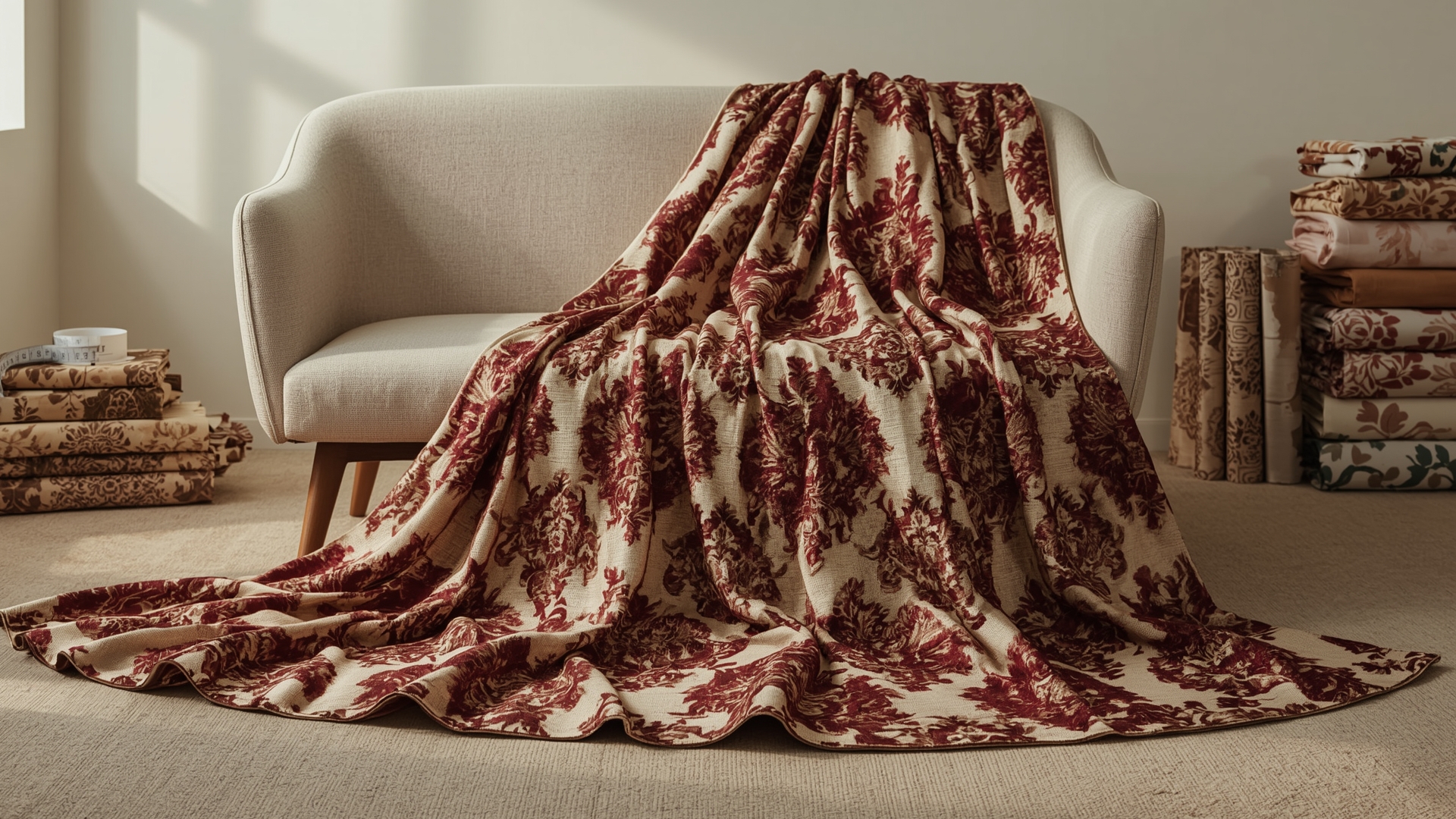
Choosing an upholstery fabric with a bold pattern feels exciting until you realize you need twice as much yardage as the label suggests. Pattern repeat is one of the most misunderstood concepts in upholstery, and it quietly drives up project costs. Understanding it before you order saves money, prevents frustrating shortages, and helps your finished piece look intentional rather than accidental.
This guide covers everything: what pattern repeat means, how to calculate it accurately, how much extra yardage to budget, which patterns suit different furniture shapes, and how to use this knowledge whether you’re reupholstering a single chair or furnishing an entire room.
Key Takeaways
- Pattern repeat adds yardage: A 27-inch repeat can increase yardage requirements by 20–35% compared to a plain fabric on the same piece of furniture.
- Two types of repeat matter: Straight repeats and half-drop repeats calculate differently and waste different amounts of fabric.
- Matching point = the visible seam: Every panel on your furniture needs to align at a single dominant motif, called the matching point.
- Furniture silhouette changes everything: Curved, tufted, and tight-back sofas hide patterns poorly and waste more fabric during matching.
- Cost multiplier is real: At $40 per yard, a 27-inch repeat on a three-cushion sofa can add $80–$160 in extra fabric cost compared to solid fabric on the same frame.
- Order extra on first purchase: Dye lots change. Always order 10–15% more than calculated and verify the repeat measurement before cutting begins.
What Is Pattern Repeat in Upholstery Fabric?
Quick Answer: A pattern repeat is the distance between one point in a design and the next identical point. In upholstery, it tells you how far the fabric must shift so each panel starts at the same place in the pattern, keeping the design aligned across the finished piece.
Picture a row of large medallions printed on fabric. Each medallion is the full motif. The distance from the center of one medallion to the center of the next is the repeat measurement. You’ll find this number on the fabric specification sheet listed as “vertical repeat” and sometimes “horizontal repeat.”
Fabrics without a pattern, called plains or solids, have a repeat of zero. Every cut starts wherever you left off. Patterned fabrics force you to align each new panel to the correct starting point in the design, which means some fabric between cuts gets wasted.
The larger the repeat, the more potential waste per cut. A 3-inch repeat on a small geometric is easy to manage. A 27-inch repeat on a large floral motif requires careful planning and noticeably more yardage.
What Is Vertical Repeat vs. Horizontal Repeat?
Vertical repeat measures the pattern length running up and down the fabric (along the selvage edge). This is the primary number used in yardage calculations. Horizontal repeat measures the pattern width across the fabric. Both matter when seaming multiple widths together, but vertical repeat drives the yardage math.
What Is a Half-Drop Repeat?
A half-drop repeat offsets alternating columns of a motif by exactly half the vertical repeat distance. Think of a classic wallpaper with diagonal staggering. These patterns require matching in two directions simultaneously, which increases complexity and waste compared to a straight repeat. Many floral and damask fabrics use half-drop construction.
What Are the Main Types of Pattern Repeat?
Quick Answer: The four main types are straight repeat, half-drop repeat, random repeat, and engineered placement. Straight repeats are easiest to calculate. Half-drop repeats waste the most fabric. Random repeats (like most textures) need minimal extra yardage. Engineered placements require professional layout planning.
| Repeat Type | How It Works | Typical Waste % | Best For | Difficulty Level |
|---|---|---|---|---|
| Straight Repeat | Motif repeats in straight vertical/horizontal grid | 10–20% | Stripes, simple geometrics, small florals | Low |
| Half-Drop Repeat | Alternating columns offset by half the vertical repeat | 20–35% | Large florals, damasks, medallions | High |
| Random / No Repeat | Design has no consistent repeat point | 0–5% | Textures, weaves, plains | Very Low |
| Engineered Placement | Motif designed to center on a specific furniture location | 30–50% | Statement chairs, custom pieces | Very High |
| Set/Tile Repeat | Pattern tiles uniformly with equal spacing on all sides | 10–15% | Geometrics, checks, plaids | Low–Medium |
How Do You Calculate Pattern Repeat for Upholstery?

Quick Answer: Divide the cut length of each fabric panel by the vertical repeat, then round up to the next whole number and multiply back by the repeat. This gives the adjusted cut length. Add all adjusted panel lengths together and divide by 36 to get total yards needed.
Step-by-Step Pattern Repeat Calculation
- Measure your furniture panels. Write down the cut length of each piece you need: seat cushion front, back panel, inside arm, outside arm, seat deck, and so on. Add 1–2 inches to each for seam allowance.
- Find the vertical repeat. Check the fabric specification sheet or bolt tag. The number is usually listed in inches.
- Calculate the adjusted cut length per panel. Divide panel length by repeat length. Round up to the nearest whole number. Multiply that number back by the repeat. This is your adjusted cut length for that panel.
- Add all adjusted cut lengths together. This gives your total adjusted fabric length in inches.
- Divide by 36. This converts inches to yards. Round up to the nearest half or full yard.
- Add a safety buffer. Add 10–15% to account for miscuts, fabric defects, or future repairs.
Pattern Repeat Calculation Example
Suppose you have a chair back panel with a 22-inch cut length and a fabric with an 18-inch vertical repeat.
- 22 ÷ 18 = 1.22 → round up to 2
- 2 × 18 = 36 inches adjusted cut length
- Without the repeat, you would cut 22 inches. With pattern matching, you need 36 inches for the same panel. That’s 14 inches of extra fabric per cut just for one piece.
Now multiply this across every panel of a sofa and the yardage adds up fast.
What Is a Matching Point and Why Does It Matter?
The matching point is the dominant element of the pattern — usually the center of the main motif — that must appear at the same position on every panel of the furniture. On a sofa, the matching point typically falls at the center of the inside back, the center of each cushion face, and the center of the front seat rail.
If your upholsterer doesn’t establish a matching point before cutting, panels will look misaligned even if the yardage is technically correct. Always confirm the matching point with your upholsterer before any fabric is cut.
How Does Pattern Repeat Affect Yardage Requirements?
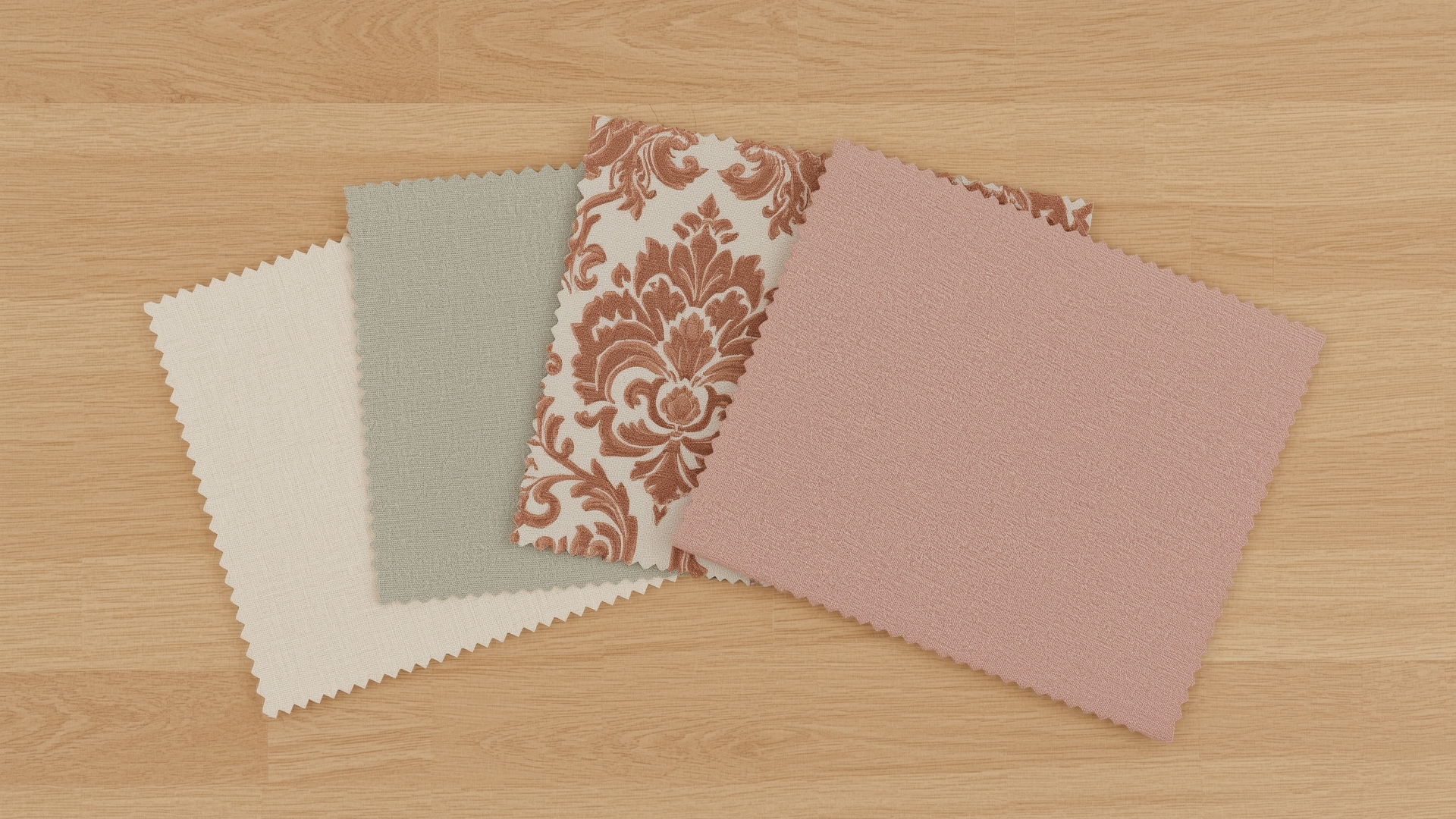
Quick Answer: Larger repeats always require more yardage than the base fabric estimate. A sofa needing 9 yards of plain fabric may need 11–13 yards with a 27-inch repeat. The exact increase depends on repeat size, number of panels, and furniture complexity.
| Vertical Repeat | Base Yardage (Plain) | Yardage with Repeat | Extra Yardage | Extra % Added |
|---|---|---|---|---|
| No repeat (plain) | 9.0 yards | 9.0 yards | 0 yards | 0% |
| 3-inch repeat | 9.0 yards | 9.5 yards | 0.5 yards | ~6% |
| 9-inch repeat | 9.0 yards | 10.5 yards | 1.5 yards | ~17% |
| 18-inch repeat | 9.0 yards | 11.5 yards | 2.5 yards | ~28% |
| 27-inch repeat | 9.0 yards | 12.5 yards | 3.5 yards | ~39% |
| 36-inch repeat | 9.0 yards | 14.0 yards | 5.0 yards | ~56% |
Does Fabric Width Affect Pattern Repeat Waste?
Yes. Wider fabric (54–60 inches) allows you to cut multiple panels side by side from a single cut. Narrower fabric (45 inches) often forces separate cuts, increasing waste per panel. When comparing fabric options, factor both repeat size and fabric width together.
A 54-inch wide fabric with an 18-inch repeat will almost always yield less waste than a 45-inch wide fabric with the same repeat, because more usable panels fit per length of fabric.
What Does Pattern Repeat Cost in Real Dollars?
Quick Answer: On a fabric priced at $40 per yard, a 27-inch repeat on a three-cushion sofa adds roughly $100–$140 in extra fabric cost compared to a plain fabric. On premium designer fabric at $80–$120 per yard, the same repeat adds $200–$350 to your total material budget.
| Fabric Price Per Yard | Plain Fabric Cost (9 yds) | Cost with 27-in Repeat (12.5 yds) | Pattern Premium |
|---|---|---|---|
| $20/yard | $180 | $250 | +$70 |
| $40/yard | $360 | $500 | +$140 |
| $65/yard | $585 | $812 | +$227 |
| $90/yard | $810 | $1,125 | +$315 |
| $120/yard | $1,080 | $1,500 | +$420 |
This is only the fabric cost. Professional upholstery labor to match a large-repeat pattern typically adds $50–$150 more compared to upholstering with a plain fabric, because alignment takes more time.
When Is the Pattern Premium Worth Paying?
The pattern premium is worth it when the fabric is the visual focal point of the room. A statement armchair with a bold botanical print at a high-traffic corner of the room earns its cost. A large sectional sofa with a complex repeat in a room full of competing patterns rarely does.
The premium is rarely worth it on tufted pieces, curved frames, or furniture with many narrow panels. All of those situations increase waste significantly with no added visual payoff from pattern matching.
Which Pattern Repeat Sizes Work Best for Different Furniture?
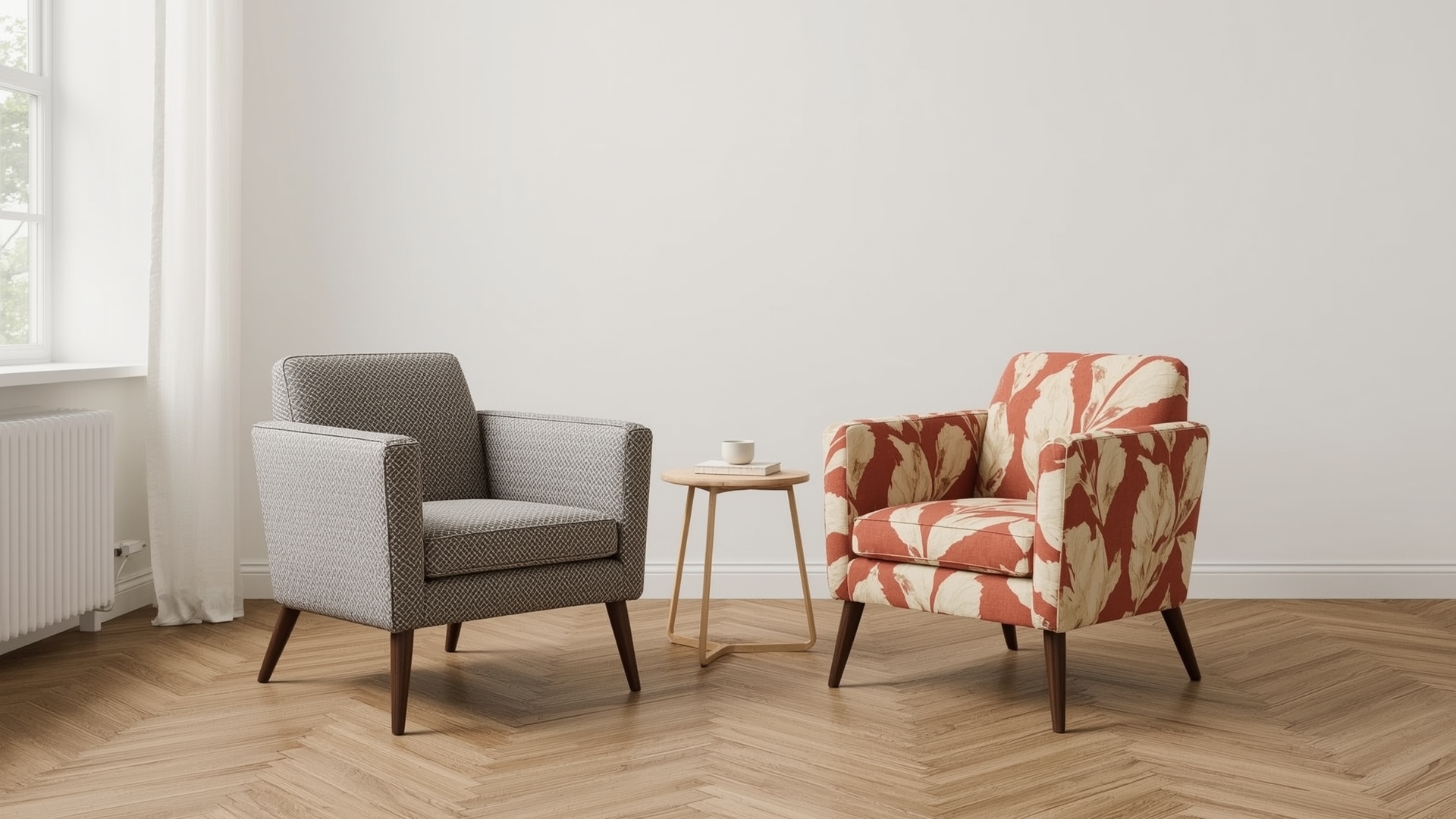
Quick Answer: Small repeats under 9 inches work on nearly any piece. Medium repeats of 9–18 inches suit sofas and large armchairs best. Large repeats over 18 inches are ideal for simple, flat-panel furniture like parsons chairs and ottomans, where the full motif can be displayed without interruption.
How Does Furniture Silhouette Affect Pattern Placement?
Furniture silhouette — the overall shape and number of panels — directly controls how a pattern reads on the finished piece. A flat, boxy sofa with large cushions gives the fabric space to breathe. A curved Victorian settee has small, angular panels that chop a large motif into unrecognizable fragments.
| Furniture Type | Panel Size | Recommended Max Repeat | Why |
|---|---|---|---|
| Parsons Chair | Large, flat panels | Up to 27 inches | Full motif displays cleanly on large surfaces |
| Tight-Back Sofa | Wide back, large seat | Up to 27 inches | Continuous back panel shows large repeat well |
| Loose-Back Sofa | Multiple loose cushions | Up to 18 inches | Cushions can shift, breaking alignment over time |
| Tufted Chair or Sofa | Distorted by tufting | Under 6 inches or plain | Tufting pulls pattern out of alignment permanently |
| Curved/Camelback Sofa | Narrow, angled panels | Under 9 inches | Curved cuts fragment large motifs |
| Ottoman (rectangular) | Four flat sides | Up to 18 inches | Simple panels match easily, minimal waste |
| Wingback Chair | Wings are narrow panels | Under 12 inches | Wings rarely align well with large repeats |
Do Stripes Count as a Pattern Repeat?
Yes. Stripes have a horizontal repeat that determines how they align across panels. Vertical stripes on a sofa must run perfectly parallel on every panel — the inside arm must match the outside arm, and each cushion must align with the back panel behind it. Misaligned stripes look worse than misaligned florals because the eye detects linear breaks immediately.
Wide stripes (over 4 inches wide) can add 15–25% extra yardage for alignment. Narrow stripes under 1 inch wide rarely need extra yardage beyond a small buffer.
How Do You Avoid Running Short on Patterned Fabric?
Quick Answer: Calculate using adjusted cut lengths, not raw measurements. Add a 10–15% buffer for defects and future repairs. Order all yardage from the same dye lot in a single purchase. Verify the repeat measurement yourself against the actual bolt before any cutting begins.
What Is a Dye Lot and Why Does It Matter for Pattern Matching?
A dye lot is a batch of fabric dyed in the same production run. Two bolts from different dye lots of the same pattern can have subtle color differences — enough to look mismatched side by side. Always order your full yardage in one purchase to ensure you receive fabric from a single dye lot.
If you do run short and need to reorder, request a new cutting from the same dye lot number. Retailers can often check dye lot availability before shipping.
Should You Verify the Pattern Repeat Before Cutting?
Always verify the repeat against the physical bolt before cutting begins. Manufacturers occasionally print repeat measurements that differ slightly from actual production runs. Lay the fabric flat and measure the repeat yourself using a tape measure. If it’s different from the spec sheet, recalculate your yardage before the upholsterer makes the first cut.
A difference of even 2 inches in a large repeat can cause you to run short if your cuts were calculated on the spec sheet number.
What Are Common Pattern Matching Mistakes to Avoid?
Quick Answer: The most common mistakes are ordering base yardage without a repeat buffer, choosing a large-repeat pattern for a tufted or curved sofa, failing to confirm the matching point before cutting, and buying fabric from two different dye lots. Each mistake either wastes money or produces a poor-looking result.
Can You Center a Pattern on Every Panel?
Centering the dominant motif on the main panels — inside back, seat cushion face, and outside back — is standard practice. However, centering on every panel simultaneously is physically impossible on complex furniture. Upholsterers prioritize the panels the eye sees first: the outside back, inside back, and seat cushion fronts. Secondary panels like outside arms and boxing strips receive whatever alignment remains.
This is why furniture with many secondary panels wastes more fabric. You’re not cutting panels from whatever you have left — you’re starting each panel at the correct repeat position, regardless of what falls between cuts.
What Happens When a Pattern Isn’t Matched?
Unmatched patterns on a finished piece look unprofessional and visually disjointed. A motif cut in half at a seam line draws the eye directly to the construction rather than the design. For premium patterned fabrics, improper matching can make an expensive piece look like a budget reupholstery job.
If your budget is tight, a plain fabric or a small random texture will always look cleaner than a large-repeat pattern that wasn’t matched correctly.
How Do Professional Upholsterers Manage Pattern Layouts?
Quick Answer: Professional upholsterers create a cut plan before touching the fabric. They list every panel with its adjusted cut length, establish the matching point, number the cuts in order, and cut the entire piece before sewing begins. This prevents mid-project fabric shortages and guarantees alignment.
What Is a Cut Plan and How Does It Work?
A cut plan is a diagram mapping exactly where each panel will be cut from the fabric roll. It accounts for the repeat, matching point, fabric width, and panel dimensions. The upholsterer assigns each panel to a specific starting position along the repeat before making a single cut.
For large projects, a cut plan can reduce waste by 10–15% compared to cutting panels as needed. It’s the difference between running a manufacturing operation and guessing as you go.
When Should You Hire a Professional vs. DIY Pattern Matching?
DIY pattern matching is manageable for small, flat-panel pieces like seat cushions, dining chair seats, or simple ottomans with repeats under 9 inches. Anything larger, more complex, or using a half-drop repeat is better left to a professional upholsterer.
Mistakes on a $50/yard fabric are expensive. Professional upholstery labor to properly match a large repeat typically costs $100–$300 more than plain fabric work but protects a fabric investment that often costs far more than the labor itself.
Frequently Asked Questions
What does “no pattern repeat” mean on a fabric label?
It means the fabric has no repeating design element, so cuts can start anywhere without alignment concerns. Solid fabrics, most textures, and woven plains fall into this category. You only need to account for standard seam allowances.
Do I add extra yardage for both vertical and horizontal repeats?
Your primary extra yardage calculation is based on the vertical repeat. The horizontal repeat matters mainly when joining multiple fabric widths side by side. If your panels fit within one fabric width, horizontal repeat has minimal impact on total yardage.
How do I find the pattern repeat measurement for a fabric?
Check the fabric specification sheet, the bolt tag, or the product listing page. It’s usually listed as “V repeat” and “H repeat” in inches. If you can’t find it, measure the bolt yourself by finding two identical points in the pattern and measuring the distance between them.
Can I use a large-repeat fabric on a sectional sofa?
You can, but expect significant waste and a substantial yardage increase. A large sectional might need 20–25 yards of plain fabric. With a 27-inch repeat, that could rise to 28–32 yards. At premium fabric prices, that’s a meaningful budget difference worth calculating before committing to the pattern.
What is a railroaded fabric and does it change repeat calculations?
Railroading means the fabric is oriented sideways on the furniture, running the selvage edge horizontally rather than vertically. This is common on sofa backs and seats to avoid seams. A railroaded fabric uses the horizontal repeat as the primary calculation driver instead of the vertical repeat. Always confirm orientation intent with your upholsterer before calculating yardage.
Is pattern matching included in standard upholstery labor quotes?
Not always. Some upholsterers quote pattern matching as a separate line item, particularly for large repeats or complex furniture. Ask specifically whether the quote includes pattern centering and alignment before you approve the project. A difference of $100–$200 in labor can appear at invoicing if it wasn’t discussed upfront.
