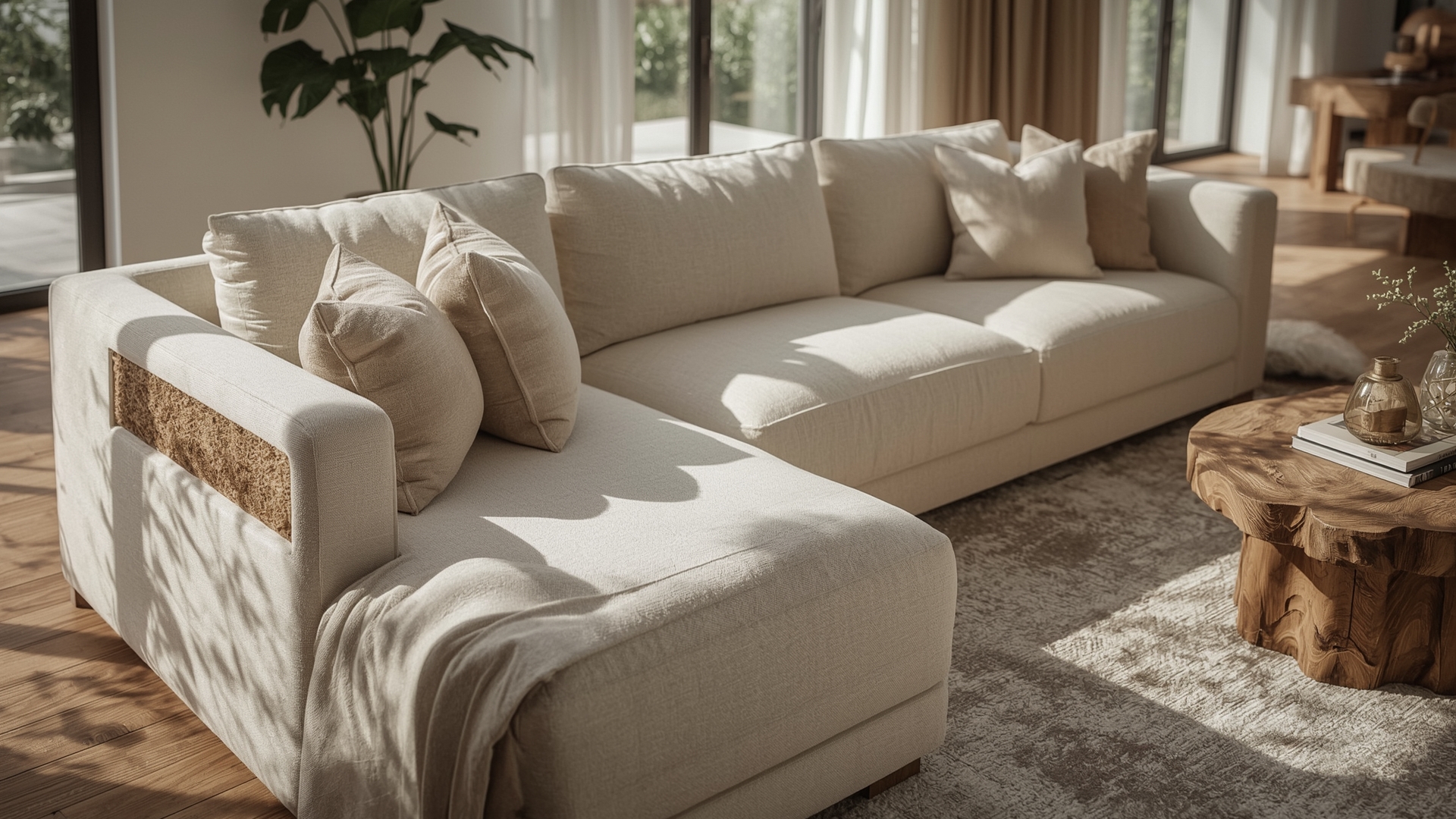
The cushion fill inside your sofa determines how it feels on day one and how it holds up five years later. Two sofas can look identical on the showroom floor but feel completely different because of what’s inside. HR foam, memory foam, down wrap, Dacron polyester, and pocket coil springs each behave differently under pressure, over time, and across different budgets.
Choosing the wrong fill means sagging cushions, constant fluffing, or a sofa that’s too firm to sit on comfortably. Choosing the right one means a sofa that holds its shape, supports your body, and stays comfortable for years. This guide covers every major fill type with real specs so you can compare them side by side.
Key Takeaways
- HR foam is the most durable core material for sofa cushions, rated by density (lbs/ft³) and ILD (firmness).
- Down and down-blend wraps feel the most luxurious but require regular fluffing and cost significantly more to maintain.
- Dacron polyester wrap is the most common budget-friendly outer layer, often used to soften a foam core.
- Memory foam conforms to your body but retains heat and recovers slowly, making it less practical for most sofas.
- Pocket coil cushions offer the best motion isolation and bounce but add significant cost.
- Most quality sofas use hybrid constructions, combining a foam core with a soft outer wrap for balanced comfort and durability.
- Cushion fill directly affects replacement cost, fluffing frequency, and long-term sofa value.
What Is Sofa Cushion Fill and Why Does It Matter?
Quick Answer: Sofa cushion fill is the material inside seat and back cushions that provides support and shape. It affects comfort, durability, and how often cushions need maintenance. The fill type is one of the biggest factors in a sofa’s long-term quality.
Cushion fill is the internal structure of every sofa cushion. It’s what you’re actually sitting on, even if you never see it. The fabric cover and outer appearance are secondary. What’s inside determines the sitting experience.
Fill materials range from high-resiliency foam blocks to loose down feathers to miniature coil springs. Each has a different feel, lifespan, price point, and maintenance requirement. A sofa with poor fill will sag within a few years. A sofa with quality fill can stay comfortable for a decade or more.
Most people never ask about cushion fill before buying a sofa. That’s one of the main reasons sofas disappoint over time.
What Are the Main Types of Sofa Cushion Fill?
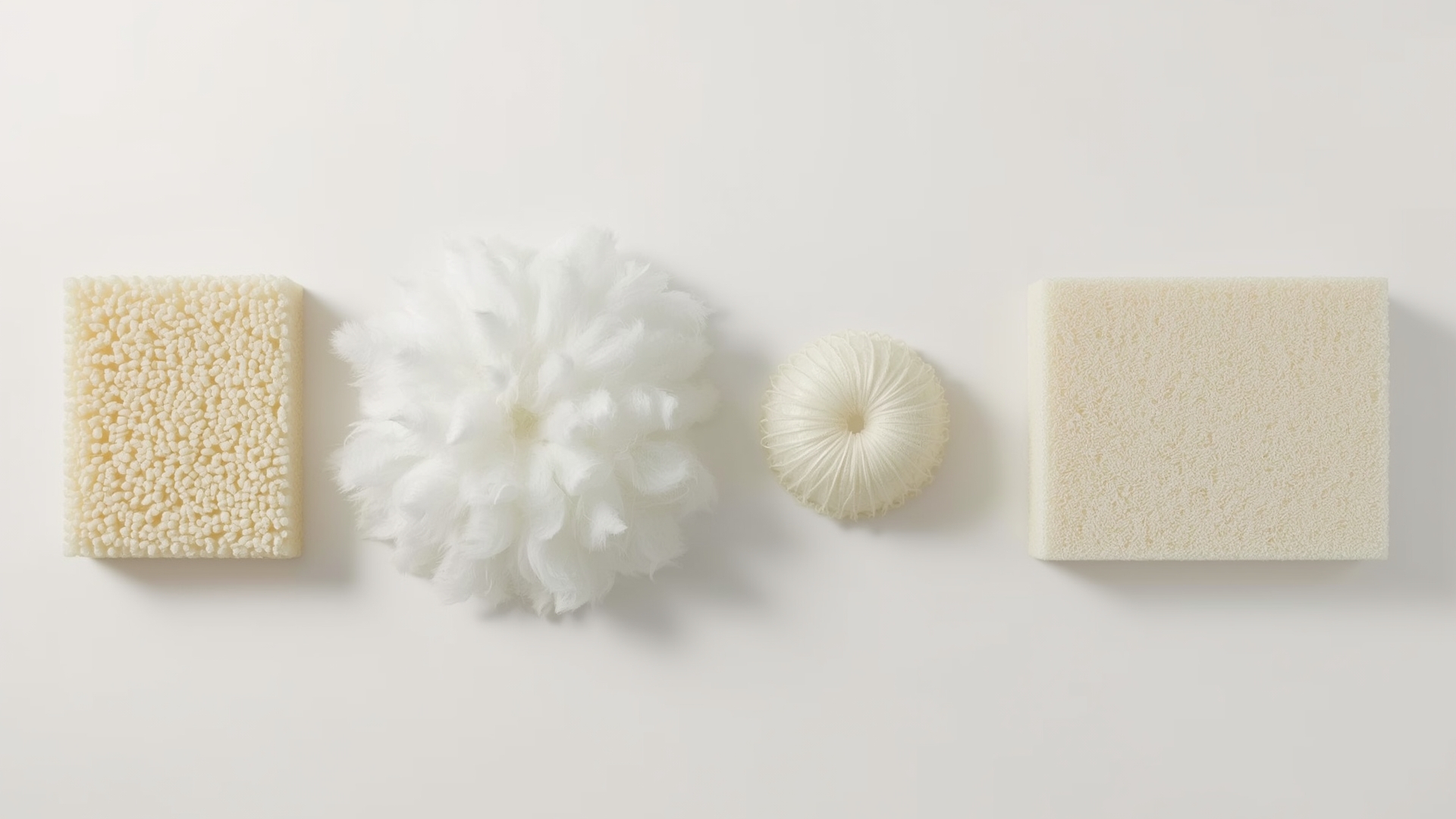
Quick Answer: The five main sofa cushion fill types are high-resiliency (HR) foam, memory foam, down and feather blend, Dacron polyester fiber, and pocket coil springs. Most quality sofas use two or more combined in a hybrid construction.
High-Resiliency (HR) Foam
HR foam is the most widely used cushion core in mid-range to high-end sofas. “High-resiliency” means the foam springs back quickly after you stand up. It’s measured by two specs: density (how much the foam weighs per cubic foot) and ILD (Indentation Load Deflection, which measures firmness).
A higher density number means the foam is more durable and holds its shape longer. A higher ILD number means the foam is firmer. Quality sofa cushions typically use foam with a density of 1.8 lbs/ft³ or higher. Budget sofas often use foam at 1.5 lbs/ft³ or lower, which breaks down faster.
Memory Foam
Memory foam (also called viscoelastic foam) molds to the shape of your body under pressure and slowly returns to its original shape when you stand. It was originally developed for NASA seat cushions and is most commonly known from mattresses.
In sofa applications, memory foam works best as a top layer over a firmer base, not as the entire cushion core. On its own, it can feel too soft, traps heat, and doesn’t bounce back fast enough for casual sitting.
Down and Feather Blend
Down refers to the soft underfeathers of ducks or geese. Feathers are the larger, structured outer feathers with quills. Most sofa cushions labeled “down” actually use a blend, typically 50% to 80% down with the remainder being feathers.
Pure down is extremely soft and luxurious but compresses heavily with use. The feather content adds structure. Down cushions require frequent fluffing to maintain their shape, sometimes daily. They’re the preferred fill in high-end, designer sofas where comfort is prioritized over low maintenance.
Dacron Polyester Fiber Wrap
Dacron is a brand name for a type of polyester fiber fill, similar to the material inside pillows and stuffed animals. In sofa cushions, it’s almost never used alone as the primary fill. Instead, it wraps around a foam core to add softness and a plump, rounded appearance.
It’s inexpensive, hypoallergenic, and easy to produce. It doesn’t compress as badly as loose fiber over time, but it does flatten and lose its loft within one to three years, depending on use.
Pocket Coil Springs
Pocket coil cushions contain individual fabric-wrapped coil springs inside the cushion itself, separate from the sofa’s frame spring system. Each coil moves independently, which provides targeted support and reduces motion transfer between cushion zones.
This is the most premium cushion fill type. Pocket coil cushions have a bouncy, responsive feel similar to a high-quality mattress. They’re significantly heavier than foam-only cushions and are typically found in sofas priced at $2,000 and above.
How Do Sofa Cushion Fill Types Compare on Durability?
Quick Answer: HR foam lasts 7 to 10 years with proper care. Pocket coil cushions can last 10 to 15 years. Down blends degrade in comfort within 3 to 5 years without consistent maintenance. Dacron wrap typically loses loft within 1 to 3 years.
| Fill Type | Avg. Lifespan | Sagging Risk | Maintenance Frequency | Replacement Cost (per cushion) |
|---|---|---|---|---|
| HR Foam (1.8+ lbs/ft³) | 7–10 years | Low | Rotate every 3–6 months | $30–$80 |
| HR Foam (below 1.8 lbs/ft³) | 2–4 years | High | Rotate every 1–2 months | $15–$40 |
| Memory Foam (as top layer) | 5–8 years | Low to moderate | Minimal | $40–$100 |
| Down/Feather Blend (50/50) | 5–10 years (with care) | High without fluffing | Daily to weekly | $80–$200 |
| Dacron Polyester Wrap | 1–3 years (as outer layer) | Moderate | Fluff monthly | $10–$30 |
| Pocket Coil + Foam Core | 10–15 years | Very low | Rotate every 6 months | $150–$400 |
How Do You Read Foam Density and ILD Ratings on a Sofa Cushion?
Quick Answer: Foam density measures how much the foam weighs per cubic foot. Higher density equals longer lifespan. ILD measures firmness on a scale of roughly 15 to 45 for sofa use. A good quality sofa cushion uses foam rated at 1.8 lbs/ft³ or above with an ILD between 28 and 36.
Density and ILD are separate measurements that work together. A foam can be dense but soft, or light but firm. For sofa cushions, you want both specs to be appropriate for your use.
Think of density like the thread count of sheets. It tells you how much material is packed into the foam. More material means the foam holds its shape longer. ILD tells you how that foam will feel when you sit on it.
| Attribute | Budget Range | Mid-Range | High-End |
|---|---|---|---|
| Density (lbs/ft³) | 1.2–1.5 | 1.8–2.0 | 2.2–2.5+ |
| ILD (Firmness) | 18–24 (soft) | 28–32 (medium) | 34–40 (firm to very firm) |
| Expected Lifespan | 1–3 years | 5–8 years | 8–15 years |
| Typical Use Case | Entry-level retail sofas | Mid-range brands | Custom and trade sofas |
| Certifications to Look For | CertiPUR-US minimum | CertiPUR-US | CertiPUR-US + GREENGUARD |
What Is a Hybrid Cushion Fill and Is It Better?

Quick Answer: A hybrid cushion combines two or more fill types, usually an HR foam core wrapped in Dacron or down. This gives you the durability of foam with the soft feel of a natural wrap. Most quality sofas above $1,200 use some form of hybrid construction.
A foam-only cushion feels firm and supportive but can feel stiff and clinical. A down-only cushion feels plush but collapses quickly. Combining both gives you the best of each.
The most common hybrid construction uses an HR foam core at 1.8 lbs/ft³ or higher, wrapped in one to two inches of Dacron polyester fiber. More premium versions wrap the foam core in a down-feather blend instead. This gives the cushion a rounded, plump look while keeping the core structure intact over time.
Common Hybrid Cushion Configurations
- Foam core + Dacron wrap: Most common in $800 to $1,500 sofas. Good balance of comfort and durability.
- Foam core + down wrap: Found in $1,500 to $3,000+ sofas. Luxurious feel, requires more maintenance.
- Pocket coil + foam layer + Dacron wrap: Premium configuration. Found in sofas above $2,500. Excellent durability and motion response.
- Memory foam top layer + HR foam core: Used in sofas targeting back support and pressure relief. Moderate heat retention.
What Are the Comfort Differences Between Each Cushion Fill Type?
Quick Answer: Down wraps feel the softest and most luxurious. HR foam with a medium ILD feels supportive and balanced. Pocket coils feel responsive and bouncy. Memory foam feels conforming but slow. Dacron alone feels cheap and flat within a year.
How Firmness Preferences Should Guide Your Fill Choice
Comfort is personal, but fill types align with general preferences. If you like sinking into your sofa, a down-wrapped foam core or a high-down-content blend will suit you. If you prefer sitting on top of your sofa rather than in it, a higher ILD foam (34 to 40) with minimal wrap is better.
People with lower back issues often prefer medium-firm foam (ILD 28 to 34) that provides lumbar support without excessive sinkage. Pocket coil cushions are another good option for back support because they distribute weight more evenly than flat foam.
How Each Fill Type Feels Over Time
New foam and new down feel very different from their long-term versions. Foam softens slightly over the first few months of use as it breaks in. Down compresses quickly and needs daily fluffing to return to its original shape. Pocket coils maintain their feel the longest with the least intervention.
| Fill Type | Initial Feel | Long-Term Feel | Heat Retention | Best For |
|---|---|---|---|---|
| HR Foam (medium ILD) | Firm, supportive | Slightly softer, consistent | Low to moderate | Everyday use, families |
| Memory Foam (top layer) | Conforming, slow | Can develop body impressions | High | Pressure relief, light use |
| Down/Feather Blend | Very soft, luxurious | Flat without fluffing | Low | Formal rooms, low daily use |
| Dacron Polyester | Soft, pillowy | Flat, lumpy | Low | Budget sofas, back cushions |
| Pocket Coil + Foam | Bouncy, responsive | Consistent, resilient | Low | High-use rooms, long-term value |
How Much Does Sofa Cushion Fill Affect Price?
Quick Answer: Cushion fill is one of the biggest cost drivers in sofa pricing. Budget sofas use low-density foam and Dacron wrap. Mid-range sofas step up to quality HR foam. Premium sofas use down wraps or pocket coils, which can add $300 to $800 to the retail price.
Retailers rarely advertise what’s inside a cushion. That makes it hard to justify price differences on the showroom floor. But the fill spec is often the clearest indicator of whether a sofa is worth its price tag.
A sofa with high-density HR foam cushions may cost $400 more than a comparable sofa with low-density foam. Over five years, the cheaper sofa will likely need new cushion inserts while the quality foam sofa still performs. That $400 difference becomes a savings over time.
Price vs. Fill Quality at Retail
| Sofa Price Range | Typical Fill Configuration | Foam Density | Outer Wrap | Expected Cushion Life |
|---|---|---|---|---|
| Under $800 | Foam only | 1.2–1.5 lbs/ft³ | Thin Dacron | 1–3 years |
| $800–$1,500 | HR foam + Dacron wrap | 1.8 lbs/ft³ | 1–2 inch Dacron | 4–7 years |
| $1,500–$2,500 | HR foam + down wrap | 1.8–2.0 lbs/ft³ | Down-feather blend | 6–10 years |
| $2,500+ | Pocket coil + foam + Dacron or down | 2.0–2.5 lbs/ft³ | Down or premium Dacron | 10–15 years |
What Are the Pros and Cons of Down-Filled Sofa Cushions?
Quick Answer: Down cushions feel extremely soft and luxurious but flatten quickly with regular use. They require daily to weekly fluffing and cost more to maintain or replace. They work best in formal living rooms with lighter daily traffic rather than busy family spaces.
Down cushions have a reputation for being premium, and in many ways they are. The fill is breathable, naturally temperature-regulating, and soft in a way that synthetic materials struggle to replicate. But that softness comes with trade-offs.
The biggest issue with down is maintenance. Every time someone sits and stands, the fill compresses and shifts. Without regular fluffing, down cushions develop flat spots and an uneven, lumpy appearance. In a house with kids, pets, or heavy daily use, down cushions can feel like a part-time job.
Down Blend Ratios and What They Mean
- 80/20 (down/feather): Maximum softness, least structure, most fluffing required
- 50/50 (down/feather): Balanced softness and structure, the most common blend
- Down-wrap over foam core: Best of both worlds, foam provides shape while down adds feel
- Feather-only: Inexpensive, structured, but quills can poke through covers over time
Is Pocket Coil Cushion Fill Worth the Extra Cost?
Quick Answer: Pocket coil cushions are worth the cost for high-use sofas where longevity matters. They last 10 to 15 years, resist sagging, and provide the most consistent feel over time. The extra upfront cost is typically offset by avoiding early cushion replacement.
Pocket coil cushion inserts work the same way as pocket coil mattresses. Each coil is individually wrapped in fabric so it moves on its own. This means the coils compress where you sit and stay stable elsewhere. There’s no movement transfer from one end of the cushion to the other.
The coil system is typically layered with foam above and below it. This prevents the coils from being felt through the cushion surface. The result is a firm yet bouncy feel that holds up longer than foam-only configurations.
Pocket coil cushions are heavier than foam cushions, which can make them harder to flip and rotate. They’re also harder to replace if damaged, since custom coil inserts aren’t widely available at retail. Most replacements require ordering directly from the sofa manufacturer.
What Cushion Fill Type Is Best for Pets and Heavy Use?
Quick Answer: HR foam at 1.8 lbs/ft³ or higher with a Dacron polyester wrap is the best option for high-use sofas with pets or children. It holds its shape, resists compression, and doesn’t require the frequent maintenance that down needs. Pocket coil adds even more durability if budget allows.
Down cushions are the worst choice for heavy daily use. The constant compression from pets sitting, jumping, and kneading accelerates fill displacement. You’ll be fluffing constantly, and the fill will lose its structure faster.
Memory foam holds up reasonably well under pet use but retains pet odors more than other fill types because of its dense cell structure. Foam with a Dacron wrap is easier to remove and clean. Cushion covers that can be unzipped and washed make any fill type more manageable in pet households.
How Should You Evaluate Cushion Fill When Shopping for a Sofa?
Quick Answer: Ask the retailer for the foam density and ILD rating. Sit on the sofa for at least five minutes and stand up to watch how quickly the cushion recovers. Press the cushion firmly and release it. It should spring back in two seconds or less for quality HR foam.
Most retailers won’t volunteer fill specs. You have to ask directly. Request the foam density rating in lbs/ft³ and the ILD number. If a sales associate can’t answer those questions, ask them to find the product spec sheet. If that spec sheet doesn’t exist, treat it as a red flag about the sofa’s quality transparency.
The recovery test is the simplest quality check you can do in a store. Press down firmly on a seat cushion with your hand and release. Quality HR foam returns to its original shape within two seconds. Slow recovery suggests low-density foam or high memory foam content, which will worsen over time.
Cushion Fill Questions to Ask Before Buying
- What is the foam density in lbs per cubic foot?
- What is the ILD rating for the seat cushions?
- Is the foam CertiPUR-US certified?
- Is there an outer wrap, and what is it made of?
- Are the cushions reversible or double-sided?
- Can replacement cushion inserts be ordered directly from the manufacturer?
Can You Replace or Upgrade Sofa Cushion Fill?

Quick Answer: Yes. Most sofa cushion covers have zippers that allow you to remove and replace the fill. You can upgrade low-density foam to HR foam, add Dacron wrap, or switch to a down-blend insert. Custom foam replacement is available from foam suppliers for $30 to $100 per cushion.
Cushion fill replacement is one of the most cost-effective ways to extend a sofa’s life. If the frame is solid and the fabric is in good condition, replacing degraded foam inserts can make a sofa feel new again at a fraction of the cost of buying new.
Foam suppliers sell cut-to-size foam inserts based on your cushion dimensions. You provide the length, width, and height, along with your preferred density and ILD. The foam arrives ready to insert into your existing cushion cover. Adding a Dacron wrap layer around the new foam is optional but recommended for a softer, more upholstered appearance.
How to Replace Sofa Cushion Fill
- Unzip the cushion cover and remove the existing fill.
- Measure the interior of the cover: length, width, and height in inches.
- Order cut-to-size HR foam at 1.8 lbs/ft³ minimum from a foam supplier.
- Optionally, wrap the new foam in one inch of Dacron batting before inserting.
- Compress the new foam slightly to fit into the cover, then allow it to fully expand.
- Zip the cover closed and check for even shape and firmness.
Frequently Asked Questions About Sofa Cushion Fill
What is the most durable sofa cushion fill type?
Pocket coil with a high-density foam layer is the most durable fill configuration. It lasts 10 to 15 years with proper care. For a more affordable option, HR foam at 1.8 lbs/ft³ or higher is the next best choice for longevity.
How do I know if my sofa cushions are low-quality foam?
Press down on the seat cushion and release. If it takes more than two to three seconds to return to its original shape, or if it doesn’t fully recover, the foam is low-density or degraded. Cushions that sag visibly after sitting for a short time are also a sign of poor foam quality.
Are down-filled sofa cushions hypoallergenic?
Standard down is not hypoallergenic. Down can trigger allergies in sensitive individuals. Some manufacturers offer treated or sterilized down that reduces allergen content, but these are not completely allergen-free. Dacron polyester and foam fills are the better choice for allergy-prone households.
What does CertiPUR-US certification mean for sofa foam?
CertiPUR-US is an independent certification program for polyurethane foam used in furniture and bedding. It confirms that the foam is free from harmful chemicals including ozone depleters, PBDE flame retardants, and heavy metals. It does not measure density or durability, only chemical safety.
How often should I rotate sofa cushions to extend their life?
Rotate and flip seat cushions every three to six months. Reversible cushions that are flipped regularly wear more evenly and last longer. Back cushions benefit from the same rotation schedule. Consistent rotation is one of the simplest ways to prevent uneven compression and extend cushion life significantly.
What is the difference between Dacron fill and polyester fiberfill?
Dacron is a branded polyester fiber product made by a specific manufacturer. Polyester fiberfill is the generic category. Both are made from synthetic polyester and perform similarly in sofa cushions. The main difference is that Dacron products may follow tighter quality consistency standards than generic fiberfill alternatives.
