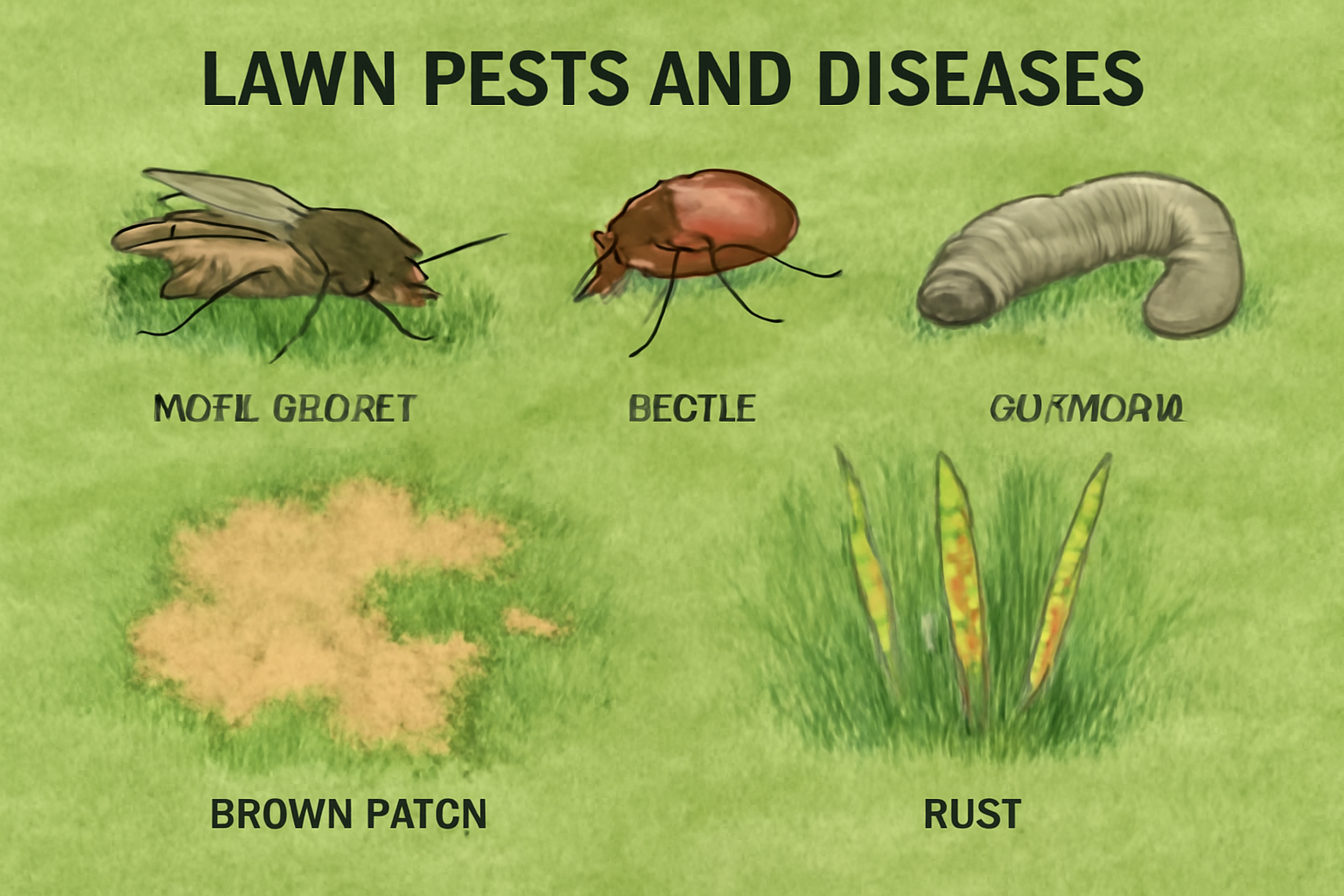
A healthy, vibrant lawn requires regular care, and part of that care involves monitoring for pests and diseases that can damage your grass. Early detection and treatment are key to maintaining a lush, green lawn. Based on Landscaping Raleigh NC they list below is a guide to identifying and addressing the most common lawn pests and diseases.
1. Identifying Common Lawn Pests
Lawn pests are typically attracted to the grass for food or shelter, and they can quickly spread if not addressed. Here are some of the most common pests to look out for:
Grubs
Grubs are the larvae of beetles and feed on the roots of your grass, leading to brown, patchy areas. If you pull up sections of your lawn and notice that the roots are damaged or missing, grubs are likely the culprit. To confirm, you can check the soil by digging a small hole. If grubs are present, you’ll see them wriggling in the dirt.
Chinch Bugs
Chinch bugs are small, black and white insects that feed on the sap of grass blades. They cause yellow or brown patches that often expand. Chinch bugs are most active during hot, dry weather. To identify an infestation, look for small insects near the damaged grass or check for dried, sunken patches.
Aphids
Aphids are tiny, pear-shaped insects that typically target new growth and tender grass blades. These pests cause distorted leaves and stunt grass growth. They can also transmit plant diseases. Aphid infestations are often noticeable when the grass has a sticky, shiny residue (honeydew) on the surface, and ants may also be seen nearby.
Armyworms
Armyworms are caterpillars that feed on grass blades, leaving behind a trail of destruction. They are most active during late summer and fall, and they can decimate large patches of lawn in a short period. If you notice sudden wilting or chewed edges of grass, armyworms could be the cause.
2. Identifying Common Lawn Diseases
Lawn diseases can be caused by fungi, bacteria, or other pathogens, and they often thrive in specific weather conditions. Here’s how to identify some of the most common lawn diseases:
Dollar Spot
Dollar Spot is a fungal disease that creates small, round patches of discolored grass that look like silver dollar-sized spots. These spots are typically light brown or tan in color and may merge into larger patches. The disease is most active during warm, humid conditions and can be controlled with fungicides and proper watering practices.
Brown Patch
Brown Patch is another fungal disease that causes large, circular patches of brown or dead grass, often with a distinct ring around the edges. It thrives in warm, humid weather and is more common on lawns that are overwatered or over-fertilized. Good lawn care practices, such as reducing watering and ensuring proper drainage, can help prevent this disease.
Powdery Mildew
Powdery Mildew appears as a white, powdery coating on grass blades, especially in shaded areas. It typically develops in cool, dry conditions, and while it doesn’t usually kill the grass, it can weaken the plant, making it more susceptible to other pests and diseases. Treatment often involves proper lawn care, including reducing shade and improving air circulation.
Rust
Rust is a fungal disease that causes grass blades to turn yellow or orange, and it often appears in patches. It thrives in hot, humid weather and typically affects lawns that are stressed or improperly maintained. Treatment includes using fungicides and adjusting mowing and watering practices to improve the lawn’s overall health.
3. How to Treat Lawn Pests
Once you’ve identified the pest, it’s time to treat the issue. Here are some effective treatments for common lawn pests:
For Grubs
To treat grubs, you can apply a chemical grub control product, or you can use natural treatments like nematodes, which are microscopic worms that kill grubs without harming your lawn. Treating your lawn in late summer or early fall is typically the most effective time, as this is when grubs are most active.
For Chinch Bugs
Chinch bugs can be controlled with insecticidal soap or specific insecticides formulated to target them. Early treatment is important, as chinch bugs can spread quickly and cause extensive damage. Cultural practices, such as maintaining a healthy lawn and avoiding overwatering, can also help deter chinch bug infestations.
For Aphids
Aphids can be treated with insecticidal soap or neem oil. In cases of severe infestations, stronger insecticides may be required. Introducing natural predators like ladybugs can also help control aphid populations without the use of chemicals.
For Armyworms
If you suspect an armyworm infestation, it’s crucial to act quickly. You can treat your lawn with insecticides designed to target caterpillars. Biological control options, such as Bacillus thuringiensis (Bt), are effective and environmentally friendly alternatives.
4. How to Treat Lawn Diseases
When dealing with lawn diseases, the first step is to improve overall lawn care practices. Here’s how to treat some common lawn diseases:
For Dollar Spot
Fungicides that target Dollar Spot can help, but it’s also important to adjust watering practices. Avoid watering at night, as this promotes fungal growth. Instead, water deeply in the morning to allow the grass to dry out before evening.
For Brown Patch
Treat Brown Patch with fungicides formulated for fungal diseases, and ensure that your lawn is receiving proper drainage. Avoid over-watering, and reduce the use of nitrogen-rich fertilizers, which can exacerbate the condition.
For Powdery Mildew
Powdery Mildew can often be managed by improving air circulation around your lawn, such as trimming trees or shrubs that are casting excessive shade. Fungicides may also be effective in treating existing infections.
For Rust
Rust can be managed by applying fungicides designed for this disease. Additionally, increase lawn health by aerating the soil, adjusting mowing height, and avoiding excessive irrigation.
Conclusion
According to Landscaping Raleigh NC, identifying and treating lawn pests and diseases is essential for maintaining a healthy, attractive lawn. By being vigilant and proactive, you can catch problems early and address them effectively.
Whether using natural methods or chemical treatments, following these guidelines will help you preserve your lawn’s beauty and ensure it thrives year-round. Regular maintenance, including proper mowing, watering, and fertilization, will also go a long way in preventing pest and disease issues from recurring.
