
Getting a crane operator certification is key for those wanting to work in construction and heavy equipment. Yet, many struggle to pass the test, which stops them from legally operating cranes. The main reasons include poor preparation and a lack of hands-on experience.
The crane certification exam, administered by the National Commission for the Certification of Crane Operators (NCCCO), evaluates an operator’s knowledge of safety protocols, load charts, and operational procedures. https://certifiedsafetyexperts.com/ recognize that this exam is not only a legal requirement but also a testament to an operator’s expertise and commitment to maintaining high safety standards.

Knowing the hurdles crane operators face in the certification process is crucial. It helps improve pass rates and keeps crane operations safe. In this article, we’ll look at why many fail and offer tips to help them succeed.
Common Mistakes During Crane Certification Test Preparation
Getting a crane certification can be tough. Knowing the common mistakes can help you do better. Let’s look at three main areas where people often struggle and how to get past them.
Insufficient Study Time and Resources
Many operators fail because they don’t prepare enough. Crane operation needs a deep understanding of technical stuff, like load charts and safety rules. It’s important to have enough time to study and use good study materials.
Look for reliable training, like online courses and practice exams. This will make sure you’re ready for the test.
Poor Understanding of Load Charts
Load charts are key to the test, and not knowing them well can cause failure. Spend time learning about load chart terms, how to figure out capacity, and what affects crane performance. Practicing with load charts is key to getting good at it.
Lack of Practical Experience
Theory is important, but real-world crane use is just as crucial. Try to get practical training, either through work or a training program. This experience will boost your confidence and help you pass the practical part of the exam.
By avoiding these mistakes and focusing on crane test preparation, using the right study materials, understanding load chart interpretation, and getting enough hands-on training, you can pass the test easily.
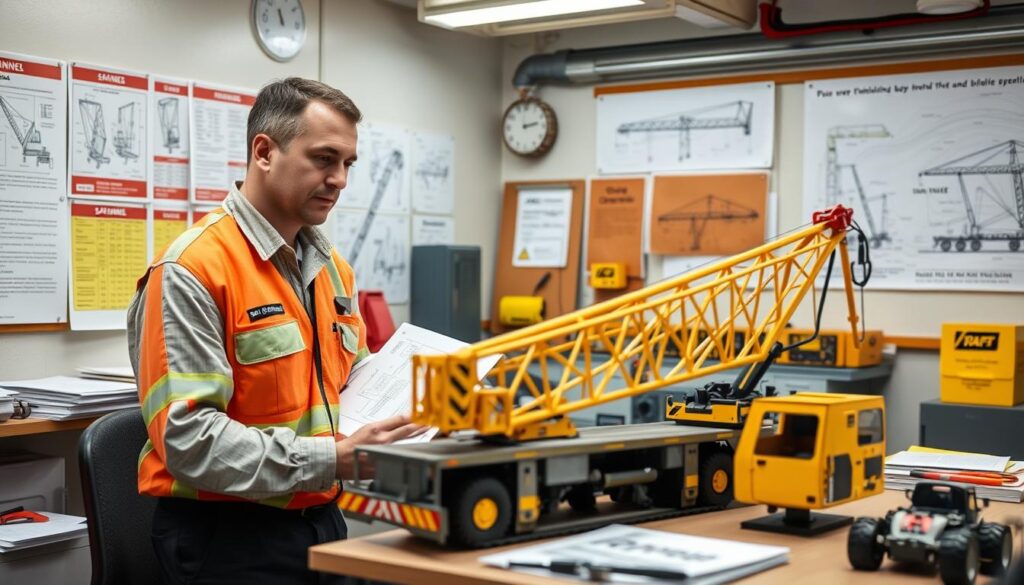
Critical Safety Regulations Often Overlooked by Test Takers
Understanding OSHA standards and crane safety rules is key to passing the crane certification test. Many test-takers miss these important rules, which can hurt their chances and put others at risk.
To pass the test, aspiring crane operators need to know a few key areas well:
- OSHA’s Powered Industrial Truck Standard (29 CFR 1910.178): This standard covers the safety basics for operating cranes and other powered tools. It includes pre-use checks, training, and what operators must do.
- Crane Capacity and Load Limits: Knowing the crane’s max weight, load charts, and how to adjust them is crucial. It helps avoid overloading and keeps operations safe.
- Rigging and Signaling Protocols: Using the right rigging, hand signals, and communication is vital. It ensures safe crane use and protects workers.
By understanding these safety rules, test-takers show they care about safety. This knowledge boosts their chances of passing the crane certification exam. Following these rules is not just a formality. It’s essential for safe crane use and a successful career.
Technical Knowledge Gaps Leading to Test Failure
Passing a crane certification test needs a deep understanding of crane operation’s technical sides. Many aspiring operators struggle with crane mechanics, load dynamics, and site assessment. It’s key to master these technical skills to pass the certification.
Understanding Crane Dynamics and Physics
Crane operators must know the physics of crane mechanics. This includes load dynamics, center of gravity, and load capacity. Not understanding these basics can lead to dangerous mistakes and test failure.
Site Assessment and Setup Requirements
Effective site evaluation is crucial for crane operators. They must assess the terrain, spot hazards, and set up the crane right. Skipping these steps can risk failing the certification test.
Signal and Communication Protocols
Knowing hand signals and radio communication is essential. Working well with the ground crew and following communication rules can make a big difference in passing the test.
To do well in crane operation, aspiring operators need thorough training and hands-on practice. By learning the basics of crane mechanics, load dynamics, site assessment, and communication, they boost their chances of passing the test.
Essential Skills Required to Pass Your Crane Certification Test
To pass the crane certification test, you need more than just book knowledge. You must show skills like critical thinking, problem-solving, and being aware of your surroundings. These skills are vital for operating cranes safely and efficiently.
Being able to analyze and understand test information is crucial. This includes reading load charts, figuring out load capacities, and making smart decisions based on the environment. Crane operators must think ahead to spot dangers and adjust their actions.
- Demonstrate strong critical thinking skills to interpret test data and make informed decisions
- Showcase problem-solving abilities to navigate complex crane operations and overcome unexpected challenges
- Exhibit a high level of situational awareness to identify and mitigate risks on the job site
Also, crane operators need to be great at solving problems. The test often has scenarios that need quick thinking and creative solutions. They must analyze the situation, think of different options, and make safe choices to protect everyone.
Lastly, being aware of your surroundings is key. In the test’s practical part, you need to keep an eye on your environment, spot dangers, and adjust your crane use. This skill is crucial for keeping the work area safe and preventing accidents.
By improving these essential skills, you can boost your chances of passing the test and becoming a valuable part of the construction world. The ability to think critically, solve problems, and stay alert is essential for handling crane operations safely and effectively.
Best Practices for Preparing and Passing the Written Exam
Passing the written part of a crane certification test is key. It checks your knowledge of safety rules, crane operation, and best practices. To do well, use smart test-taking strategies and good study materials.
Start by making a study plan. Spend enough time on the study guide and practice tests. Knowing the exam format and time limits helps you prepare better.
- Learn about crane load charts and how to use them safely.
- Know the important safety rules and procedures for crane use, like OSHA standards and signaling.
- Use study guides and take practice tests to find and fix any knowledge gaps.
When taking the exam, answer each question carefully. Read the question well, think about all options, and choose the best answer. Stay calm and focused to avoid test anxiety. With these strategies and good preparation, you’ll pass the written crane certification exam easily.
Mastering the Practical Skills Test: Tips and Techniques
Passing the practical skills test is key to getting your crane certification. This test checks if you can safely and well use the crane. To do great, practice a lot, use simulators, and get good at different crane tasks.
Spending a lot of time getting ready for the test is important. Practice using a crane or a simulator often. This builds your skills and confidence for the test.
Simulator training is very helpful. It lets you try out many crane tasks in a safe place. You get to know the crane better and learn how to handle different situations.
- Prioritize hands-on practice and simulator training to build crane operation skills.
- Familiarize yourself with the specific equipment and configurations you’ll encounter during the practical exam.
- Develop muscle memory for common crane operations through repetition and practice.
- Understand and adhere to all safety protocols and regulations during the practical assessment.
By mastering the practical skills needed for crane operation, you’ll be ready for the test. This is a big step towards getting your crane operator credentials.
Overcoming Test Anxiety and Building Confidence for Certification Success
Getting ready for a crane certification test can be tough. But, with the right mindset and strategies, you can beat test anxiety and do your best. It’s all about mental prep and finding ways to manage stress and boost confidence.
For successful Certified Safety Experts, try stress management techniques like deep breathing, meditation, or visualization. These practices can help calm both your mind and body, improving focus for the test. Additionally, light exercise or yoga can relieve tension and boost your energy levels, helping you perform at your best.
Building confidence is key to passing the test. Get to know the test format, practice with sample questions, and do mock exams. Positive self-talk and imagining success can also help. Remember, the test is a chance to show off your skills and knowledge. So, go into it feeling proud and ready.
Certified Safety Experts
7410 Chapel Hill Rd Suite 101 Cary, NC United States
+1 (919) 326-3742
