
A well-built sofa can last 10 to 15 years. A neglected one starts showing its age in three. The difference almost always comes down to maintenance — not the original price tag.
Most people wait until something goes wrong before they act. The cushions flatten. The frame creaks. A stain sets in permanently. By then, you’re looking at repair costs or early replacement. A simple routine prevents most of that.
This guide covers everything you need to keep a sofa in great shape: cushion rotation schedules, spot cleaning by fabric type, fixing frame problems before they get worse, and knowing when foam inserts have reached the end of their life.
Key Takeaways
- Rotate cushions every 2 to 4 weeks to prevent uneven wear and sagging on high-use seats.
- Cleaning method depends on fabric type — always check the care code (W, S, WS, or X) before applying any liquid or solvent.
- Frame creaks signal loose joints, not structural failure — most can be fixed with wood glue or tightened fasteners before they worsen.
- Foam inserts typically last 5 to 10 years depending on density and daily use, and replacing them is far cheaper than buying a new sofa.
- Sunlight and humidity are silent killers — UV exposure fades fabric and dries out leather, while excess moisture weakens frame joints over time.
- A consistent maintenance routine can extend sofa life by 5 or more years without major repair costs.
How Often Should You Rotate Sofa Cushions?
Quick Answer: Rotate loose seat cushions every 2 to 4 weeks. Flip reversible cushions each time you rotate them. This distributes wear evenly across the foam core and prevents any single area from compressing permanently.
Most people sit in the same spot every day. That concentrated pressure breaks down foam and fiber fill unevenly, leaving one or two cushions significantly more compressed than the rest.
Rotation is the simplest thing you can do to slow that process. It does not reverse existing damage, but it buys you years of even support before replacement becomes necessary.
What Is the Right Rotation Pattern?
Think of your cushions like tires on a car. You rotate them on a schedule to prevent any single one from wearing out first.
For a three-seat sofa, move the left cushion to the center, the center to the right, and the right to the left. For reversible cushions, flip them top to bottom every other rotation. For back cushions, swap left and right and fluff them after each use.
How Does Cushion Fill Type Affect How Fast They Wear?
Not all cushion fills respond the same way to daily pressure. Understanding what’s inside your cushions helps you set realistic expectations and maintenance intervals.
| Cushion Fill Type | Typical Lifespan | Recovery Speed | Maintenance Need | Best For |
|---|---|---|---|---|
| High-density foam (1.8+ lb/ft³) | 7 to 10 years | Slow (hours) | Low | Everyday use sofas |
| Down-wrapped foam | 5 to 8 years | Fast (minutes) | Medium (daily fluffing) | Comfort-focused seating |
| Polyester fiberfill | 3 to 5 years | Very fast | High (frequent fluffing) | Low-traffic rooms |
| Spring-over-foam | 8 to 12 years | Immediate | Low | High-traffic family rooms |
| Memory foam | 5 to 7 years | Slow (30 to 60 min) | Low | Supportive seating needs |
How Do You Spot Clean a Sofa Without Damaging It?
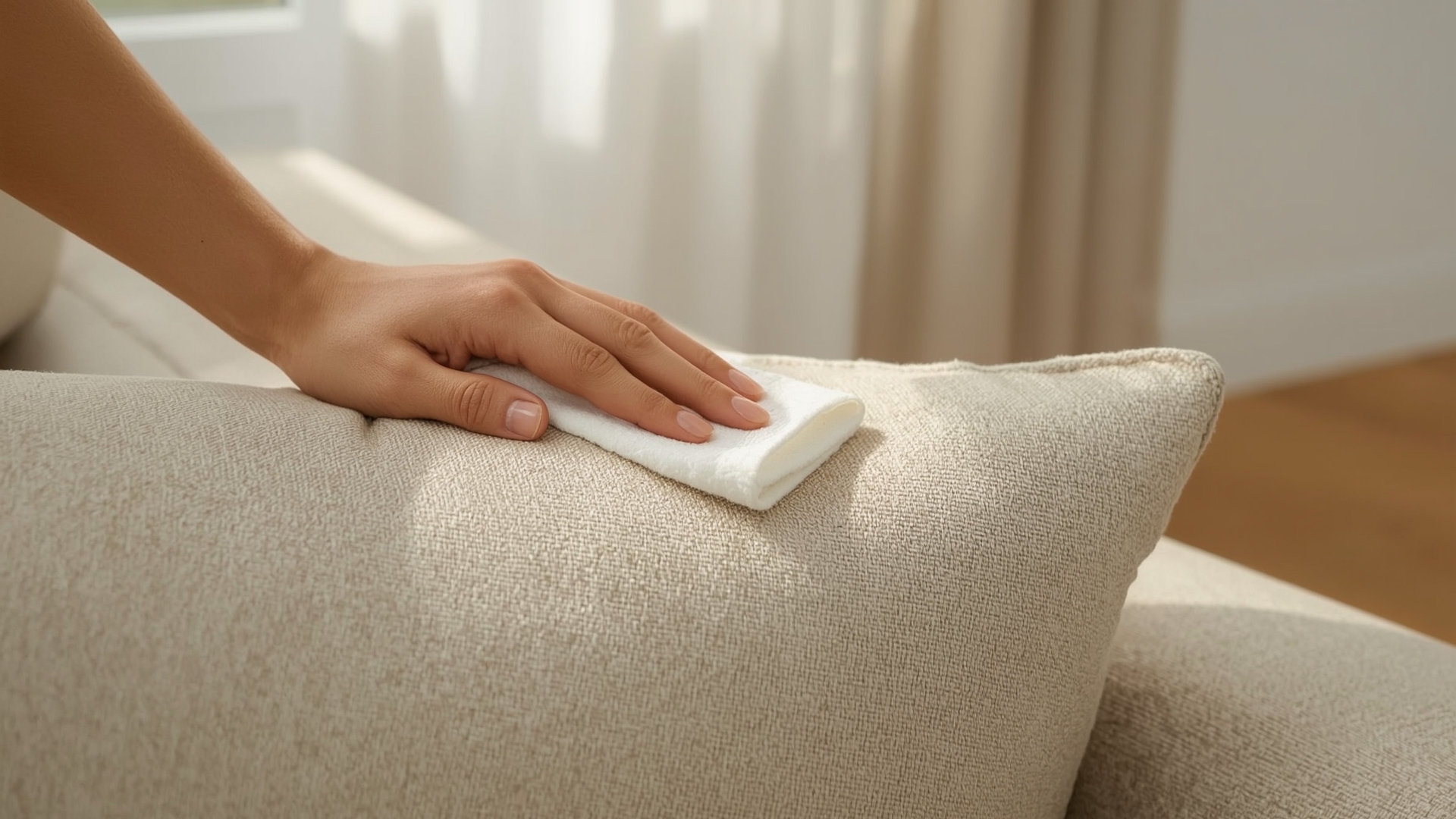
Quick Answer: Check the care tag for a cleaning code before touching any stain. Code W means water-based cleaner only. Code S means solvent only. Code WS allows both. Code X means vacuuming only — no liquids. Always blot, never rub.
The care tag is usually found under a seat cushion or on the sofa’s underside. It takes 10 seconds to find and can save you from permanently damaging the fabric.
Rubbing a stain pushes it deeper into the fibers and can distort the fabric weave. Blotting lifts the stain upward. Always work from the outside edge of the stain toward the center to avoid spreading it.
What Cleaning Method Works for Each Fabric Type?
Different fabrics have different vulnerabilities. Water can shrink natural fibers or leave rings on velvet. Solvents can damage certain synthetic coatings. Knowing your fabric type prevents accidental damage.
| Fabric Type | Care Code | Recommended Cleaner | Avoid | Drying Method |
|---|---|---|---|---|
| Polyester | W or WS | Mild dish soap + water | Bleach | Air dry, fan-assisted |
| Cotton | W | Cool water + upholstery cleaner | Hot water, harsh solvents | Air dry flat |
| Velvet | S or WS | Dry cleaning solvent | Water (causes watermarks) | Brush pile when dry |
| Microfiber | W or S | Rubbing alcohol (code S) or water mist (code W) | Soaking fabric | Brush dry with stiff brush |
| Linen | S | Dry cleaning solvent | Water (shrinks fibers) | Air dry only |
| Performance fabric (Crypton, Sunbrella) | WS | Mild soap + water or bleach solution (per brand) | Abrasive scrubbers | Air dry |
How Do You Handle Common Stain Types?
Different stains need different approaches. Acting within the first few minutes gives you the best chance of full removal.
- Liquid spills (water, juice, wine): Blot immediately with a clean dry cloth. Apply a W-code cleaner and blot again. Repeat until the stain lifts.
- Grease or oil: Sprinkle baking soda or cornstarch on the stain. Let it sit for 15 to 20 minutes to absorb the oil. Brush off, then treat with a solvent-based cleaner.
- Ink: Apply rubbing alcohol to a clean cloth and blot — do not pour directly on the fabric. Work slowly in small circles from the edge inward.
- Pet accidents: Blot liquid first. Apply an enzyme-based cleaner designed for pet stains. These break down the odor-causing proteins that regular cleaners miss.
- Dried stains: Gently scrape off any crust with a plastic card first. Then treat as you would a fresh stain with the appropriate cleaner.
How Often Should You Deep Clean Your Sofa?
Spot cleaning handles individual incidents, but your sofa also accumulates dust, allergens, and body oils over time. A deeper clean every 6 to 12 months removes what spot treatments miss.
For most fabric sofas, this means vacuuming all surfaces with an upholstery attachment, treating the full fabric with a light foam-based cleaner, and allowing 4 to 6 hours of drying time before use. For leather sofas, a full clean with a leather-specific conditioner every 6 months keeps the material supple and crack-resistant.
What Causes a Sofa Frame to Creak and How Do You Fix It?
Quick Answer: Sofa frame creaks usually come from loose joints where wood pieces connect, or from friction between frame components. Most creaks can be fixed with wood glue on loose joints, tightened corner block screws, or felt pads between rubbing surfaces.
A creak is almost always an early warning sign — not a sign of structural failure. The frame is telling you a joint has loosened before any real damage has occurred. Ignoring it gives the loose joint time to work itself into a gap, which is much harder to fix.
How Do You Find the Source of a Sofa Creak?
Press down on different areas of the sofa while a second person watches and listens. Sit on each cushion section separately, lean on each armrest, and press on the back. This helps isolate which joint or area is the source.
Common creak locations include the corner blocks (the triangular wood pieces inside each corner of the frame), leg attachment points, and armrest-to-frame joints.
What Are the Most Common Frame Problems and Their Fixes?
| Problem | Location | Likely Cause | Fix | Difficulty |
|---|---|---|---|---|
| Creaking sound when sitting | Seat frame joints | Loose corner block screws | Tighten screws or re-glue corner block | Easy |
| Wobbling leg | Leg attachment point | Loose bolt or worn thread | Re-tighten bolt; add thread-lock compound | Easy |
| Armrest shifting | Armrest-to-frame joint | Dried or failed wood glue | Apply fresh wood glue, clamp for 24 hours | Moderate |
| Back frame flex | Back upright joints | Weak dowel connection | Reinforce with L-bracket or corner block | Moderate |
| Spring noise | Seat deck | Broken or detached spring coil | Re-tie or replace spring; call a professional | Hard |
Can You Access the Sofa Frame Without a Professional?
Yes, in most cases. Turn the sofa onto its back to expose the underside. Many sofas have a dust cover fabric stapled to the bottom — you can carefully remove this to access the frame, tighten fasteners, or apply wood glue to loose joints.
Re-staple the dust cover when you’re done. The whole process takes about 30 to 60 minutes for most frame creak fixes.
How Do You Protect Sofa Fabric From Everyday Damage?
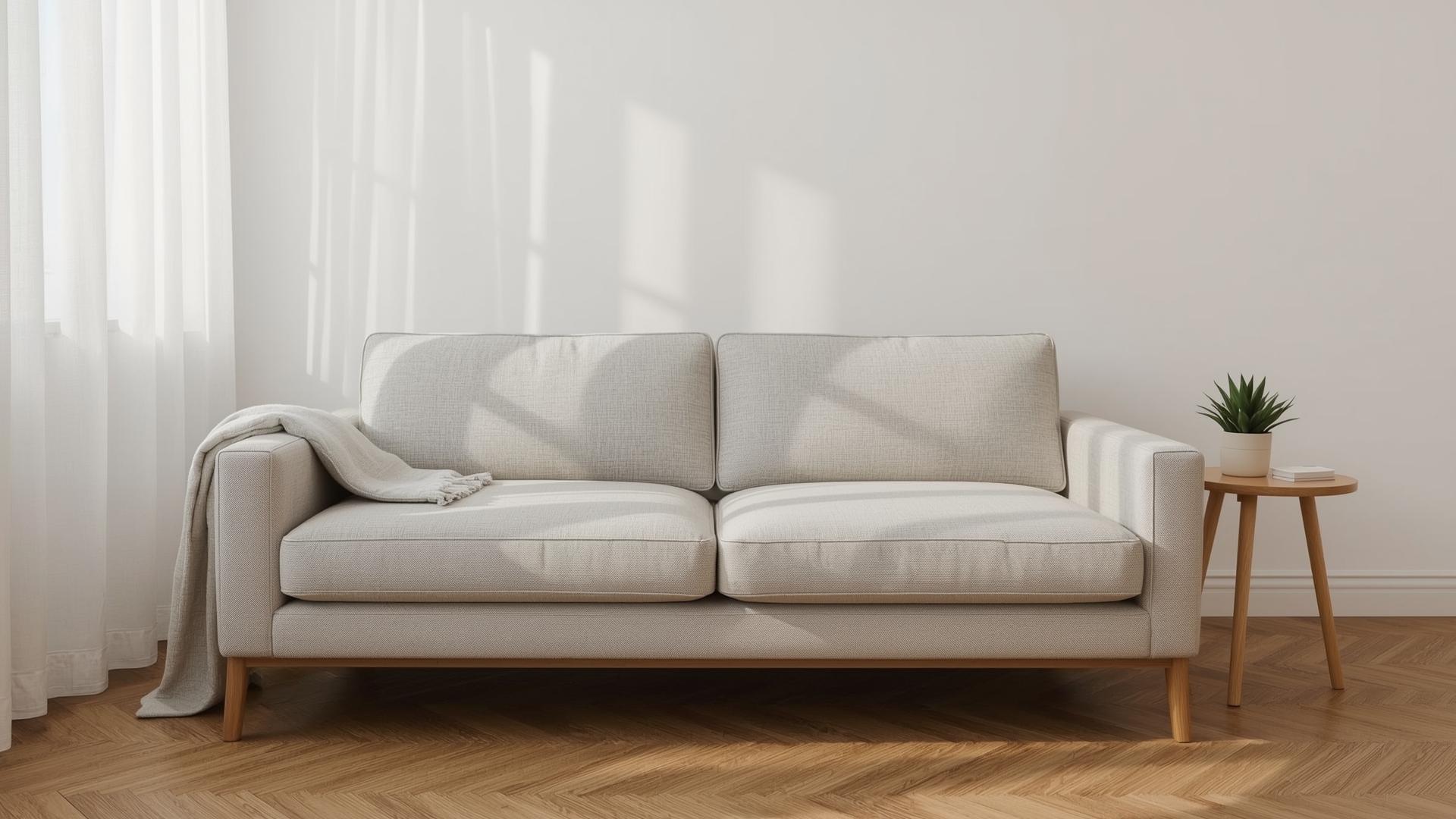
Quick Answer: Keep sofas at least 12 inches from heat sources and out of direct sunlight to prevent fading and fiber breakdown. Use a fabric protector spray every 6 to 12 months, and add arm covers or washable throws to high-contact zones.
Sunlight is one of the most underestimated threats to upholstery. UV rays break down dye molecules in fabric and dry out leather, causing fading and cracking over time. Even indirect sunlight through a window can cause noticeable fading within 6 to 12 months.
If repositioning the sofa is not an option, UV-blocking window film is an effective alternative. It reduces UV transmission by up to 99% without significantly darkening the room.
What Role Does Humidity Play in Sofa Longevity?
High humidity (above 60%) promotes mold growth in foam and fabric, weakens wood joints, and causes fabric to feel damp or musty. Low humidity (below 30%) dries out leather and can cause wood frame joints to shrink and loosen.
The ideal humidity range for furniture is 40 to 55%. A basic hygrometer costs under $20 and lets you monitor your room’s humidity. In humid climates, a dehumidifier protects both the frame and the upholstery.
How Do Pets and Children Accelerate Sofa Wear?
Pet claws create micro-tears in fabric weave over time, while the oils in pet fur can stain certain fabrics if not cleaned regularly. Children introduce food, liquid, and concentrated pressure in small areas.
Removable, washable slipcovers are the most practical solution for heavy-use sofas. They take the daily abuse instead of the upholstery. For fabric sofas without slipcovers, a performance fabric with a Wyzenbeek rating above 30,000 double rubs offers significantly better resistance to abrasion.
When Should You Replace Sofa Foam Inserts?
Quick Answer: Replace sofa foam inserts when cushions compress more than 30 to 40% of their original height, feel noticeably harder on one side, or no longer recover shape within a few minutes of sitting. Most foam inserts need replacement every 5 to 10 years.
Foam replacement is one of the most cost-effective repairs you can make to a sofa with a solid frame. New foam inserts typically cost $50 to $200 per cushion depending on size and density, compared to $800 to $3,000+ for a new sofa.
The key test: sit on a cushion and stand up. If the impression you left takes more than 5 minutes to disappear, the foam has lost its resiliency. That is the clearest sign it is time to replace it.
What Foam Density Should You Choose for Replacement?
Foam density is measured in pounds per cubic foot (lb/ft³). Higher density means more material packed into the same space, which translates to longer life and better support.
| Foam Density | Expected Lifespan | Cost Per Cushion (approx.) | Best Use Case | ILD Range (Firmness) |
|---|---|---|---|---|
| 1.5 lb/ft³ | 3 to 5 years | $30 to $60 | Low-traffic guest rooms | 25 to 30 ILD (soft) |
| 1.8 lb/ft³ | 5 to 7 years | $60 to $100 | Everyday living room use | 28 to 35 ILD (medium) |
| 2.0 lb/ft³ | 7 to 10 years | $100 to $150 | High-traffic family sofas | 30 to 40 ILD (firm-medium) |
| 2.5 lb/ft³ | 10 to 15 years | $150 to $250 | Commercial or heavy daily use | 35 to 45 ILD (firm) |
How Do You Replace Foam Inserts at Home?
Most sofa cushion covers have a zipper on the back seam. Unzip the cover, pull out the old foam block, and take it to a foam supplier to be cut to the exact same dimensions. Slide the new foam in and zip the cover closed.
If the foam is wrapped in a layer of down or polyester batting, keep that wrap and transfer it to the new foam block. It softens the feel without affecting the foam’s structural support.
What Is a Practical Sofa Maintenance Schedule?
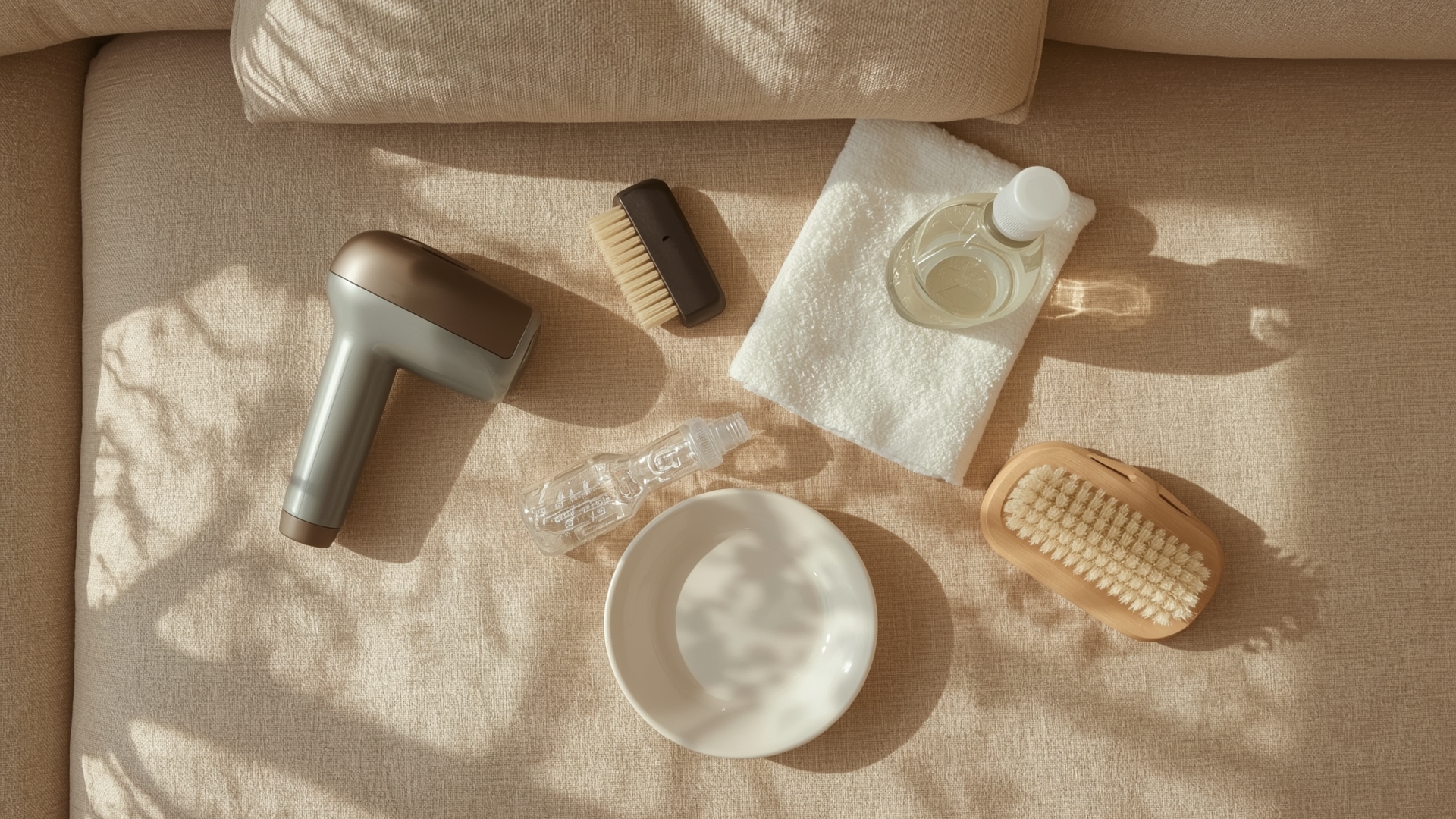
Quick Answer: A practical sofa maintenance schedule combines weekly vacuuming, monthly cushion rotation, quarterly fabric treatment checks, biannual deep cleans, and annual frame inspections. This routine prevents most common sofa problems before they become costly repairs.
Building maintenance into a recurring calendar removes the guesswork. You do not need to remember when you last rotated the cushions — the schedule does it for you.
What Should Your Weekly and Monthly Sofa Routine Look Like?
- Weekly: Vacuum all cushion surfaces, crevices, and the sofa base using an upholstery attachment. Remove and vacuum behind cushions where crumbs and dust accumulate.
- Weekly: Fluff back cushions filled with down or polyester fiber — these lose shape fastest with daily use.
- Monthly: Rotate all loose seat cushions. Flip reversible cushions top to bottom.
- Monthly: Wipe leather sofas with a dry microfiber cloth to remove surface dust and body oils.
What Should Your Quarterly and Annual Sofa Routine Look Like?
- Every 6 months: Deep clean fabric with a foam-based upholstery cleaner or have leather conditioned with a product designed for the specific leather type (aniline, semi-aniline, or pigmented).
- Every 6 to 12 months: Reapply a fabric protector spray to upholstered sofas, particularly on armrests and seat surfaces.
- Annually: Inspect the frame by turning the sofa onto its back. Check corner blocks, leg attachment points, and spring webbing for wear or looseness.
- Annually: Assess cushion compression. If any cushion has lost more than 1 to 1.5 inches of height compared to when it was new, plan for foam replacement.
When Is It Better to Repair vs. Replace a Sofa?
Quick Answer: Repair a sofa when the frame is structurally sound and the problem is limited to foam, fabric, or loose joints. Replace it when the frame itself is broken, warped, or the total repair cost exceeds 50% of a comparable new sofa’s price.
The frame is the most important factor in this decision. A solid hardwood or kiln-dried softwood frame can last 20 to 30 years with proper maintenance. If that frame is intact, nearly everything else — foam, fabric, springs, webbing — can be repaired or replaced at a fraction of the cost of a new sofa.
What Are the Signs That a Sofa Is Beyond Repair?
- Broken frame rails: A snapped seat rail or cracked side rail compromises the structural integrity of the entire sofa and is rarely worth repairing cost-effectively.
- Warped or bowed frame: Usually caused by prolonged moisture exposure. The frame will not return to its original shape and the problem will worsen over time.
- Multiple failing systems: If the springs, foam, fabric, and frame all need attention at once, replacement is usually more economical.
- Persistent odor after cleaning: Odor that survives deep cleaning usually means mold or bacteria has penetrated the foam core, which requires full cushion replacement and possibly frame treatment.
Frequently Asked Questions
How do you get pet hair off a sofa without a vacuum?
A slightly damp rubber glove or a rubber squeegee pulled across the fabric is highly effective at lifting embedded pet hair. Rub in one direction to gather the hair into clumps, then pick up or vacuum the clumps away. A lint roller works well for lighter shedding on smooth fabrics.
Can you use baking soda to deodorize a sofa?
Yes. Sprinkle baking soda generously over the cushion surfaces and leave it for at least 20 to 30 minutes — longer for stronger odors. The sodium bicarbonate absorbs odor molecules from the fabric. Vacuum thoroughly afterward. This works best on fabric sofas with W or WS care codes.
How do you prevent sofa cushions from sliding?
Non-slip rug pad material cut to size and placed under loose cushions is the most effective fix. You can also find adhesive hook-and-loop strips designed for upholstery that attach the cushion to the seat deck without damaging the fabric.
Does sofa color affect how quickly it shows wear?
Yes. Mid-tone and heathered colors (grays, taupes, warm browns) hide both light dust and dark debris better than very light or very dark solids. Light sofas show surface dust, pet hair, and stains faster. Very dark sofas show lint and light-colored pet hair prominently. The fabric texture matters as much as the color — textured weaves disguise minor wear better than flat, smooth fabrics.
What is the best way to store a sofa during a move or renovation?
Wrap the sofa in moving blankets or furniture pads, then cover it with breathable fabric wrap — not plastic sheeting, which traps moisture and can cause mold on foam and fabric. Store it on its feet in a climate-controlled space, away from direct contact with concrete floors, which can transfer moisture upward through the legs.
How do you fix a sofa cushion that has lost its shape?
If the cushion cover has a zipper, open it and add a layer of polyester batting around the existing foam to restore volume. For fully flattened foam, replacing the foam insert is the more durable fix. Adding batting over dead foam gives temporary improvement but does not restore the underlying support structure.
